
Alternative Fish Species for Aquaponics: Beyond Tilapia and Trout
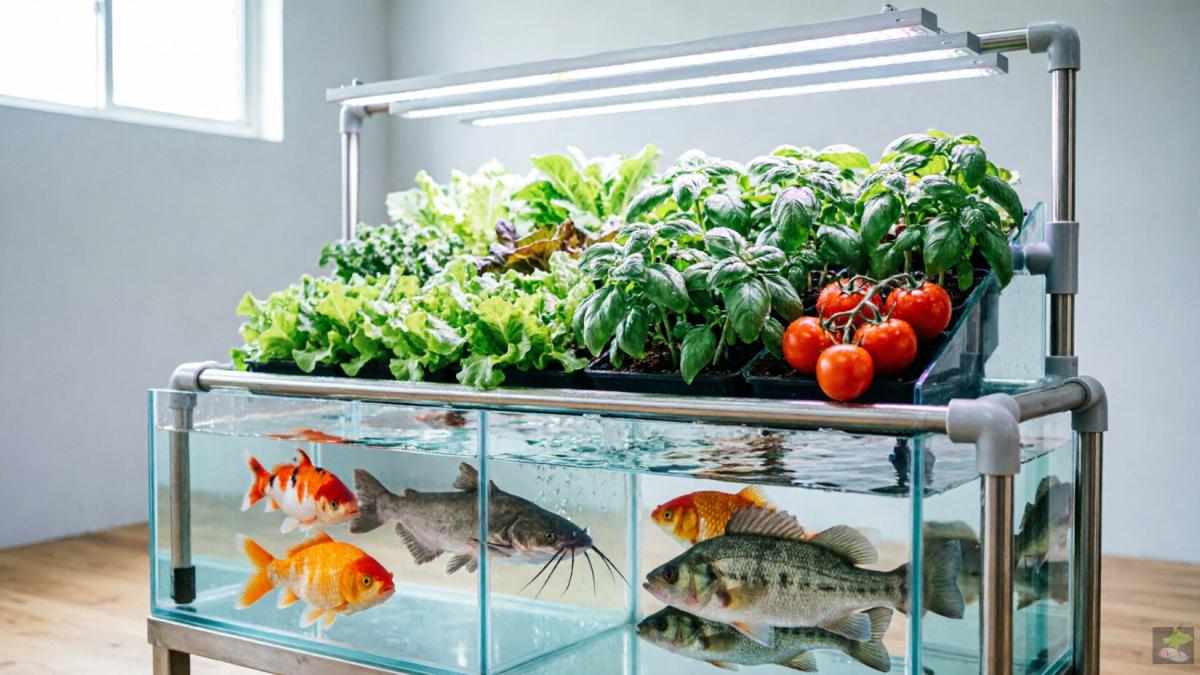
Tilapia and trout are among the best-known fish used in aquaponics, but other species may also suit systems in Central Europe. The decisive question is not merely whether a fish can survive particular threshold conditions. Fish species, water temperature, oxygen supply, feed, stocking density, filtration capacity and growing area must remain compatible over the long term.
Why alternative fish species are worth considering
Tilapia need warm water for good growth, whereas trout require cool, oxygen-rich water. Depending on location and season, heating, cooling or aeration may therefore demand considerable resources.
Species established in the region or suited to recirculating aquaculture can enable different operating concepts. There is no universally best fish species, however. At minimum, the following points should be clarified before making a selection:
- the system’s temperature profile throughout the year
- available aeration and backup-power equipment
- stocking density and intended feed rate
- capacity of solids removal and biofiltration
- availability of suitable juveniles and feeds
- production objective, personal consumption or sale
- animal-health and regulatory requirements
Common carp: adaptable, but not undemanding
The common carp (Cyprinus carpio) is a long-established European food fish. It copes with seasonal temperature fluctuations better than many tropical species and can therefore be considered for Central European systems.
Its resilience must not be confused with an absence of husbandry requirements. Carp also need consistently appropriate oxygen levels, effective solids removal and a mature biofilter. Low oxygen or elevated ammonia and nitrite concentrations are not normal operating conditions.
Carp are omnivores. The amount of nutrients that actually enters the system is determined primarily by feed quantity and composition, digestibility, fish size and temperature.
African sharptooth catfish: a warm-water species for intensive systems
The African sharptooth catfish (Clarias gariepinus) is raised in European recirculating systems and can breathe atmospheric air. This adaptation improves its ability to survive temporary oxygen shortages, but it does not replace reliable aeration.
A fish’s ability to survive poor conditions is not an appropriate target for normal system operation.
The African sharptooth catfish is a warm-water species, which can entail significant heating costs in Central Europe. Intensive feeding and protein-rich diets also increase the load on solids removal, the biofilter and oxygen supply.
Wels catfish: a large-growing species with particular space requirements
The wels catfish (Silurus glanis) is a native predatory fish. Its eventual size, feeding behaviour and long-term space requirements must be considered in an aquaponic system.
The species should not be chosen solely for its temporary tolerance of adverse conditions. Responsible husbandry still requires stable water quality, adequate oxygen, appropriately sized tanks and suitable feeding.
Before commercial production, the route to market, slaughter, processing and long-term occupation of tank capacity must also be planned realistically.
European perch: attractive, but management-intensive
The European perch (Perca fluviatilis) is an attractive food fish that can be kept in controlled recirculating systems. Compared with more robust species, it requires especially careful management.
Key requirements include reliable oxygenation, low ammonia and nitrite exposure, a stable biofilter and consistent feeding. European perch is therefore only conditionally suitable for new or still unstable systems.
Tench: a robust species for less intensive concepts
The tench (Tinca tinca) is adapted to warm, still waters that may sometimes contain less oxygen. This natural tolerance likewise does not mean that low oxygen levels should be accepted as a system target.
Tench can be of interest for less intensive systems. Their growth, feed intake and therefore nutrient input may, however, be lower than with intensively fed species. The growing area must consequently be matched to the actual feed rate.
Nutrient output is not determined by fish species alone
Fixed figures such as “grams of nitrogen per kilogram of fish per day” are not meaningful without information on feed quantity, protein content, digestibility, temperature and fish size. Daily feed input is therefore a better starting point for practical system design.
As feed input rises, the following typically increase:
- oxygen demand of fish and microorganisms
- quantity of solids to be removed
- ammonium load on the biofilter
- nitrate availability to plants
- risk associated with pump, aeration or power failure
Plant nutrition must be assessed using actual measurements. Potassium, calcium and iron may need to be supplemented in addition to nitrogen. No particular fish species therefore guarantees complete plant nutrition.
Guidance for choosing a species
For the most robust possible start
Carp can be a sensible option when the temperature profile, stocking density and legal framework are suitable. Even with robust species, stocking should initially be conservative and feed input increased gradually.
For warm, intensively operated systems
African sharptooth catfish may suit professionally monitored warm-water systems. Heating energy, high filtration loads and resilience to failures must be included in the design.
For more demanding recirculating systems
European perch is better suited to operators already proficient in controlling water quality, oxygenation, feeding and biofilter performance.
For less intensive concepts
Tench may suit calmer, less heavily fed systems, though nutrient availability to the plants may be correspondingly lower.
Mixed-species stocking only with clear justification
Keeping several fish species in one tank increases biological and operational complexity. Differences in feed intake, growth, behaviour and body size can cause competition, injury or uneven development.
Mixed-species stocking should therefore not be treated as a simple way to use space more efficiently or close nutrient cycles. It requires species-specific planning and especially close observation.
Law, animal health and escape prevention
The notifications, registrations or permits required depend on factors including the fish species, type of use, distribution or sale, and system location. Aquaculture facilities may require authorisation or registration under animal-health legislation.
The competent veterinary authority and, where appropriate, fisheries authority should therefore be contacted before stocking. Non-native species must not be allowed to escape into natural waters. Regardless of species, husbandry, feeding, water quality and technical equipment must meet the animals’ needs.
Conclusion
Alternative fish species can help adapt aquaponic systems to their location, climate and marketing objective. The decisive factor, however, is not the supposed robustness of any one species. A stable system depends on conservative stocking, suitable feed, adequate aeration, effective solids removal, a capable biofilter and regular measurements.
Selection should therefore begin with the actual temperature profile and planned feed input. Only then can operators assess whether carp, catfish, European perch, tench or another species fits the system.