
Junges Grün, voller Geschmack
Microgreens
Kleine Pflanzen, die zwischen Keimling und ausgewachsenem Gemüse geerntet werden.
What are microgreens?
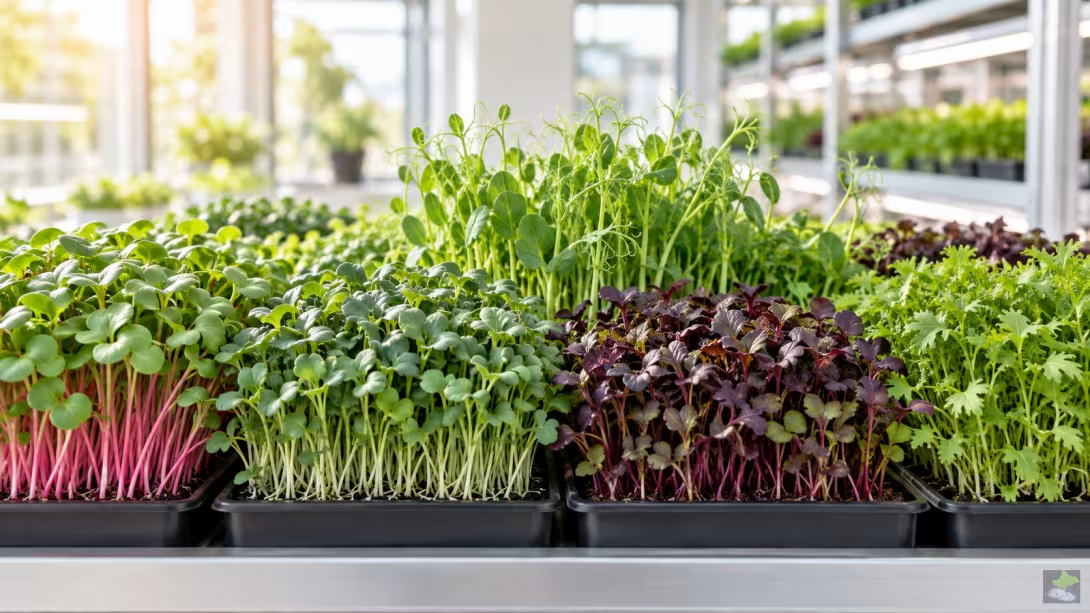
Microgreens are young edible plants harvested shortly after germination. At this stage, the cotyledons have fully opened and the first true leaves are often already visible. The tender stems and leaves are eaten, while the roots and growing medium remain in the tray.
This distinguishes microgreens both from sprouts, which are usually grown without a substrate and eaten whole, and from mature vegetables. Depending on the species, microgreens are often ready to harvest after approximately one to three weeks.
Short growing cycle
Many varieties develop into aromatic young plants ready for harvest within just a few days.
Minimal space requirements
Shallow trays are sufficient, making microgreens ideal for windowsills, kitchens and vertical shelving.
Remarkable variety
From mild pea shoots to peppery mustard, different varieties offer a broad range of colours and flavours.
How are microgreens grown?
The seeds are sown densely but evenly on a suitable growing substrate or cultivation mat. They require consistent moisture during germination. Afterwards, adequate light, gentle air circulation and controlled watering promote compact, healthy growth. Harvest the plants with clean scissors just above the substrate.
Untreated, food-grade seed, clean trays and hygienic handling are particularly important for safe cultivation. Waterlogging, persistently wet leaves and overcrowded stands can encourage mould and rot.
Flavour and culinary uses
Microgreens add colour, freshness and distinctive varietal flavours to a dish. Radish and mustard have a pronounced peppery taste, broccoli is milder, and pea shoots taste fresh and slightly sweet. They complement salads, bowls, sandwiches, soups and egg dishes. Add them shortly before serving to preserve their texture and flavour.
Which varieties are suitable for beginners?
Radish, broccoli, mustard and cress germinate relatively quickly and are easy to monitor. Peas produce larger, succulent shoots and need a little more space. Slower-growing species such as basil or coriander are rewarding, but require more patience and especially consistent growing conditions.