
Microgreen-Sorte
Broccoli Microgreens
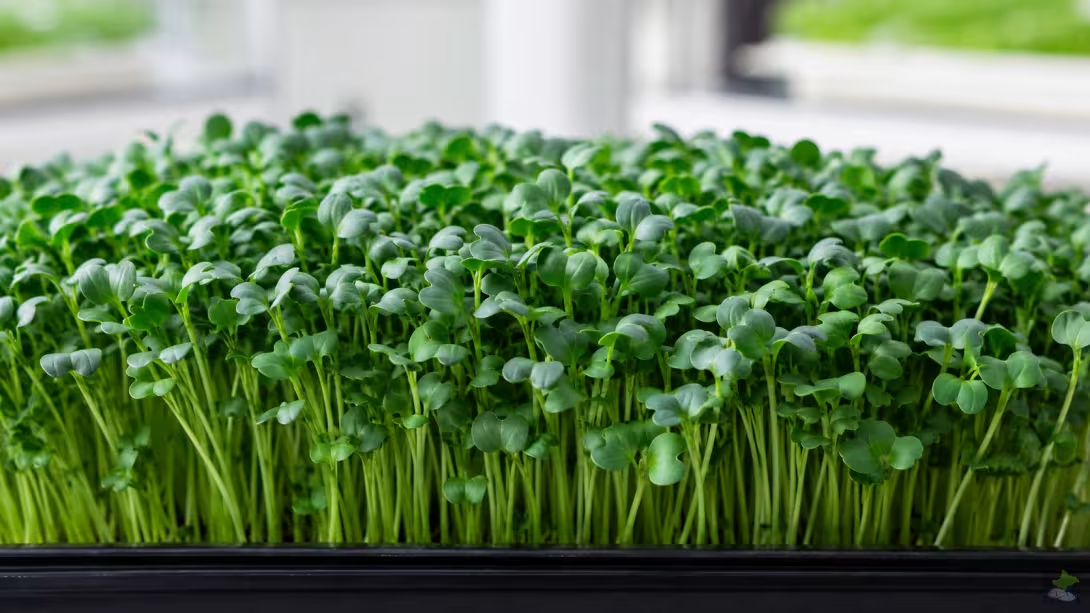
Broccoli Microgreens Are a Compact Beginner Crop: With suitable seed, they generally germinate uniformly, form a dense green crop and can be grown repeatably in a small area. A documented sowing quantity, controlled moisture, sufficient light, air movement and consistent hygiene are crucial.
Profile
- Botanical classification: Brassica oleracea var. italica
- Plant family: Brassicas (Brassicaceae)
- Flavour: mildly cabbage-like, slightly spicy and dependent on cultivar
- Growth: slender green seedling stems with paired cotyledons
- Harvested part: seedling stems and above-ground leaves
- Typical harvest stage: fully expanded cotyledons to the emergence of the first true leaf
- Suitability: readily comparable crop for documented beginner trials
What Distinguishes Broccoli Microgreens
Broccoli microgreens are grown from seed of the same plant species that would later develop a broccoli head. In microgreen production, however, cultivation ends at an early stage. The above-ground crop is harvested while roots and substrate remain in the tray.
The cotyledons are generally rounded to slightly heart-shaped and sit on slender, pale green stems. Colour, height, uniformity, flavour and yield vary with the cultivar, seed lot and growing method. General reference values are therefore no substitute for your own germination and cultivation test.
Distinguish Broccoli Microgreens from Broccoli Sprouts
Sprouts and microgreens are different products. Sprouts are generally grown without substrate in a very humid system and eaten whole, including the root. Microgreens grow on or in a suitable medium, receive light and are cut above the substrate surface.
This distinction is also relevant to hygiene. Microgreens are not automatically risk-free. Seeds, water, hands, tools, trays and growing areas can transmit microorganisms. Clean workflows must therefore be planned from goods receipt through to harvest.
Select Suitable Seed
Use viable, true-to-type seed expressly suitable for food or microgreen production. Chemically treated, pelleted seed or seed treated with unsuitable substances does not belong in the crop. Check package labels and supplier information before sowing.
Record the supplier, cultivar, lot number, purchase date and storage conditions. Store seed dry, cool and protected from moisture. Do not mix different lots without testing because germination rates and development may differ.
Test Germination Before Sowing a Full Tray
A germination test using a counted number of seeds shows whether a lot is suitable for a larger crop. Place, for example, 50 or 100 seeds on clean, moist paper and keep them under suitable conditions. Count normally developed seedlings and record weak, damaged or markedly delayed seedlings separately.
A low germination rate cannot reliably be offset by sowing especially densely. This often produces a patchy crop at different developmental stages and makes moisture, airflow and harvest timing more difficult to manage.
Prepare Trays and Substrate
Stable, food-safe trays with drainage holes are suitable. A solid lower tray enables controlled bottom watering after germination. All containers must be undamaged, readily accessible and easy to clean.
Suitable propagation substrate, verified coconut products or purpose-made mats can serve as the growing medium. It should absorb water evenly while allowing air to reach the roots. Permanently saturated or heavily compacted substrate promotes weak growth and microbiological problems.
Distribute the substrate evenly and moisten it in a controlled manner before sowing. Large dry or wet zones cause uneven germination. Record the quantity of substrate and water used per tray.
Determine Sowing Density Systematically
Broccoli seeds are relatively small and are sown densely but not on top of one another. Excessive spacing wastes growing area; an overcrowded crop dries poorly, competes more strongly for light and more readily develops moist, poorly ventilated zones.
A general quantity can serve only as a starting point. Tray size, actual internal growing area, seed size, germination rate, cultivar, substrate and indoor climate affect the result. For reliable values, weigh the seed and relate it to the usable area.
Sow Repeatably
- Record the inside dimensions and usable growing area of the tray.
- Add and moisten a consistent quantity of substrate.
- Weigh a defined quantity of seed.
- Distribute the seed as evenly as possible without large clusters.
- Label the tray with cultivar, lot, sowing quantity and date.
- Change only one major variable in the following crop cycle.
Control the Germination Phase
After sowing, the seeds require even moisture and good contact with the substrate. A clean lid or second tray can help distribute moisture and gentle pressure evenly during early germination. Nevertheless, inspect the crop daily.
Standing water, an unpleasant odour or slimy seeds are warning signs. Once the seedlings rise evenly, remove the cover and provide light and air movement. An unnecessarily long dark phase promotes long, unstable stems.
Light and Crop Development
After emergence, broccoli microgreens need uniform lighting. Insufficient light often produces long, pale, soft plants. Excessive intensity, inadequate distance from the lamp or additional heat, by contrast, can cause stress, drying and leaf damage.
Keep lighting duration, distance, orientation and the day–night rhythm constant for comparable crop cycles. What matters is not a single lamp specification, but the quantity of light actually reaching the crop in combination with temperature, water supply and airflow.
Research shows that light quality and intensity can affect growth, pigments and other constituents. Such experimental results cannot, however, be transferred directly to every cultivar and shelving system. Your own measurements and observations remain essential.
Irrigation and Air Movement
The root environment should be moist but not permanently saturated. Water especially carefully during the early phase so that seeds are not displaced. Once roots are established, bottom watering can help keep leaf surfaces drier.
Irrigation intervals depend on the substrate, tray size, crop density, temperature, relative humidity and evaporation. Rigid schedules are less reliable than checking tray weight, substrate moisture and plant condition.
Gentle, even air movement supports moisture removal. Strong airflow directed at the crop dries edge areas and can create an uneven stand. Avoid condensation above the plants and permanently wet leaves.
Choose Harvest Time by Developmental Stage
Harvest generally takes place once the cotyledons are fully open and the crop has reached the desired height, colour and strength. The emergence of the first true leaf can provide an additional reference point. A fixed calendar day alone is unsuitable because temperature, light, seed lot and management alter development.
For each crop cycle, record the sowing date, visible start of germination, cotyledon opening, harvest date, fresh weight and quality observations. This gradually establishes a reliable production window for your conditions.
Harvest Cleanly
- Harvest only dry crops or crops whose surfaces have dried.
- Use clean, sharp, food-safe tools.
- Cut well above the substrate and seed residues.
- Remove damaged, discoloured or unusual areas.
- Clean and clearly label harvest containers before use.
- Use harvested microgreens promptly or cool them under controlled conditions.
Hygiene and Food Safety
Broccoli microgreens are often eaten raw. Good hygiene practice is therefore part of production, not an additional measure applied afterwards. Clean seed, water of suitable quality, cleaned trays, maintained work surfaces and protected harvest areas reduce avoidable risks.
Pets, soil from houseplants, splashing water, dirty tools and unwashed hands do not belong in the production area. Separate clean and unclean work zones. Symptoms of illness in anyone harvesting or packing must also be considered.
Penn State Extension food-safety guidance emphasises the importance of controlled processes throughout the production chain. A visually clean crop is not microbiological evidence. Commercial supply is additionally subject to relevant food-law requirements and operational hygiene plans.
Interpret Root Hairs Correctly
Fine white root hairs may look like fluff but occur uniformly on the roots and change after watering. Irregular webbing on seeds or substrate, unpleasant odours, slimy areas, discolouration or soft plant tissue are more suggestive of a problem.
When in doubt, do not eat or market the affected crop. Simply removing individual unusual areas is not a reliable solution to an unclear hygiene problem.
Flavour and Use
Broccoli microgreens generally taste milder than many mustard or radish crops. Their flavour is reminiscent of young brassicas and may be slightly spicy. They suit salads, sandwiches and bowls and can be added fresh to cooked dishes.
Add microgreens shortly before serving to preserve their colour, texture and fresh flavour. They replace neither vegetable variety nor an overall balanced diet. First test flavour and tolerance with a small amount.
Put Nutrients into Perspective
Depending on the cultivar and growing conditions, broccoli microgreens contain minerals, vitamins, pigments and phytochemicals. Studies show that young broccoli plants can achieve nutritionally interesting concentrations of various constituents. Values nevertheless vary with genetics, substrate, light, irrigation, harvest timing and analytical method.
“Superfood” is not a precise scientific category. Individual laboratory values establish neither a guaranteed effect nor a universally applicable serving size. Broccoli microgreens can complement a varied diet but do not replace medical treatment or a balanced food selection.
Claims concerning glucosinolates, glucoraphanin or sulforaphane also require differentiation. The precursor compound, enzymatic conversion, processing and individual bioavailability are not the same. Assessments of health effects must distinguish plant analysis, bioavailability and clinical outcomes.
Recognise Common Problems
Uneven germination
Possible causes include a weak seed lot, uneven seed distribution, dry areas, waterlogging or varying substrate depth. First check the germination test, sowing distribution and moisture log.
Long, pale or unstable stems
Often, light is insufficient or the transition from covered germination occurred too late. Assess lamp distance, actual light distribution, temperature and crop density together.
Wet, poorly ventilated areas
Excessive sowing density, too much water, poorly draining trays or inadequate air exchange can create moist zones. Do not change water quantity and sowing density simultaneously, so the effect remains traceable.
Yellowish cotyledons
Immediately after a dark phase, seedlings may initially appear pale and turn green under light. If the colour persists, check lighting, root condition, moisture and temperature. Routine fertilisation without a diagnosis is not a reliable solution.
Seed coats remain on the cotyledons
Some seed coats may be shed late. Even germination moisture and a suitable cover support the process. Do not tear firmly attached coats away roughly, as this can damage young leaves.
A Documented Initial Trial
- Select one broccoli cultivar and a clearly identified seed lot.
- Conduct and document a germination test.
- Use identical, cleaned trays and a uniform substrate.
- Record usable area, substrate quantity, seed quantity and initial water application.
- Inspect germination daily and record when light is introduced.
- Document lighting duration, lamp distance, temperature and unusual observations.
- Photograph the crop at harvest and determine fresh weight.
- Change only one variable purposefully in the next cycle.
This approach turns a single tray into a traceable cultivation trial. Sowing density or production area should be increased substantially only after several cycles work under similar conditions.
Further Technical Sources
- Penn State Extension: The ABCs of Microgreens
- Penn State Extension: Ensuring Food Safety in Microgreens Production
- Weber: Broccoli Microgreens – A Mineral-Rich Crop That Can Diversify Food Systems
- Bouranis et al.: Sulforaphane Bioavailability from Broccoli Microgreens
- Bhaswant et al.: Microgreens – A Comprehensive Review