
Microgreen-Sorte
Mustard Microgreens
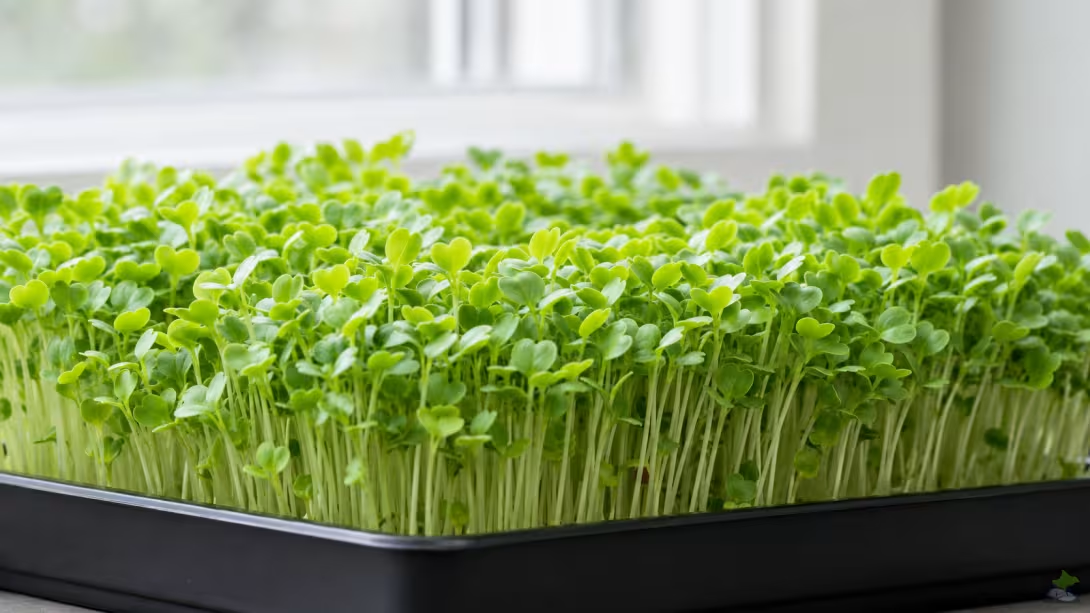
Mustard Microgreens at a Glance: Mustard grows quickly, develops slender seedling stems and—depending on the species and cultivar—has a fresh, distinctly spicy to hot flavour. A uniform crop requires tested seed, repeatable sowing, controlled moisture, sufficient light and consistent hygiene.
Profile
- Botanical classification: commonly Brassica juncea; other mustard species and cultivars are also sold
- Plant family: Brassicas (Brassicaceae)
- Flavour: spicy, peppery to distinctly hot; highly cultivar-dependent
- Growth: rapid, with slender to medium stems and uniform under suitable conditions
- Harvested part: seedling stems and above-ground leaves
- Typical harvest stage: fully expanded cotyledons to the emergence of the first true leaf
- Suitability: well suited to small, documented comparison crops
What Distinguishes Mustard Microgreens
Mustard microgreens are harvested neither for a developed root nor a mature seed. The young above-ground crop is used. Their characteristic heat comes from mustard compounds and their breakdown products, although perception depends on cultivar, developmental stage and preparation.
Green, reddish and finely divided cultivars can differ visibly. Germination speed, stem length, leaf size and yield are not the same for every mustard either. The seed supplier’s information is therefore a starting point that must be checked with your own cultivation trial.
Distinguish Mustard Microgreens from Mustard Sprouts
Sprouts and microgreens are different products. Sprouts are generally grown in very humid conditions and usually eaten whole, including the root and seed residue. Microgreens grow on or in a suitable medium, receive light and are cut above its surface.
The FDA describes the distinction between sprouts and microgreens using characteristics including leaf development and harvesting method. The distinction is also important for hygiene: it does not make microgreens risk-free but requires a workflow appropriate to the crop.
Select Suitable Seed
Use viable, true-to-type seed expressly intended for food or microgreen production. Chemically treated, pelleted or otherwise unsuitably treated seed does not belong in an edible crop. Check package labels and supplier information before sowing.
Record the species, cultivar, supplier, lot, purchase date and storage conditions. Keep seed dry, cool and protected from moisture. Do not mix lots without testing because germination rate, seed weight and development may differ.
Test Germination Before Sowing a Full Tray
A germination test with 50 or 100 counted seeds shows whether a lot is suitable for a larger crop. Place the seeds on clean, moist paper and keep them under suitable conditions. Count normally developed seedlings and note weak, damaged or markedly delayed seedlings separately.
A low germination rate cannot reliably be offset by especially dense sowing. It is more likely to create gaps, different developmental stages and moisture zones that are difficult to manage.
Prepare Trays and Substrate
Shallow, food-safe trays with drainage holes facilitate controlled cultivation. A solid lower tray later enables bottom watering. Trays must be stable, undamaged and easy to clean.
Fine propagation substrates or mats intended for food crops are suitable if they absorb water evenly while allowing air to reach the roots. Fill the material evenly and moisten it uniformly without saturating it. Material already densely rooted is difficult to clean reliably and should not be reused uncritically.
Determine Sowing Density Systematically
Distribute mustard seed evenly without creating large clusters or bare areas. Sowing too sparsely uses space poorly; an overcrowded crop dries slowly, competes more strongly for light and promotes moist areas. A universal weight in grams is unreliable without knowing the cultivar, seed weight, germination rate and internal tray dimensions.
The Penn State Extension Microgreens Seed Density Calculator can provide a numerical guide. For practical production, it remains crucial to document the seed quantity and area actually occupied and change them only gradually.
Sow Repeatably
- Record the inside dimensions and usable growing area.
- Fill and moisten the substrate evenly.
- Weigh a defined quantity of seed.
- Distribute the seed as uniformly as possible.
- Label the tray with cultivar, lot and sowing date.
- Change only one important variable in the next crop cycle.
Control the Germination Phase
Keep the seeds uniformly moist, but do not leave them permanently in free water. A clean lid or second tray can help distribute moisture and gentle pressure during the early phase. Nevertheless, inspect the crop daily.
Remove the cover as soon as the seedlings lift the crop and develop uniformly. Excessive darkness produces unnecessarily elongated, delicate stems. Determine the timing and duration for the mustard cultivar through small comparison trials.
Light and Crop Development
After germination, mustard microgreens need uniform lighting. Insufficient light often produces long, pale, unstable plants. Excessive intensity or insufficient lamp distance, by contrast, can cause heat load, drought stress and leaf damage.
A USDA-documented study of light intensity and quality in Brassica microgreens included mustard and showed that light quantity and spectrum influence growth, morphology and nutrient uptake. This does not establish one universally ideal formula: assess lamp type, distance, lighting duration, temperature and plant response together.
Create Uniform Lighting Conditions
- Position trays at the same height and a comparable distance from the lamp.
- Keep lighting times repeatable with a timer.
- Check edge zones for leaning, paler colour or delayed growth.
- Monitor temperature at plant level, not only elsewhere in the room.
Irrigation and Air Movement
Keep the root environment evenly moist but not waterlogged. Once germination is established, bottom watering generally keeps leaf surfaces drier. Remove excess water; the tray must not remain permanently in a deep layer of water or nutrient solution.
Gentle air movement helps remove moisture and promotes more uniform development. Strong direct airflow dries edge areas. Fans do not replace appropriate spacing, clean trays or correctly dosed irrigation.
Choose Harvest Time by Quality
Harvest according to developmental stage, flavour and crop quality—not solely a fixed number of days. Fully expanded cotyledons, fresh colour and a stable, dry crop are important indicators. Once the first true leaf appears, appearance, texture and heat may vary more noticeably.
Before harvesting, check for unpleasant odours, slimy areas, unusual discolouration or soft tissue. Do not attempt to “rescue” an unusual crop by washing or seasoning it.
Harvest Cleanly
- Clean the work surface, hands, knife or scissors.
- Harvest only a dry crop with no unusual signs.
- Cut above the substrate and avoid contact with it.
- Place the harvest in clean, food-safe containers.
- Document harvest date, lot and unusual observations.
- Use the produce promptly or cool it under controlled conditions.
Hygiene and Food Safety
Microgreens are often eaten raw. Seeds, water, hands, tools, trays and contact surfaces can transmit microorganisms. Clean practice therefore begins before sowing and ends only after harvesting, packaging and cleaning.
Penn State Extension guidance on food safety in microgreen production addresses control of potential contamination sources. USDA research has also examined the transmission and persistence of pathogens through irrigation water in mustard microgreens, among others. Visually clean plants alone are therefore not evidence of microbiological safety.
Distinguish Root Hairs from Problematic Growth
Fine root hairs occur regularly on young roots and may appear less conspicuous immediately after moistening. Irregular webbing on seed and substrate, a musty odour, slimy areas or discoloured tissue are more suggestive of a problem. When in doubt, discard the crop.
Flavour and Use
Mustard microgreens suit salads, sandwiches, egg dishes, pulses, potatoes and vegetable dishes. Their heat can give a dish structure, but should first be tested with a small amount. Heat alters the fresh pungency and delicate texture.
In mixtures, dose mustard according to its actual flavour intensity, not only its colour. Particularly hot cultivars can quickly overwhelm milder components.
Put Nutrients into Perspective
Mustard microgreens can contain vitamins, minerals and phytochemicals. Concentrations nevertheless vary with genetics, light, growing medium, water and nutrient provision, harvest timing and analytical method. Individual study values must therefore not be presented as guaranteed values for every home-grown tray.
Microgreens complement rather than replace a balanced diet. Claims about preventing or treating disease cannot credibly be inferred from one food or a laboratory analysis.
Recognise Common Problems
Uneven germination
Possible causes include a weak lot, unevenly distributed water, varying sowing depth or clusters of seed. Germination testing and documented sowing help distinguish seed problems from cultivation problems.
Long, unstable stems
Insufficient light, excessive darkness, high temperature or an overcrowded crop can promote elongation. Change only one variable at a time so that the effect remains traceable.
Wet, poorly ventilated areas
Waterlogging, uneven trays, excessive sowing density and inadequate air exchange promote problematic zones. Assess affected crops critically and do not eat them if hygiene is in doubt.
Uneven colour or heat
Uneven light distribution, different maturity stages or mixed cultivars can alter colour and flavour. Uniform seed, identical positions and a defined harvest stage improve comparability.
A Documented Initial Trial
A few equally sized trays are sufficient to begin. Give each the same seed lot, substrate and comparable environmental conditions. Change only the seed quantity or one other clearly defined factor between variants.
- Sowing date, cultivar, lot and seed weight
- Tray dimensions and area actually occupied
- Germination rate and timing of covering and uncovering
- Lighting duration, lamp distance and temperature
- Irrigation volume and visible crop response
- Harvest day, fresh weight, flavour and unusual observations
Only when several cycles work reliably under similar conditions should the area, sowing density or technical equipment be enlarged. This turns a single tray into a traceable cultivation process.
Conclusion
Mustard microgreens combine a short growing period, fresh colour and distinctive flavour. Suitable seed, uniform sowing, controlled moisture, appropriate light, air movement and consistent hygiene are crucial.
By starting small, recording measurements and changing only one variable per cycle, the crop can be adapted to the cultivar, room and production objective—without blanket promises about seed quantities, harvest dates or nutrient content.
Further Technical Sources
- Penn State Extension: The ABCs of Microgreens
- Penn State Extension: Ensuring Food Safety in Microgreens Production
- USDA Agricultural Research Service: Light Intensity and Quality in Brassica Microgreens
- USDA Agricultural Research Service: Irrigation Water and Microbial Safety of Microgreens
- FDA: Guidance on Sprouts and the Distinction from Microgreens