
Microgreen-Sorte
Rocket Microgreens
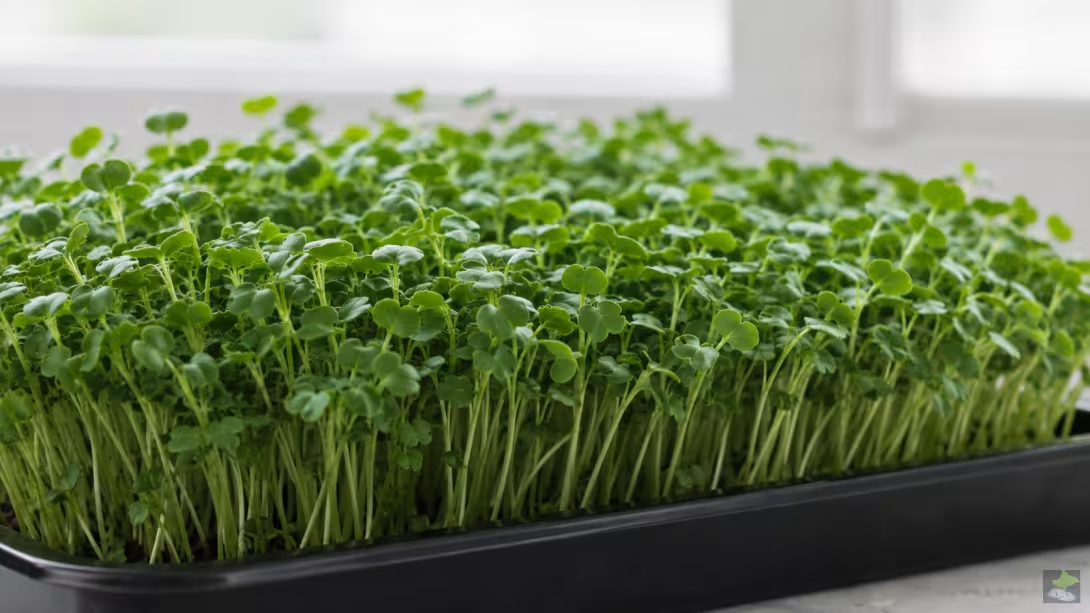
Rocket microgreens combine a spicy, slightly pungent flavour with a short growing period. A reliable crop requires suitable seed, uniform sowing, controlled moisture, appropriate light, air movement and consistent hygiene.
Profile
- Botanical classification: Commercial rocket generally belongs to species in the genera Eruca or Diplotaxis .
- Plant family: Brassicas (Brassicaceae).
- Flavour: spicy, nutty to peppery-hot, depending on species, cultivar and growing conditions.
- Growth: initially slender seedling stems with two cotyledons; the first cultivar-specific true leaves appear later.
- Harvested part: seedling stems, cotyledons and, depending on the desired stage, the emerging first true leaf.
- Suitability: an interesting crop for documented trials once moisture and crop density can be managed reliably.
What Distinguishes Rocket Microgreens
Rocket microgreens are grown from seed of rocket species but harvested much earlier than mature salad rocket or wild rocket. At this stage, the plants have not yet formed a large leaf rosette. The young above-ground crop is harvested just above the growing substrate.
Rocket does not refer to a single cultivar. Salad rocket and wild rocket may differ in seed size, germination, leaf form, pungency and growth rate. A seed supplier’s information must therefore always relate to the specific species, cultivar and lot supplied.
Distinguish Rocket Microgreens from Rocket Sprouts
Sprouts are usually grown in a very humid system and eaten with the root. Microgreens, by contrast, grow on or in a suitable medium, receive light and are cut above its surface. They reach a later developmental stage, often through expansion of the cotyledons or emergence of the first true leaf.
This distinction is also important for hygiene. The US Food and Drug Administration treats microgreens and sprouts as different product groups but notes that microgreens are not automatically risk-free either. Seeds, water, trays, hands, tools and work surfaces can transmit microorganisms.
Select Suitable Seed
Use viable, true-to-type seed expressly intended for food or microgreen production. Chemically treated, pelleted or otherwise unsuitably treated seed does not belong in an edible crop. Check the package label, species and cultivar names and supplier information before sowing.
Record the supplier, species, cultivar, lot number, purchase date and storage conditions. Keep seed dry, cool and protected from moisture. Do not mix lots without testing because germination rate, seed size and development may differ.
Test Germination Before Sowing a Full Tray
A germination test using 50 or 100 counted seeds shows whether a lot is suitable for a larger crop. Place the seeds on clean, moist paper under suitable conditions. Count normally developed seedlings and record weak, damaged or markedly delayed seedlings separately.
A low germination rate cannot reliably be offset by especially dense sowing. This is more likely to cause gaps, different developmental stages and moisture zones that are difficult to control.
Prepare Trays and Substrate
Shallow, food-safe trays with drainage holes facilitate controlled cultivation. A solid lower tray later enables bottom watering. All containers must be stable, undamaged and easy to clean.
Fine propagation substrates or mats intended for food crops are suitable if they absorb water evenly while allowing air to reach the roots. Fill the material evenly and moisten it uniformly without saturating it. Material already densely rooted is difficult to clean reliably and should not be reused uncritically.
Prepare the Growing Area
Clean the growing area before every cycle. Soil from houseplants, pets, splashing water, open waste and unwashed harvest containers do not belong in the immediate production area. Arrange lights and shelves so condensation cannot drip onto the crop.
Determine Sowing Density Systematically
Distribute rocket seed as evenly as possible without large clusters or bare areas. Sowing too sparsely uses space poorly; an overcrowded crop dries more slowly, competes more strongly for light and can form moist, poorly ventilated zones.
General seed-density calculators can provide a starting point but do not replace a species-specific trial. The usable tray area, thousand-seed weight, germination capacity, species, cultivar, growing medium and desired harvest stage are decisive. Record the seed mass used for each lot and adjust it gradually.
Sow Repeatably
- Record the inside dimensions and area actually occupied.
- Fill the growing medium evenly and moisten it uniformly.
- Weigh a defined quantity of seed.
- Distribute the seed uniformly and gently break up clusters.
- Label the tray with species, cultivar, lot and sowing date.
- Change only one important variable in the next cycle.
Control the Germination Phase
Keep the seedbed evenly moist during germination but do not leave it permanently in free water. A clean cover or second tray can help distribute moisture and gentle pressure more evenly. Nevertheless, inspect the crop daily.
Remove the cover once the seedlings lift the crop and develop uniformly. Excessive darkness produces unstable, pale plants and makes the later transition to light more difficult. Unusual odours, slimy areas or discoloured tissue are warning signs, not a normal part of germination.
Observe Moisture Rather Than the Calendar
Rigid time specifications are less reliable than actual development. Temperature, seed lot, seed size, water availability and growing medium alter germination. Uniform emergence, firm growth and a crop without sensory abnormalities are decisive.
Light and Crop Development
After germination, rocket microgreens require uniform light. Insufficient light produces long, unstable stems and pale colour. Excessive intensity, strong heat input or inadequate lamp distance, by contrast, can cause stress and leaf damage.
A stable day–night rhythm and repeatable distances are more important for comparison trials than a blanket maximum amount of light. Make changes to duration, intensity or spectrum individually and record them alongside plant height, colour and density.
Recognise Uneven Elongation
If part of the crop leans markedly towards the light, illumination is uneven. If stems throughout the crop become long and soft, assess light, temperature, sowing density and duration of the dark phase together.
Irrigation and Air Movement
Keep the root environment moist but not permanently saturated. After early germination, bottom watering can help keep leaf surfaces drier. Excess water must not remain in the lower tray for long periods.
Gentle air movement supports moisture removal. Strong direct airflow dries edge areas more rapidly and can cause mechanical stress. The goal is a uniform microclimate without wet pockets or dried-out zones.
Document Irrigation
Record the water volume, time, water temperature and visible moisture status. This helps distinguish whether a problem comes from seed, substrate, irrigation or the indoor climate. Water must be suitable for the intended food crop; do not reuse standing residual water without assessment.
Choose Harvest Time by Developmental Stage
Harvest rocket microgreens when the crop is uniformly developed, sufficiently sturdy and without sensory abnormalities. Depending on species, cultivar and intended use, harvesting can occur with fully expanded cotyledons or the emerging first true leaf.
A later harvest changes leaf texture, pungency, plant height and shelf life. Do not harvest solely according to calendar days. Photograph the specific stage and document it with sowing date, growing conditions and harvest weight.
Harvest Cleanly
- Harvest only dry crops or crops whose surfaces have dried well.
- Clean hands, knife or scissors and harvest containers.
- Cut the plants just above the growing medium.
- Remove substrate, seed coats and damaged plant parts.
- Use the harvested produce promptly or cool it under controlled conditions.
Hygiene and Food Safety
Microgreens are often eaten raw. Clean workflows are therefore part of cultivation, not cosmetic measures applied afterwards. Contaminants may enter through seed or water and then spread via hands, tools, trays and surfaces.
- Use only suitable, clearly traceable seed.
- Use clean trays, tools and harvest containers.
- Protect irrigation water and lines from backflow and contamination.
- Discard entire crops that are diseased, slimy or have an unusual odour.
- Separate the harvest and unwashed production equipment in space or time.
Distinguish Root Hairs from Problematic Growth
Fine root hairs occur regularly on roots and can resemble white fluff, especially after humid periods. Irregular webbing on seed, stems or substrate, unpleasant odours, discolouration and soft tissue, by contrast, indicate a problem. Do not eat uncertain crops.
Flavour and Use
Rocket microgreens add a spicy to peppery note to salads, sandwiches, bowls, spreads and hot dishes. Add them shortly before serving to preserve colour, texture and flavour. Intensity may vary considerably between species, cultivars and harvest stages.
Before using a large amount, conduct a small sensory test. Do not mask unusually hot or bitter portions with seasoning; assess the cultivar, developmental stage, water stress and growing conditions.
Put Nutrients into Perspective
Studies show that rocket microgreens can contain various vitamins, minerals and phytochemicals. Measured concentrations nevertheless depend on genetics, growing medium, light, nutrient supply, harvest timing, storage and analytical method.
An individual laboratory value therefore cannot be applied indiscriminately to every home-grown tray. Rocket microgreens can complement a varied diet but replace neither balanced food choices nor medical treatment. “Superfood” is not a reliable scientific quality category.
Storage Affects Quality
After harvest, respiration, moisture loss and microbial processes continue to change the produce. Studies on post-harvest quality of rocket microgreens show that packaging and storage temperature affect shelf life. For small-scale growing, clean harvesting, prompt use and controlled cooling remain the clearest basic rules.
Common Problems
Uneven germination
Possible causes include weak seed lots, uneven seed distribution, dry or saturated areas and temperature fluctuations. First check the germination test, then moisture distribution and the area actually occupied.
Long, unstable stems
Common causes are insufficient light, an excessively long dark phase, high temperature or overcrowded sowing. Do not change every factor at once. A documented comparison shows which correction actually works.
Wet, poorly ventilated areas
These arise from uneven trays, too much water, dense sowing and inadequate air exchange. Reduce irrigation, check drainage and improve gentle airflow. Do not harvest plants with sensory abnormalities.
Pale or uneven colour
Check light distribution, lamp distance, crop density, temperature and root-zone moisture. Local differences often indicate shade, dry edges or standing water.
A Documented Initial Trial
A few identical trays are sufficient to begin. Use the same seed lot, growing medium and clearly defined seed mass. Keep lamp distance, irrigation method and harvest criterion constant. Change only one variable in a subsequent cycle.
- Species, cultivar, supplier and lot
- Tray size and usable area
- Seed mass and germination rate
- Sowing, lighting and harvest dates
- Irrigation volumes and visible moisture status
- Temperature, unusual observations and harvest outcome
Only once several cycles work reliably under similar conditions should sowing density or production area be increased substantially. This turns a single tray into a repeatable process rather than a chance snapshot.
Conclusion
Rocket microgreens are an aromatic crop whose quality depends on more than rapid germination. Suitable seed, even distribution, controlled moisture, sufficient light, gentle air movement and consistent hygiene form the shared foundation.
Starting small, documenting measurements and observations and changing only one important variable per cycle allows the crop to be adapted to the cultivar, room and production objective—without blanket promises about seed quantity, harvest date or nutrient content.