
Microgreen-Sorte
Radish Microgreens
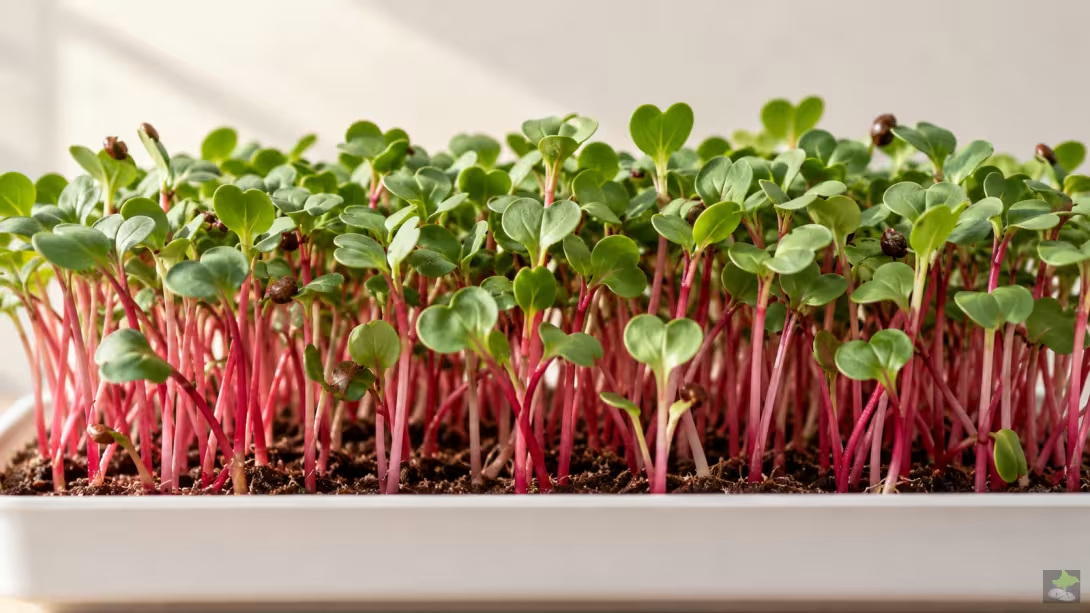
Radish microgreens are the young shoots of Raphanus sativus, harvested above the growing medium. They belong to the crucifer family and have a distinctly hot, spicy flavour.
Variety profile
- Botanical name: Raphanus sativus
- Typical growing time: 6–10 days
- Difficulty: easy
- Flavour: distinctly hot and spicy
Seeds and preparation
Sow untreated seeds dry and distribute them evenly; soaking is generally unnecessary. Use only untreated, viable seeds intended for producing edible sprouts or microgreens. A small germination test before the main sowing saves space and reveals differences between seed lots.
Sowing and germination
A clean, shallow tray with drainage and a separate catch tray make cultivation easier. Moisten the growing medium evenly without leaving standing water. Distribute the seeds as closely as possible without layering them on top of one another. During the covered germination phase, check odour, moisture and seedling development every day.
Light, water and crop management
Radish germinates quickly and is well suited to initial trials. A short blackout phase promotes an even crop, after which bright light encourages compact stems. Once the cotyledons are upright, provide bright, uniform light. Watering from below is preferable; drain off any excess water. Allow the surface to dry slightly between waterings.
Harvesting and use
Harvest with clean scissors just above the growing medium when the cotyledons are fully open and the shoots are dry. Remove unused seed hulls and damaged plants. The young shoots work particularly well on bread, in bowls and salads, and as a garnish for savoury dishes. Add them just before serving.
Putting nutrients into perspective
The pungency is characteristic of the variety. Nutrient levels vary with the cultivar, light, substrate and harvest time. More generally, the variety, seed lot, light, temperature, irrigation and age at harvest all affect composition. This information is not a substitute for laboratory analysis or medical advice.
Hygiene and common problems
Dense crops in warm, humid conditions can encourage plant diseases and undesirable microorganisms. Keep hands, trays and tools clean, use drinking-quality water only and do not consume any suspect batch. Common problems include patchy germination, long pale stems, adhering seed hulls and mould. Adjust seeding density, air movement, light and moisture only gradually, documenting each change.
Conclusion
Radish microgreens broaden the selection with a distinctive flavour characteristic of the crop. A germination test for each seed lot, clean bottom watering and a documented harvest window allow the variety to be assessed reliably.