Kale
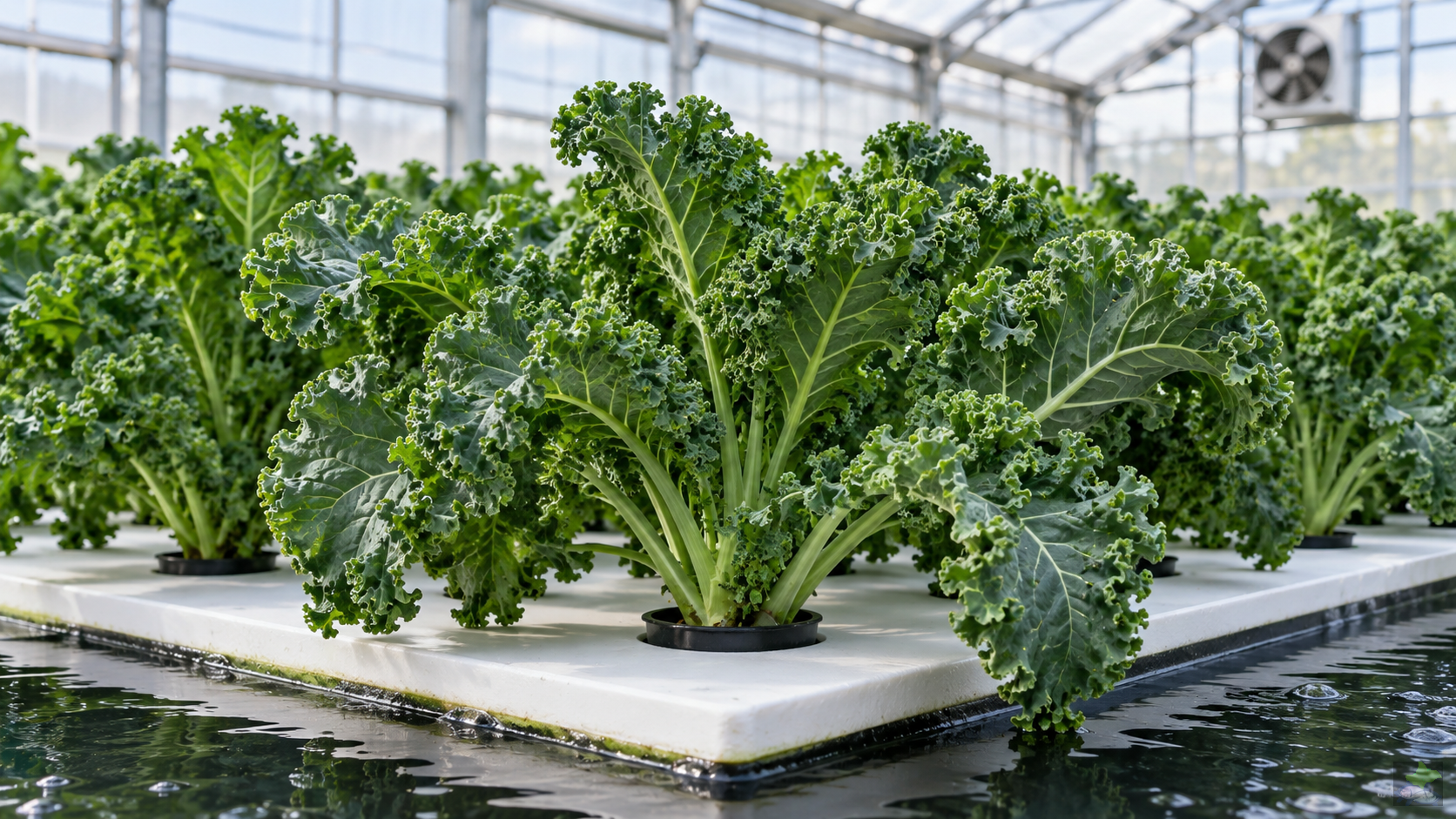
Brassica oleracea var. sabellica is suitable for hydroponic self-sufficiency in DWC, NFT or substrate systems.
Why this crop is worthwhile
Kale is a cold-tolerant leafy crop with a longer production period. The question is not only whether a plant grows hydroponically, but also whether its edible proportion, growing time, light requirements, workload and storage life suit the household.
System and root space
DWC, NFT or substrate is recommended. The root zone must remain evenly moist, well aerated and protected from light. Record the source water and nutrient solution; returns, pipes and reservoirs must remain accessible and easy to clean.
Relevant system pages: Deep Water Culture (DWC) · Nutrient Film Technique (NFT)
pH, EC and climate
A cautious starting range is pH 5.8–6.5 and EC 1.6–2.4 mS/cm at 10–21 °C. These are not universal target values: the cultivar, age, light, source water, temperature, measurement method and growth stage may require adjustments.
Sowing and crop management
Allow more root and leaf space than for lettuce harvested young. Run a small preliminary trial to check germination and behaviour in the system. Space plants approximately 25–40 cm apart and regularly inspect root health, leaf colour, pests and even water distribution.
Harvesting and storage
Harvest the lower leaves continuously. For storage, refrigerate, blanch or freeze. Process only healthy, clean plant material and follow the food-hygiene requirements of the chosen preservation method.
Troubleshooting
- Long, soft plants: Check light levels, spacing and temperature.
- Leaf-edge damage or chlorosis: Check not only EC, but also pH, water hardness and the nutrient formulation.
- Brown roots: Investigate temperature, oxygen, hygiene and waterlogging.
- Uneven yields: Compare flow, emitters, plant spacing and cultivars.