
Aquaponiksysteme · Partial Loop
Partially Coupled Aquaponics System
Stabiler Fisch-Hauptumlauf mit regelbarem Pflanzen-Nebenstrom und kontrollierter Rückführung.
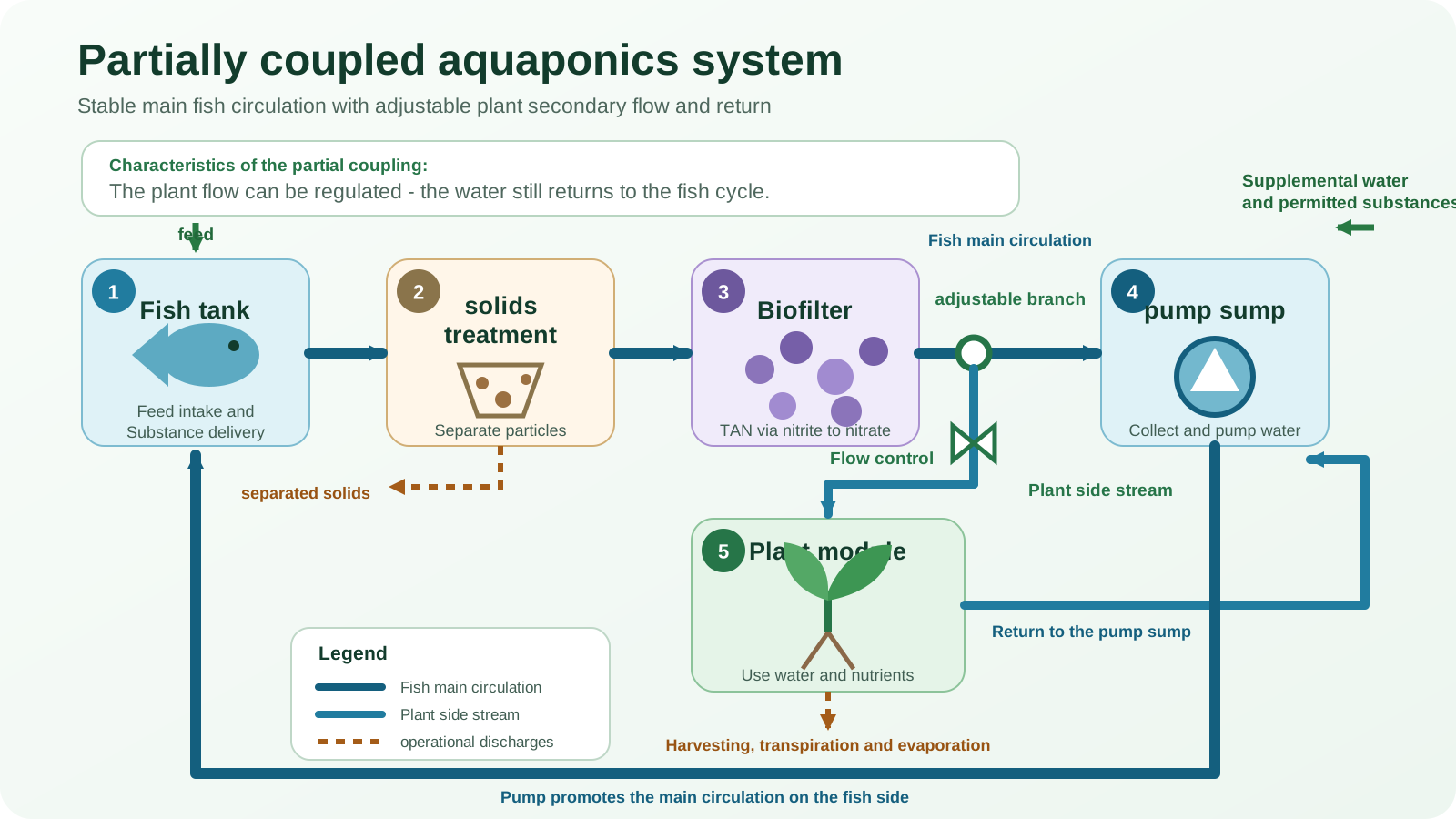
Clearly define system architecture
What is a semi-coupled aquaponics system?
A partially coupled aquaponics system combines an independent main circulation for fish farming with an adjustable plant-side secondary flow. Only a fixed proportion of the treated water is directed to the plant area. After use in the plant module, this water returns to the fish cycle.
Hydraulically coupled
The return remains intact
Fish and plant areas continue to be connected by a common body of water. Water from the plant area is not permanently removed from the system, but is returned to the fish cycle in a controlled manner.
Hydraulically divided
Main stream and secondary stream fulfill different tasks
The main stream ensures the circulation, solids treatment, biofiltration and oxygen supply required for fish farming. The plant area receives a branched-off and controllable partial stream.
01
main circulation
The fish cycle continues to work safely even if the plant side stream is throttled, temporarily switched off or maintained. Its minimum funding must therefore not depend on the water consumption of the plant module.
02
Controllable bypass flow
Valves, distributors or speed-controlled pumps determine which volume flow reaches the plant area. The root space, plant module, irrigation strategy, oxygen supply and intended hydraulic residence time are decisive.
03
Common water supply
Although not all of the water flows through the plant area on each cycle, return water, supplements, and operational interventions continue to influence the overall system. A complete independent optimization of both production areas is therefore not possible.
Organize secondary flow in a controlled manner
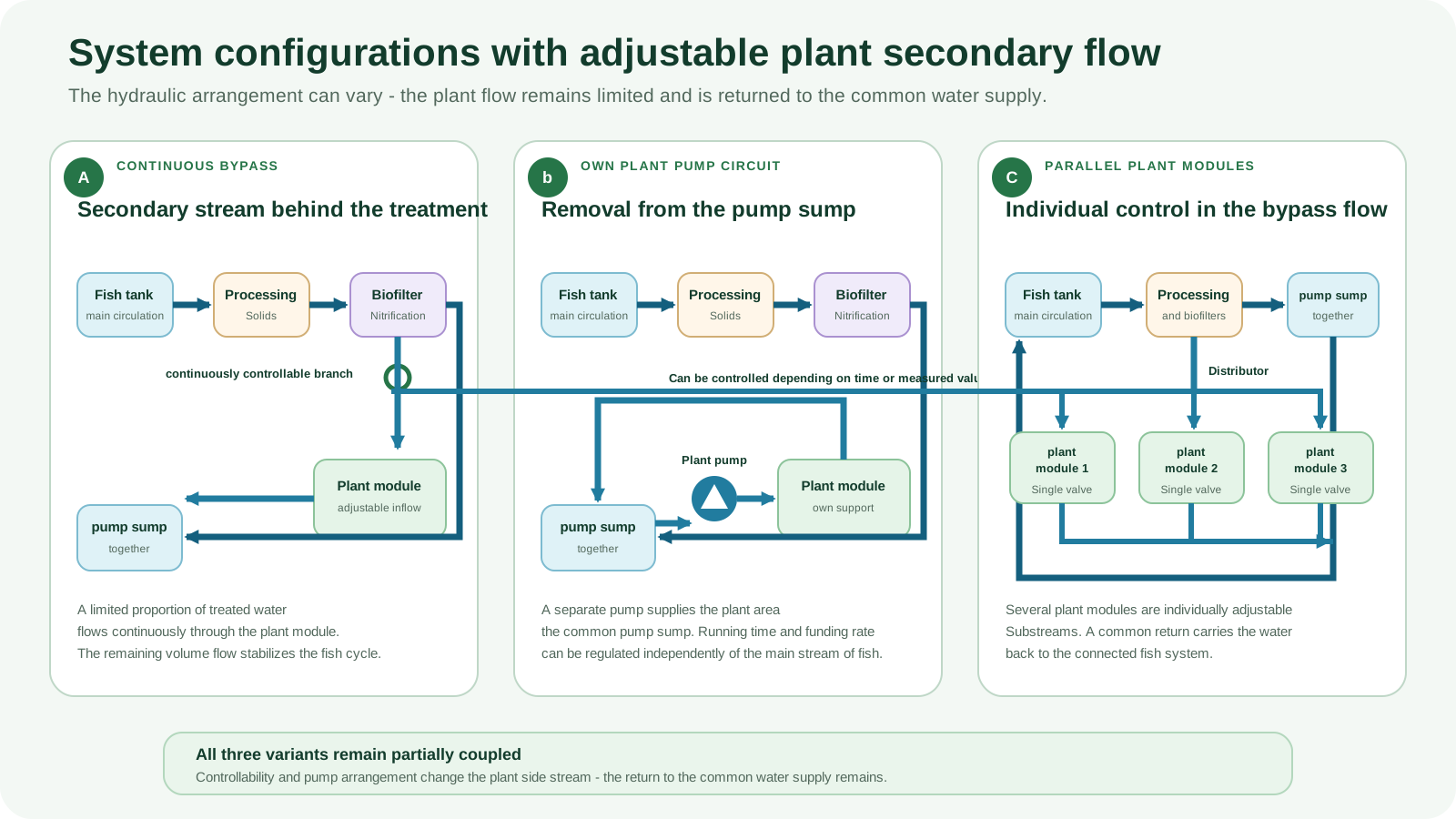
Possible system configurations with adjustable bypass flow
The specific pipe routing can vary. However, all variants described here have a viable main fish circulation, a controlled branch to the plant area and a defined return.
A
Secondary stream after central water treatment
Part of the mechanically and biologically treated water is diverted behind solid filters and biofilters to the plant area. The remaining volume flow flows directly back to the fish area.
This arrangement protects sensitive root areas from an unnecessarily high solids load and maintains central biofiltration regardless of plant operation.
b
Parallel plant line with its own feed pump
The main circulation and the plant line have separate pumps or separately controlled pump groups. Both obtain water from a common collection or clear water area.
This allows the flow and operating time of the plant module to be changed without directly reducing the necessary turnover in the fish and biofilter area.
C
Several plant modules on one distributor
The side stream is distributed over several parallel plant modules. Each branch requires an adjustable flow limitation and a controllable return.
The sum of the partial flows must not fall below the minimum volume flow required for the main fish circulation.
D
Temporary or demand-dependent secondary power
The plant area can be irrigated at set watering intervals or depending on water level, temperature and plant needs. Meanwhile, the main fish circuit remains in continuous operation.
Timing control does not replace hydraulic design. Standstill, oxygen depletion, heating and deposits in pipes or root areas must be taken into account.
Balance water and substances separately
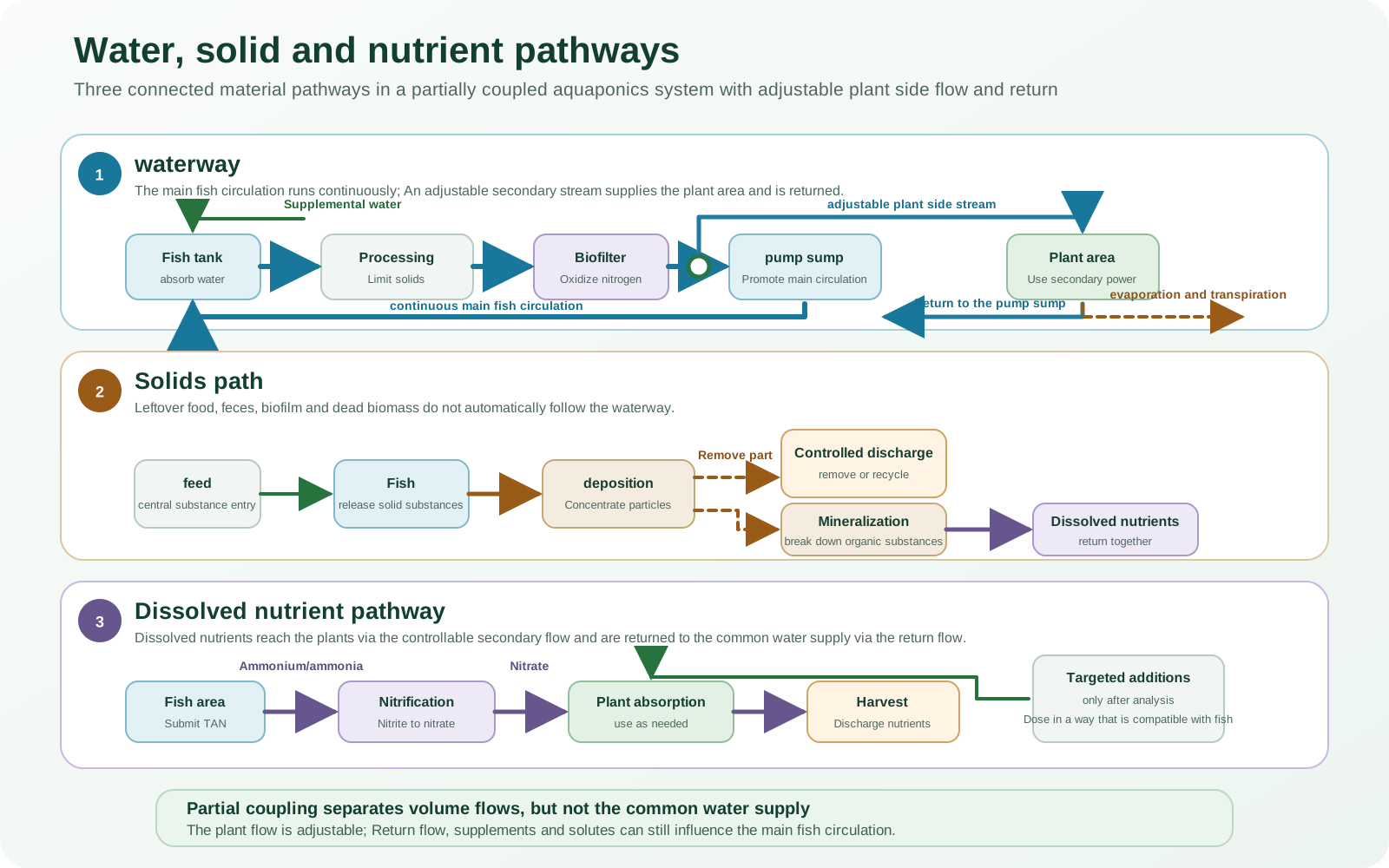
Water, solid and nutrient pathway
The division of water flow does not change the fundamental distinction between water circulation, solids transport, and dissolved nutrient flows.
01
Waterway in the main circulation
The larger or safety-relevant portion of the water circulates between the fish tank, solids treatment, biofilter, oxygen input and return pumping. This route must meet the requirements of fish farming even without an active plant strand.
02
Waterway in the side stream
A defined portion of the treated water is directed to the plant area. There are additional pressure losses, residence times, water losses and possible changes in temperature, oxygen content and chemical composition.
03
Solids path
Feces, leftover food, biofilm and dead biomass do not automatically follow the dissolved nutrient pathway. The largest possible proportion of the settleable solids is separated in front of sensitive pipes and plant modules. Separated solids are removed, recycled separately or mineralized in a controlled manner.
04
Dissolved nutrient pathway
Dissolved nitrogen compounds and other ions are distributed with the water throughout the entire system. The plants only take the portion that actually reaches their roots and is available under the existing conditions. The remaining portion remains in the water, is converted biologically or removed through harvesting and operational output.
Measurand
main stream
The real volume flow in the fish and filter circuit must be determined separately. A pump characteristic curve alone proves neither the actual throughput nor sufficient circulation.
Measurand
side stream
The flow to the plant area is measured at the junction or per plant strand. This is the only way to comprehensibly evaluate the hydraulic residence time, distribution and return flow.
Balance sheet size
Entries and exits
Feed, supplemental water and permitted additives are offset by fish biomass, plant biomass, separated solids, evaporation, transpiration and other controlled discharges.
Independently ensure fish-side water treatment
Biofilter and nitrification
The biofilter is designed according to the nitrogen load on the fish. The size of the plant side stream is no substitute for a sufficiently dimensioned and oxygen-supplied biofilter performance.
Step 1
TAN is created in the fish sector
Fish release reduced nitrogen into the water through gills and excretions. Together with the breakdown of nitrogen-containing solids, all ammoniacal nitrogen TAN is formed from ammonium and uncharged ammonia.
With increasing pH and temperature, the proportion of NH, which is more toxic to fish, decreases3 to. Therefore, neither the TAN value nor the amount of bypass flow alone is sufficient for risk assessment.
Step 2
Ammonia oxidation forms nitrite
Ammonia-oxidizing microorganisms oxidize reduced nitrogen compounds to nitrite. This reaction requires suitable colonization areas, oxygen and sufficient alkalinity.
Nitrite is also critical for fish. An increase indicates that load, oxygen supply, biofilter capacity or break-in status are not sufficiently coordinated.
Step 3
Nitrite oxidation forms nitrate
Nitrite-oxidizing microorganisms, including representatives of the genus in many plants Nitrospira, nitrite further oxidizes to nitrate. Nitrate is less acutely toxic to many fish species than TAN or nitrite, but can accumulate in the common water supply.
Plant uptake can remove some of the nitrate. However, their effect depends on plant mass, culture condition, secondary stream, temperature, light and other nutrients.
Design the biofilter according to peak load
The basis for assessment is feed rate, protein content, fish biomass, temperature, expected TAN load and the performance of the biofilter process used. The plant area may not be used as a mathematical substitute for assured nitrification capacity.
Provide oxygen and alkalinity
Nitrification consumes oxygen and acid capacity. Dissolved oxygen, pH and alkalinity must therefore be monitored at appropriate points and stabilized in a controlled manner if necessary.
Biological load and hydraulics are dimensioned separately
Interpretation of feed rate and biological load
A partially coupled system is not designed using a general ratio between fish tank, plant area and secondary stream. The biological load on the fish determines the water treatment required; The plant module also receives its own hydraulic dimensioning.
Planning step 1
Determine fish species and production target
Fish species, size class, stocking, target weight, water temperature and production time determine feed intake, oxygen requirements and sensitivity to water quality deviations.
Planning step 2
Determine the maximum daily feeding rate
The highest daily amount of feed that can realistically be expected is the central operational load factor. It must not be derived solely from the starting biomass, but must take into account the planned production process.
Planning step 3
Estimate TAN, solids and oxygen load
Protein content, digestibility, feed intake and metabolism influence the nitrogen load. Uneaten food, feces and biofilm determine the particulate load. Fish and microorganisms simultaneously create a significant need for oxygen.
Planning step 4
Dimension the main fish circulation
Pumps, solids treatment, biofilters, ventilation, pipes and return flow are dimensioned so that fish farming can be operated safely even when the plant secondary flow is reduced or switched off.
Planning step 5
Determine plant side stream separately
The required secondary flow depends on the plant module, root area, irrigation method, hydraulic residence time, oxygen supply, temperature and permissible solids load. A fixed percentage of pump current is not a resilient design.
Planning step 6
Measure both currents in real operation
Main flow, secondary flow and individual distribution lines are measured under real delivery head. Filter contamination, root growth, valve positions and fluctuating water levels can significantly change the distribution.
Document separately for interpretation
- maximum daily feed amount and expected fish biomass,
- calculated TAN and solids freight,
- required biofilter and oxygen performance,
- Minimum volume flow of the main fish circulation,
- planned and measured plant side stream,
- pressure loss and head of each hydraulic path,
- return capacity, overflow routes and minimum water levels,
- Behavior when the plant strand is switched off or blocked.
Balance controllability against additional complexity
Operational goal conflicts
The hydraulic partial coupling creates more control options than a completely continuous circuit. However, because the water is returned, biological and chemical interactions between fish and plant areas remain.
Adjustable plant flow – additional monitoring required
The side stream can be adjusted to the plant module and crop condition. At the same time, additional valves, distributors, measuring points and possible misalignments arise.
Stable fish circulation – limited plant treatment
The main fish circulation remains hydraulically stable when the plant line is changed. However, plant treatments are only permitted if recycled substances for fish, biofilters and food production are acceptable.
Lower solids load – possible nutrient losses
Effective pre-separation protects pipes and roots. If solids are completely removed and not mineralized in a controlled manner, plant nutrients bound in them are lost from internal use.
Flexible operating hours – risk of stagnation
A temporarily operated secondary stream can adjust irrigation and energy use. However, prolonged downtime can promote oxygen depletion, heating, deposits and undesirable microbial changes.
Multiple plant branches – uneven distribution
Parallel modules increase expandability and maintenance flexibility. Without hydraulic balancing, low-resistance branches often receive more water than more distant or more heavily loaded pipes.
Common water stock – common disturbance
Dividing the volume flow does not separate the water chemistry. Return water can affect temperature, pH, oxygen, nutrient concentration and undesirable substances in the overall system.
Consider feedback with every addition
Nutrient management and acceptable supplements
The adjustable bypass flow improves hydraulic control, but does not create a chemically independent plant cycle. Supplements in the plant area can reach the fish, the biofilter and the entire water supply with the return flow.
01
Lining remains the central material input
Fish feed provides the largest predictable nutrient input. Only some of the contained elements are bound in fish biomass; Other components enter the water in dissolved or particulate form.
02
Treat solids in a controlled manner
Separated solids may contain nutrients, but must not remain uncontrolled in pipes or root spaces. Removal, separate recovery or monitored mineralization will be planned as a separate process.
03
Determine nutrient deficiencies through analysis
Plant symptoms alone do not allow a clear diagnosis. Water analysis, leaf or tissue examination, pH, temperature, oxygen, alkalinity and possible ionic interactions must be evaluated together.
04
Select supplements that are compatible with fish
In coupled systems, iron, potassium or calcium are often supplemented as needed. Material form, purity, dosage, accompanying ions and possible accumulation must be suitable for the fish species, biofilter, plants and food production.
05
Take the dosing point and return path into account
Addition to the plant side stream may limit the immediate concentration peak spatially, but does not prevent later distribution in the overall system. Dosing point, mixing and return time are documented.
06
Evaluate trends instead of individual values
Plant removal, feed changes, harvesting, water supplementation and seasonal evaporation alter concentrations. Repeated measurements under comparable conditions are more meaningful than an isolated laboratory value.
Monitor common water stocks professionally
Water quality and species-specific target areas
A partially coupled system allows different flows, but no separate temperature, pH or salt ranges. Target and intervention values are therefore derived from fish species, crop production, biofilter, water source and operational safety reserve.
Consider pH and alkalinity together
pH influences nutrient availability, nitrification and NH3-Share. Alkalinity describes an important part of the buffer capacity. A seemingly suitable pH can drop rapidly when buffering is exhausted.
Set temperature according to species combination
Temperature affects fish metabolism, feed intake, plant development, microbial activity and oxygen solubility. The side stream cannot permanently keep strong thermal differences away from the fish cycle.
Measure oxygen at multiple points
Dissolved oxygen is assessed in the fish tank, after heavily loaded filters, in the plant area and, if necessary, in the return line. Particularly unfavorable times of day are more important than individual measurements under ideal conditions.
TAN and NH3 differentiate
TAN includes ammonium and uncharged ammonia. The toxicologically important NH3-Proportion depends in particular on pH and temperature. The same TAN value can therefore represent different risks.
Evaluate nitrite on a species-specific basis
Nitrite impairs oxygen transport in fish. The sensitivity and possible protective effects of chloride differ depending on the fish species and water chemistry. An increasing trend requires a root cause analysis.
Specify nitrate with a clear reference form
Nitrate levels can be expressed as NO3− or as NO3-N can be specified. These details are not identical. Every documentation must clearly state the unit and reference form.
| group of fish | Temperature orientation | Oxygen orientation | Importance for the side stream |
|---|---|---|---|
| Tilapia and other warm water fish | Often around 25-30°C for good growth; Check species, strain and production target. | Ensure consistently high supply; Values around 4 mg/l are only a lower guideline and not a desired safety reserve. | Take into account warm returns, oxygen depletion in root areas and night-time stress. |
| Carp-like warm to transitional water fish | Broad species-specific range; Do not derive production optimum from the mere tolerance range. | Plan reserves for high biomass, feeding, warm periods and filter load. | Select plant crops based on the actual water temperature. |
| Trout-like cold-water fish | Often around 12-18°C; Pay attention to the specific type, size class and production goal. | High demand; usually aim for more than 6 mg/l and take temperature dependence into account. | Bypass flow and return must not cause critical heating or unnecessary oxygen consumption. |
Frequently or continuously
- temperature and dissolved oxygen,
- water level and pump function,
- main and secondary stream,
- Fish behavior and feed intake,
- visible return and distribution problems.
Regularly and after changes in load
- pH and alkalinity,
- TAN and calculated NH3-share,
- Nitrite and nitrate with a clear reference form,
- Solids accumulation and filter condition,
- Root condition and plant development.
Additionally depending on the occasion
- Potassium, calcium, iron and other nutrients,
- Hardness, sodium, chloride and water source parameters,
- microbiological investigations for biosafety issues,
- Calibration and plausibility check of the sensors,
- Laboratory analysis for recurring unexplained problems.
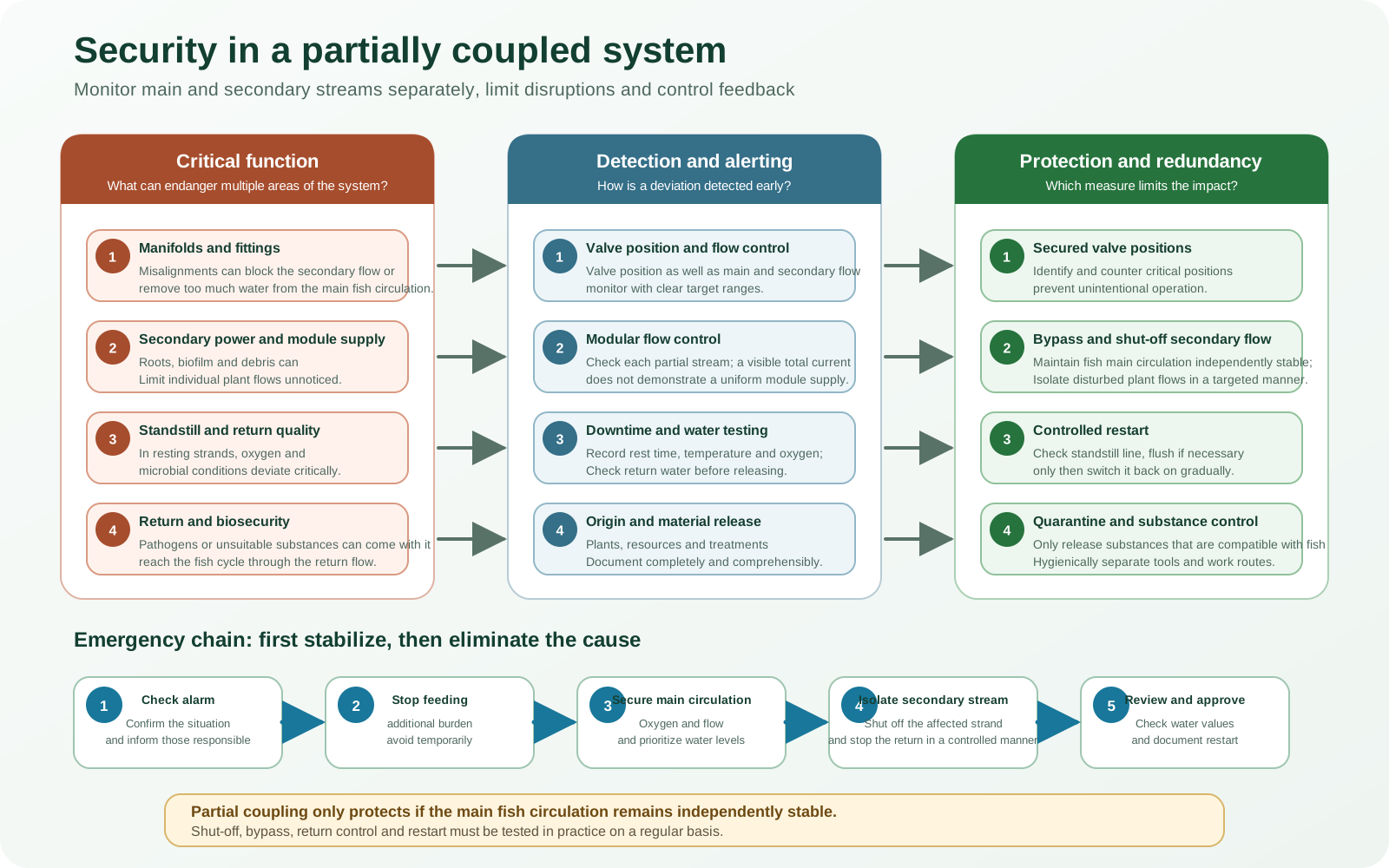
Monitor main and secondary streams separately
Incidents, biosecurity and redundancy
The additional hydraulic branching creates its own sources of error. Disturbances in the plant side stream must not impair the safe main circulation of fish unnoticed; Return water can still introduce biological or chemical problems into the overall system.
01
Misalignment or failure on the distributor
Closed, adjusted or blocked fittings can interrupt the secondary flow or remove too much water from the main fish circulation. Critical valve positions are marked and secured against unintentional operation.
02
Congestion and uneven plant flows
Roots, biofilm, solids and debris can put more strain on individual pipes than others. A visible total current therefore does not prove that all plant modules are supplied evenly.
03
Stagnation in the temporarily operated side stream
During longer shutdowns, oxygen content, temperature and microbial conditions may differ from the main circulation. Before the return, the water quality that has developed in the stationary line is taken into account.
04
Backflow and accidental emptying
Differences in height, pump stoppages or defective non-return and shut-off devices can cause backflow, overflow or emptying. Safe overflow routes and minimum water levels are determined constructively.
| Critical function | Early detection | Hedging |
|---|---|---|
| Ventilation and energy | Monitor power failure, airflow and dissolved oxygen at critical points. | Provide independent emergency ventilation and tested replacement energy for fish protection. |
| Fish main circulation | Capture flow, pump status, water level, overflow and unusual level changes. | Have a spare pump, accessible bypass, dry running protection and safe waterways available. |
| Plant side stream | Check flow per distributor or branch as well as return and root condition. | Design the secondary stream to be shut off without interrupting the necessary fish circulation. |
| Water quality and biofilters | Track TAN, nitrite, pH, alkalinity, temperature and oxygen with documented control limits. | Reduce or stop feeding, provide additional ventilation and eliminate the cause under controlled conditions. |
| Biosecurity | Document fish behavior, plant condition, origin of stock and plants as well as operational events. | Apply quarantine, separate tools, regulated work routes and controlled introduction of new organisms. |
Emergency chain: first stabilize, then eliminate the cause
- Acknowledge alarm or observation and determine affected system areas.
- Temporarily stop feeding if water quality or oxygen levels are unclear.
- Prioritize main fish circulation, oxygen supply and minimum water levels.
- Shut off faulty secondary flow or take it out of operation in a controlled manner.
- Check water parameters and fish condition before backed-up water is reintroduced.
- Eliminate the cause, restore function in a controlled manner and document the event.
Evaluate controllability realistically
Advantages and limitations
The partially coupled system can reduce the hydraulic dependency between fish and plant areas. However, it does not eliminate the common water chemistry and the feedback of plant return.
Possible benefits
- The main fish circulation can be kept stable regardless of short-term changes in the plant flow.
- The flow to the plant area can be adjusted to the module, crop condition and hydraulic requirements.
- Plant modules can be closed off for maintenance or harvesting without stopping the entire fish cycle.
- Mechanical and biological water treatment can be prioritized centrally and on the fish side.
- Parallel plant branches allow the cultivation area to be gradually expanded.
- Sensitive root areas can be better protected from coarse and settleable solids.
Limits and additional requirements
- Fish and plant areas continue to share water, temperature, pH and solutes.
- Additional pumps, valves, distributors and measuring points increase investment and maintenance costs.
- Incorrect valve positions can change the main or secondary flow unnoticed.
- A small side stream can limit the uptake and nutrient removal of the plants.
- Stopped pipes or plant modules can promote oxygen depletion and undesirable microbial changes.
- Supplements and treatments remain limited by fish tolerance and repatriation.
Determine the area of application before detailed planning
Suitability and selection aid
Partially coupled systems are suitable if a common water supply is desired, but the plant area needs to be operated more hydraulically and more maintenance-friendly than in a completely continuous circuit.
Well suited
Fish production with stable main circulation
Fish farming should continue even when harvesting, cleaning or converting individual plant modules without interrupting essential water treatment.
Well suited
Multiple parallel plant modules
Different plant areas should be individually throttled, closed off or gradually expanded, while the central fish and filter area remains.
Conditionally suitable
Different watering times
Intermittent operation is possible, but requires an assessment of stagnation, oxygen consumption, return quality, overflow paths and restart.
Conditionally suitable
Strongly changing plant area
The bypass flow can be adjusted. However, nutrient concentration, water chemistry and stress on the fish do not automatically change in the appropriate proportions.
Less suitable
Separate pH and nutrient management
If plants and fish are to be operated with significantly different chemical target ranges, a controllable side stream is not sufficient.
Less suitable
One-way transfer without return
If no return from the plant area is planned, this is a different system architecture and not the partially coupled system defined here.
Answer before choosing
- Should plant water return to the fish after use?
- Can the main fish circulation continue to operate safely without an active plant strand?
- What minimum flow rates do fish tanks, filters and plant modules require?
- How are the main stream, side stream and individual plant branches measured?
- Which valve positions or pump failures can endanger fish circulation?
- How is water from a stationary plant strand evaluated before being returned?
- Are supplements and treatments suitable for later regression?
- Are separate chemical targets required requiring decoupling?
Distinguish system architecture and plant module
Connect to media bed, NFT, DWC and vertical plant modules
Media bed, NFT, DWC and vertical plant systems describe the plant-side cultivation method. They do not alone determine whether an aquaponics system is fully coupled, partially coupled or decoupled.
01
Media bed
The substrate influences water storage, solids retention, root aeration and hydraulic resistance. In the side stream, overflow, blockage and time-dependent flow changes must be taken into account.
Detailed hydroponics specialist page follows
02
NFT
NFT channels are sensitive to pump failure, uneven distribution, root ingrowth and solids. An adjustable, well-filtered bypass flow can improve hydraulic control.
Detailed hydroponics specialist page follows
03
DWC
DWC requires sufficient oxygen in the root area and water movement that matches the shape of the pool. Secondary flow, pool volume and hydraulic retention time are planned together.
Detailed hydroponics specialist page follows
04
Vertical plant modules
Differences in height, pressure distribution, return flow, risk of leakage and uneven supply become particularly important in vertical modules.
Detailed hydroponics specialist page follows
Compare all five system architectures
Does this aquaponics system fit your system?
Compare the water flow, controllability, technical complexity and typical operating conditions of all five system architectures.
Compare all five aquaponics systemsTechnical basis and conceptual boundaries
Specialist sources
The sources cover coupled and decoupled aquaponics, parallel processing, water treatment, nitrification and system design. The term “partially coupled” is used on this page as a clearly defined Vida-Vertical order term.
- Somerville, C. et al.: Small-scale aquaponic food production – Integrated fish and plant farming. FAO Fisheries and Aquaculture Technical Paper No. 589, 2014.
- Goddek, S. et al.: Navigating towards Decoupled Aquaponic Systems: A System Dynamics Design Approach. Water, 2016.
- Tetreault, J.; Fogle, R.L.; Guerdat, T.: Scalable coupled aquaponics design: Lettuce and tilapia production using a parallel unit process approach. Frontiers in Sustainable Food Systems, 2023.
- Fogarty, S.: Coupled aquaponics: Optimizing hydraulic retention times using a parallel unit process water treatment approach. Frontiers in Horticulture, 2023.
- Palm, H. W. et al.: Towards commercial aquaponics: a review of systems, designs, scales and nomenclature. Aquaculture International, 2018.
- Mohapatra, B.C. et al.: Design and development of a portable and streamlined nutrient film technique aquaponic system. Aquacultural Engineering, 2020.
- Nishanth, D. et al.: Current technologies for nutrient recovery in aquaponic systems: a review. Frontiers in Sustainable Food Systems, 2025.