
CHAPTER 04 · 8 MIN READ
Nutrients of Concern in Vegan Diets
Evidence-Based Analysis and Supplementation Strategies
Section: Health | Vida Vertical
Summary
Public debate frequently questions whether vegan diets can provide adequate nutrition without animal products. This article assesses four central concerns—protein, vitamin B12, essential fatty acids and minerals—in light of the evidence. The analysis shows that a well-planned plant-based diet can meet most nutritional requirements, while vitamin B12 requires targeted supplementation and long-chain omega-3 fatty acids may also warrant particular attention. The final section considers how controlled plant production in vertical and aquaponic systems can support a sustainable, micronutrient-rich food supply.
1. Introduction
Plant-based diets have gained considerable importance in recent years. At the same time, persistent assumptions portray vegan diets as nutritionally inadequate. Some concerns lack a scientific basis; others identify genuine gaps that require a deliberate response.
The German Nutrition Society (DGE) recommends a daily protein intake of 0.8 g per kilogram of body weight for the general adult population. This recommendation applies across dietary patterns and can readily be met with a balanced plant-based diet. The relevant question is therefore not whether a vegan diet can meet nutritional requirements, but how to ensure that it does so reliably.
2. Protein Provision: Myth and Reality
2.1 Physiological Function
Proteins consist of amino acids and are fundamental building blocks of all body cells. They contribute to muscle formation and to the maintenance of connective tissue, tendons, hair and nails. They also act in metabolic signalling and as structural components of immune defence (Lemon, 2000).
2.2 Protein Quality and the Principle of Complementarity
Protein quality describes the extent to which the amino acids in dietary protein can be converted into the body’s own proteins. Individual plant sources often have a limiting amino acid profile. Deliberately combining different sources—particularly wholegrain cereals with legumes—can substantially improve the overall amino acid profile and bring protein quality closer to that of animal proteins.
2.3 Overview of Plant Protein Sources
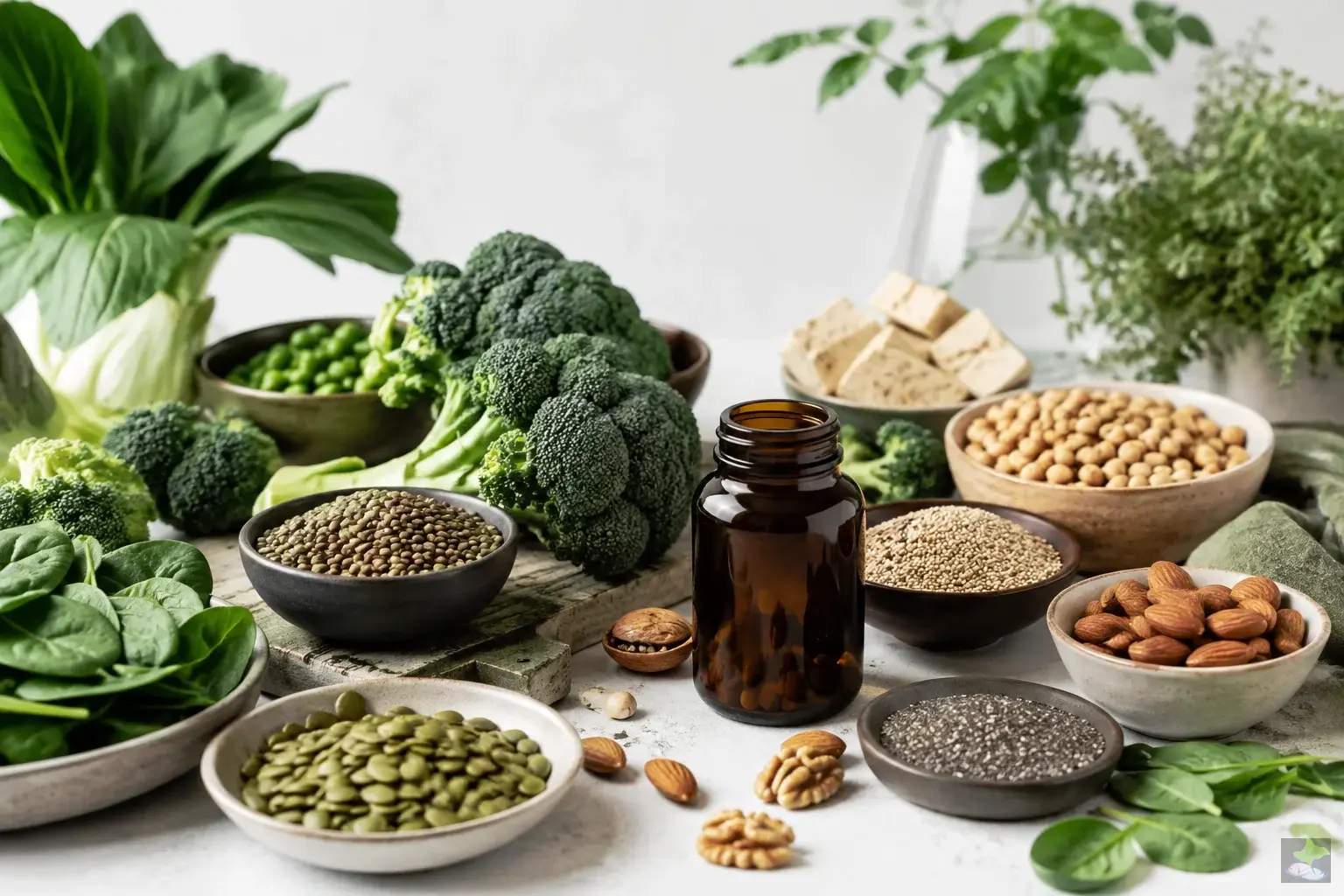
Legumes provide the essential amino acid lysine, which is important for muscle-protein synthesis and numerous physiological processes. Lentils, peas, chickpeas, beans and soy products such as tofu and tempeh form the backbone of plant-based protein intake.
Cereals and pseudocereals provide protein alongside complex carbohydrates that promote lasting satiety. Spelt, quinoa, brown rice, oats and wholegrain products are especially useful examples.
Seeds and nuts combine a high protein content with unsaturated fatty acids, vitamins and minerals. Flax, chia, hemp and pumpkin seeds, together with walnuts, cashews, almonds, pistachios, hazelnuts and peanuts, broaden the protein supply.
The claim that people following vegan diets cannot meet their protein requirements is not supported by the evidence. With sufficient energy intake, variety and appropriate food choices, plant sources can also meet higher protein needs.
3. Vitamin B12: The Genuinely Critical Nutrient
3.1 Physiological Function and Requirements
Vitamin B12 (cobalamin) is a water-soluble vitamin essential for normal nervous-system function. It is also involved in amino acid metabolism, red-blood-cell formation, cell division and differentiation.
The DGE recommends an adequate intake of 4.0 micrograms per day for adults. Reference values differ for infants, pregnancy and breastfeeding and should be checked against current professional guidance.
3.2 Signs of Deficiency
Chronic deficiency can alter the blood count and cause megaloblastic anaemia. Other possible effects include fatigue, weakness, sensory disturbances and neurological damage, which may become irreversible if deficiency is prolonged.
3.3 Vitamin B12 Provision in Vegan Diets
Very few plant foods provide reliable amounts of biologically active vitamin B12. Fermented products and certain algae may contain traces or inactive analogues, but they are not dependable sources for meeting requirements.
Vitamin B12 is produced by microorganisms rather than by animals themselves. Because reliable food sources are absent from an unfortified vegan diet, regular intake through fortified foods or supplements is essential.
3.4 Forms of Supplementation
Several forms of cobalamin are available. The variants most commonly used in supplements include cyanocobalamin (synthetic, stable and inexpensive) and methylcobalamin (a biologically active form). Both can meet requirements when taken regularly at an appropriate dose. Product instructions and professional guidance should determine the regimen.
4. Essential Fatty Acids: Balancing Omega-3 and Omega-6
4.1 Physiological Significance
Omega-3 and omega-6 fatty acids include essential fatty acids and both families perform important physiological functions. Their effects cannot be reduced simply to “anti-inflammatory” and “pro-inflammatory”; the type, dose, overall dietary pattern and metabolic context all matter.
Western diets often contain substantially more omega-6 than omega-3 fatty acids because of the foods and oils commonly consumed. Improving omega-3 intake may be more useful than attempting to eliminate omega-6 sources.
4.2 Potential Benefits of Adequate Omega-3 Intake
Adequate provision of omega-3 fatty acids supports several physiological functions, including:
- Normal cardiovascular function
- Cell-membrane structure and signalling
- Normal brain and visual function
- Regulation of inflammatory processes
- Provision during pregnancy and early development
4.3 Intake Guidance and Plant Sources
Requirements and recommendations vary by fatty acid, age and life stage. Current national guidance or individual professional advice should be used rather than a single universal dose.
Plant sources include chia, flaxseed, hemp oil and flaxseed oil. These chiefly provide alpha-linolenic acid (ALA), which the body converts into the long-chain forms EPA and DHA only to a limited and individually variable extent.
4.4 Algae as a Direct Source
The long-chain omega-3 fatty acids EPA and DHA originate in aquatic food webs from microalgae. For people following a vegan diet, algal oil is therefore a direct source of DHA and, depending on the product, EPA. A supplement may be useful when intake from food and endogenous conversion do not provide the desired amount; dose and product quality should follow current guidance.
5. Minerals and Other Potential Nutrients of Concern
5.1 Vitamin D
Low vitamin D status is not exclusive to vegan diets. Cutaneous synthesis depends on UV-B exposure and may be inadequate during winter at northern latitudes. Individual needs should be assessed according to sun exposure, dietary intake, risk factors and, where indicated, blood tests.
5.2 Vitamin K
Vitamin K contributes to normal blood clotting and bone metabolism. Vitamin K1 occurs in green vegetables, while menaquinones (vitamin K2) occur in fermented foods and are also produced by bacteria. Routine K2 supplementation is not universally recommended; individual indications and interactions, especially with anticoagulants, require professional assessment.
5.3 Iodine and Selenium
Iodine is essential for thyroid function. In vegan diets, reliable sources may include iodised table salt or appropriately dosed supplements. Seaweed varies widely in iodine content and should be used only when its content is known and controlled.
Selenium content in plant foods depends heavily on the soil. Brazil nuts can contain high but very variable amounts, so a fixed daily number does not guarantee a safe or adequate intake. Dietary assessment and professional advice are preferable when supplementation is considered.
5.4 Iron and Zinc
Plant-derived non-haem iron has lower average bioavailability than haem iron. Combining it with vitamin-C-rich foods such as citrus fruit, sweet peppers or broccoli improves absorption. Phytate can reduce zinc absorption from legumes, wholegrains and nuts; soaking, germination and fermentation can lessen this effect.
6. Overall Assessment: Myth versus Evidence
| Nutrient | A concern in vegan diets? | Recommendation |
|---|---|---|
| Protein | Usually manageable with sufficient energy, variety and suitable combinations | Combine legumes, wholegrains, nuts and seeds |
| Vitamin B12 | Yes—reliable supplementation or fortified foods are essential | Use a reliable B12 product according to current guidance |
| Omega-3 (EPA/DHA) | Potentially—direct food sources are limited | Consider a quality-controlled algal-oil source where appropriate |
| Vitamin D | Potentially—risk depends mainly on sun exposure and other factors | Assess seasonal exposure and supplement when indicated |
| Vitamin K | Usually available as K1 from green vegetables; individual issues vary | Eat leafy greens regularly; seek advice before supplementing |
| Iodine | Potentially—reliable sources may be limited | Use iodised salt or a controlled supplement as appropriate |
| Selenium | Potentially—plant content depends on the soil | Use varied sources; assess before supplementing |
| Iron / zinc | Potentially—bioavailability is lower in some plant foods | Combine iron with vitamin C; use soaking, germination or fermentation |
7. Relevance to Controlled Plant Production: Vida Vertical
A direct practical connection for Vida Vertical readers is that the quality and nutrient density of plant foods depend substantially on growing conditions. Crop nutrition can be controlled precisely in vertical and hydroponic systems.
Practical implications for vegan diets:
- Sprouts and microgreens may have improved mineral bioavailability after germination because the process can reduce phytic acid. The degree of change depends on the species and growing conditions.
- Herbs and leafy vegetables from controlled cultivation provide vitamin C, folate, potassium and other nutrients at high freshness. Short harvest-to-consumption intervals minimise storage losses.
- Legumes and wholegrain cereals provide protein, fibre and minerals. Their nutritional value depends on the species, variety, soil or nutrient supply, processing and preparation.
- Edible algae may supply iodine and some species or algal oils provide long-chain omega-3 fatty acids. Composition varies widely, so food safety, species identity and controlled nutrient levels are essential.
- Fermentation processes such as making tempeh from soybeans can improve digestibility and alter the bioavailability of certain nutrients.
Controlled self-provisioning allows direct influence over crop nutrition, harvest timing and processing. It can complement, but does not replace, deliberate dietary planning and reliable supplementation where required.
8. Conclusion
A balanced vegan diet can reliably meet most nutritional requirements. Combining varied protein sources supports an adequate amino acid intake, while a plant-rich diet supplies vitamins, minerals and fibre.
Nevertheless, some nutrients require particular attention. Vitamin B12 must be obtained reliably from supplements or fortified foods. Algal oil can provide EPA and DHA directly, while vitamin D status depends largely on sun exposure, season and individual risk factors regardless of dietary pattern.
People who plan a varied diet, use reliable B12 sources and seek professional assessment when needed can follow a vegan diet while supporting their health. Sound nutritional knowledge and high-quality, fresh foods—whether from a supermarket or a vertical garden—provide a strong foundation.
Note: These recommendations apply to healthy adults. Individual medical or dietetic advice is indicated in the presence of illness, during pregnancy or breastfeeding, or when planning a major dietary change. Supplementation should reflect current guidance and personal risk; laboratory testing may be appropriate for selected nutrients.
References:
- German Nutrition Society (DGE): D-A-CH reference values for nutrient intake. www.dge.de
- Lemon, P. W. (2000). Beyond the zone: Protein needs of active individuals. Journal of the American College of Nutrition, 19(suppl 5), 513S–521S.
- Rizzo, G., et al. (2016). Vitamin B12 among Vegetarians: Status, Assessment and Supplementation. Nutrients, 8(12), 767.
- Welch, A. A., et al. (2010). Effects of the C677T polymorphism of the methylenetetrahydrofolate reductase gene on the association of dietary folate with biomarkers of folate status. American Journal of Clinical Nutrition, 91(5), 1348–1358.
- Saini, R. K. & Keum, Y.-S. (2018). Omega-3 and omega-6 polyunsaturated fatty acids: Dietary sources, metabolism, and significance. Life Sciences, 203, 255–267.
- Mariotti, F. & Gardner, C. D. (2019). Dietary Protein and Amino Acids in Vegetarian Diets – A Review. Nutrients, 11(11), 2661.
- Pawlak, R., et al. (2014). The prevalence of cobalamin deficiency among vegetarians assessed by serum vitamin B12: a review of literature. European Journal of Clinical Nutrition, 68(5), 541–548.
Author: Uwe | Vida Vertical – Health
EXPLORE RELATED TOPICS
You may also be interested in
Plant Proteins
Sources, Amino Acid Profiles and Strategies for Meeting Requirements
Protein Content of Broccoli
Nutrient Analysis, Calorie-Adjusted Protein Density and Its Place in Plant-Based Nutrition
Plant Proteins
Amino Acid Complementarity, Protein Quality and Source Assessment for Meeting Nutritional Requirements