CHAPTER 04 · 9 MIN READ
Nutrients of Concern in Vegan Diets
Evidence-Based Analysis of Common Myths and Strategies for Meeting Nutritional Requirements

Section: Health | Vida Vertical
Summary
Public discussion often claims that a vegan diet cannot provide adequate nutrition without animal products. This article examines four central concerns—protein, vitamin B12, essential fatty acids and minerals—using current nutritional evidence. A well-planned plant-based diet can meet most nutrient requirements, while vitamin B12 requires a reliable supplement or fortified foods and EPA/DHA, vitamin D, iodine and other nutrients may require individual attention. The article also considers how controlled cultivation can support access to fresh, nutrient-dense foods without overstating its nutritional capabilities.
1. Introduction: Preconceptions versus Nutritional Physiology
Plant-based diets have gained considerable importance in recent years. At the same time, persistent assumptions portray vegan diets as nutritionally inadequate. Some concerns lack a scientific basis; others identify genuine gaps that require a deliberate response.
The relevant question is therefore not simply whether a vegan diet can meet nutrient requirements, but how to plan and monitor it appropriately. General protein reference values apply across dietary patterns; needs vary with age, activity, health and energy intake, and can usually be met with a sufficiently varied and energy-adequate plant-based diet.
2. Protein Intake: Myth and Scientific Reality
2.1 Physiological Function
Proteins consist of amino acids and serve as structural and functional components throughout the body. They support muscle and connective tissue, act as enzymes and signalling molecules and contribute to immune function, among many other roles.
2.2 Protein Quality and the Principle of Complementarity
Protein quality describes the extent to which the amino acids in dietary protein can be converted into the body’s own proteins. Individual plant sources often have a limiting amino acid profile. Deliberately combining different sources—particularly wholegrain cereals with legumes—can substantially improve the overall amino acid profile and bring protein quality closer to that of animal proteins.
The claim that vegan diets inherently cannot meet protein requirements is not supported by evidence. Adequacy depends on total intake, variety, digestibility and individual needs—not anecdotes about athletes or comparisons with herbivorous animals, whose digestive physiology differs fundamentally from that of humans.
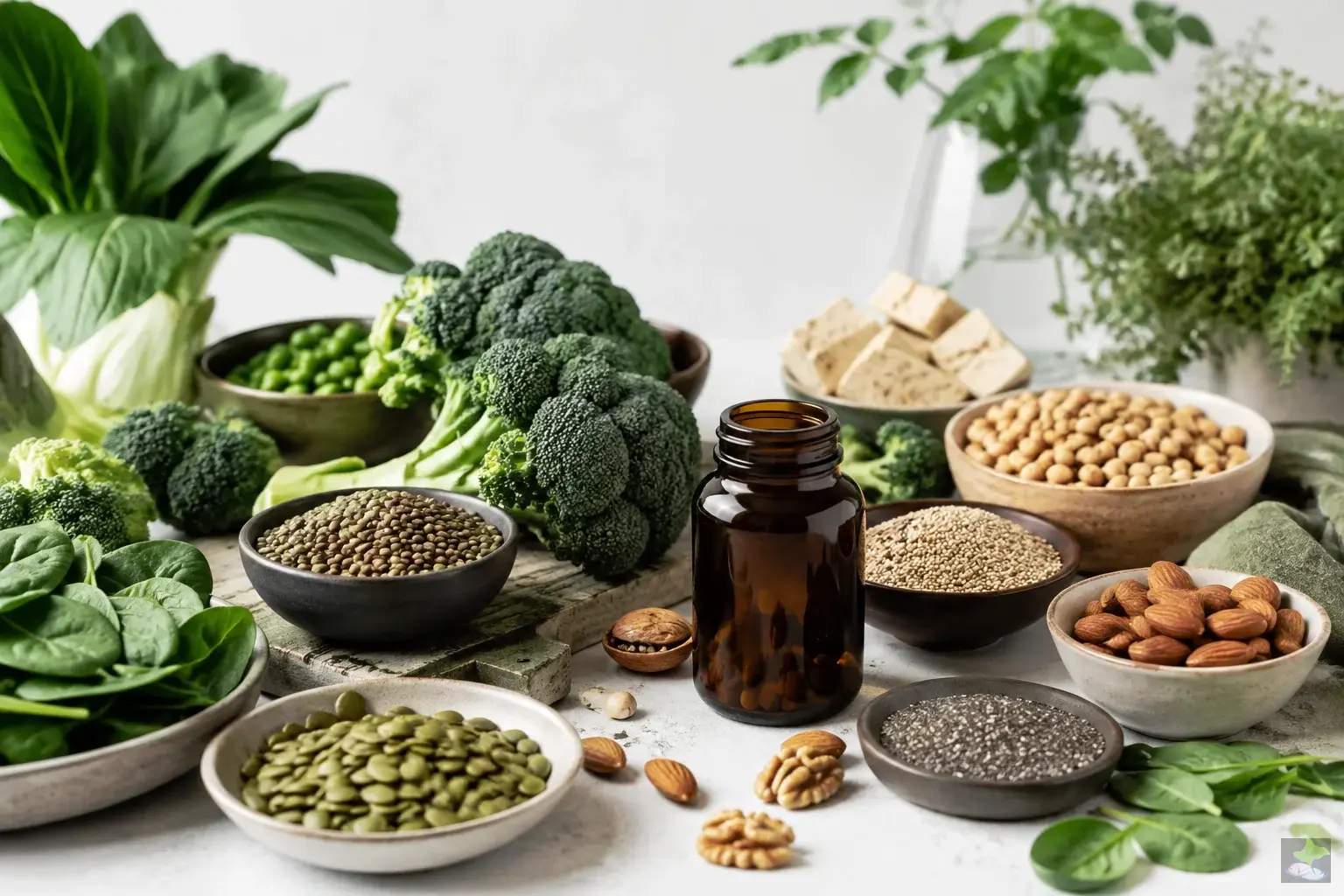
2.3 Overview of Plant Protein Sources
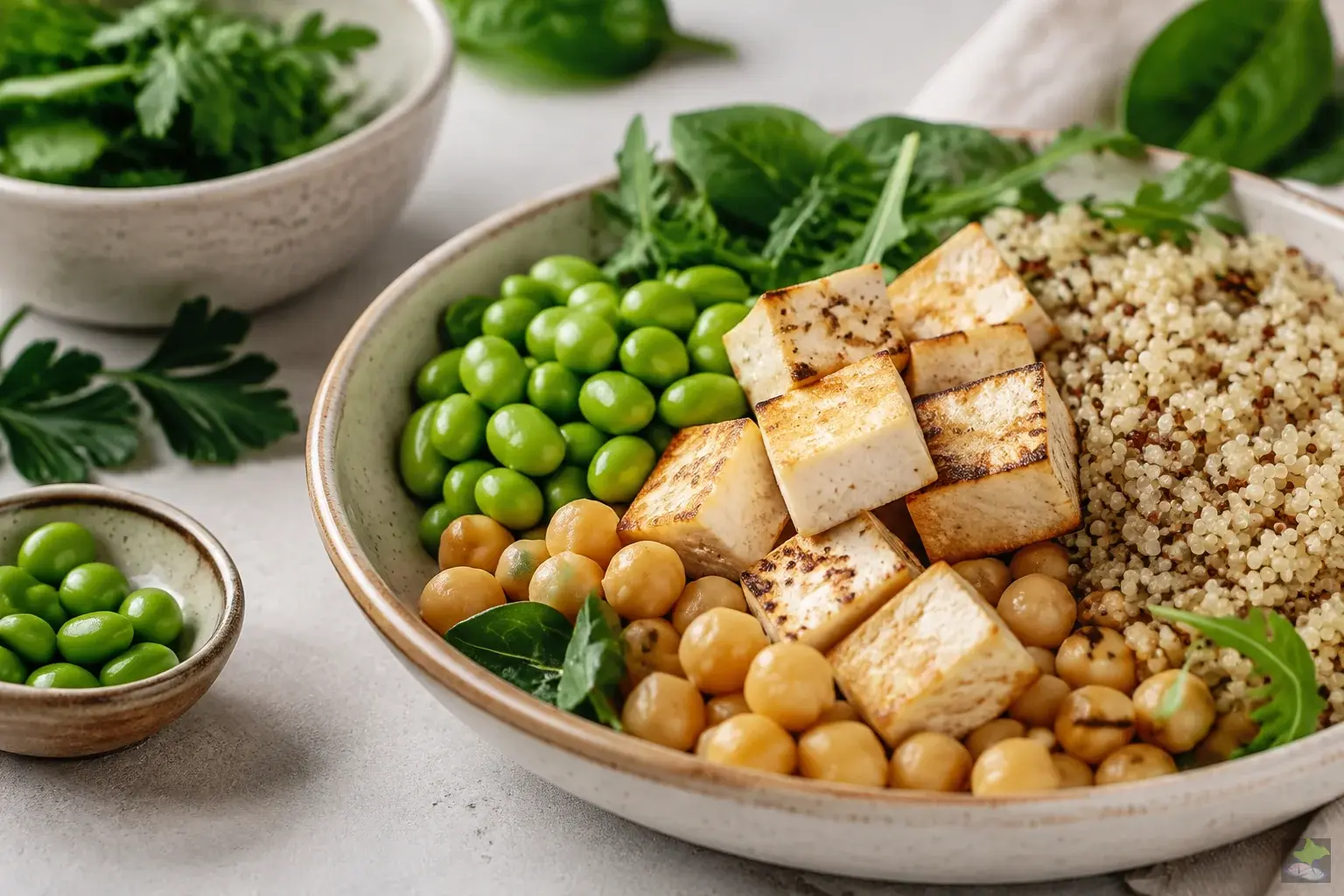
Legumes provide lysine, an essential amino acid important for protein synthesis and many physiological processes:
- Lentils, peas and chickpeas
- Beans (kidney, black and white beans)
- Tofu and tempeh
Cereals and pseudocereals provide protein, complex carbohydrates and fibre that can support sustained satiety:
- Spelt, quinoa and brown rice
- Oats, wholegrain bread and wholegrain pasta
- Couscous
Seeds, nuts and nut butters combine protein with unsaturated fats, vitamins and minerals:
- Flaxseed, chia seeds and hemp seeds
- Pumpkin and sunflower seeds
- Peanuts, walnuts, cashews, almonds, pistachios and hazelnuts
3. Vitamin B12: The Genuinely Critical Nutrient
3.1 Physiological Function and Requirements
Vitamin B12 (cobalamin) is a water-soluble vitamin essential for normal nervous-system function. It is also involved in amino acid metabolism, red-blood-cell formation, cell division and differentiation.
The DGE recommends an adequate intake of 4.0 micrograms per day for adults. Reference values differ for infants, pregnancy and breastfeeding and should be checked against current professional guidance.
3.2 Signs of Deficiency
Chronic deficiency can alter the blood count and cause megaloblastic anaemia. Other possible effects include fatigue, weakness, sensory disturbances and neurological damage, which may become irreversible if deficiency is prolonged.
3.3 Vitamin B12 Provision in Vegan Diets
Unfortified plant foods do not provide vitamin B12 reliably. B12 is synthesised by microorganisms and enters food chains through microbial production, animal feed and fortification. Because dependable natural plant sources are lacking, people following a vegan diet need regular B12 from a validated supplement or appropriately fortified foods.
3.4 Forms of Supplementation
Several forms of cobalamin are used in supplements. Cyanocobalamin is stable, extensively studied and inexpensive; methylcobalamin is another effective form when taken in an appropriate regimen. Absorption depends strongly on dose and frequency, so product instructions and current professional guidance matter more than claims that one form is universally superior.
4. Essential Fatty Acids: Balancing Omega-3 and Omega-6
4.1 Physiological Significance
Omega-3 and omega-6 fatty acids are both essential families with multiple roles in cell membranes and signalling. Describing one as simply anti-inflammatory and the other as pro-inflammatory is misleading. In many diets, the practical priority is obtaining sufficient alpha-linolenic acid (ALA) and, where appropriate, EPA and DHA—not pursuing an arbitrary ratio.
Reducing heavily processed foods may improve overall dietary quality, but increasing omega-3 intake does not guarantee lower cortisol, effortless fat loss or stronger immunity. Benefits depend on baseline intake, the fatty acid, dose, health status and the overall diet.
4.2 Intake Guidance and Plant Sources
No single EPA/DHA dose is appropriate for every healthy person. Recommendations vary by authority and life stage; those who avoid fish may consider a quality-controlled algal-oil product after assessing their diet and individual needs.
Fish obtain EPA and DHA ultimately from aquatic food webs involving microalgae. Algal oil therefore offers a direct vegan source, provided the product is quality controlled and appropriately dosed.
Sources of ALA and/or omega-6 fatty acids include:
- Chia seeds
- Flaxseed
- Hemp oil
- Flaxseed oil
Flaxseed, chia and their oils can supply ALA without inevitably exceeding energy needs when portions are appropriate. Conversion of ALA to EPA and especially DHA is limited and variable, so algal oil may be useful for some people; routine supplementation should reflect personal circumstances rather than being presented as mandatory for everyone.
5. Minerals and Other Potential Nutrients of Concern
Alongside macronutrients, vitamins and minerals are essential to health. Plant-rich diets can supply many of them, but adequacy depends on food choices, fortification, supplementation where necessary and individual absorption. The same principle of planning applies to every dietary pattern.
Several nutrients may require particular attention, although this is not unique to vegan diets:
Vitamin D: Vitamin D status depends chiefly on UV-B exposure, season, latitude, skin and lifestyle. Supplementation is appropriate when sunlight and food sources are insufficient, ideally following current national guidance and individual assessment rather than as an automatic year-round rule for everyone.
Vitamin K, iodine and selenium need distinct strategies. Leafy greens generally provide vitamin K1. Iodised salt or a controlled supplement can provide iodine; seaweed content is highly variable. Selenium in plants varies with soil, and Brazil nuts vary markedly in selenium content, so a fixed daily number is not a reliably dosed strategy.
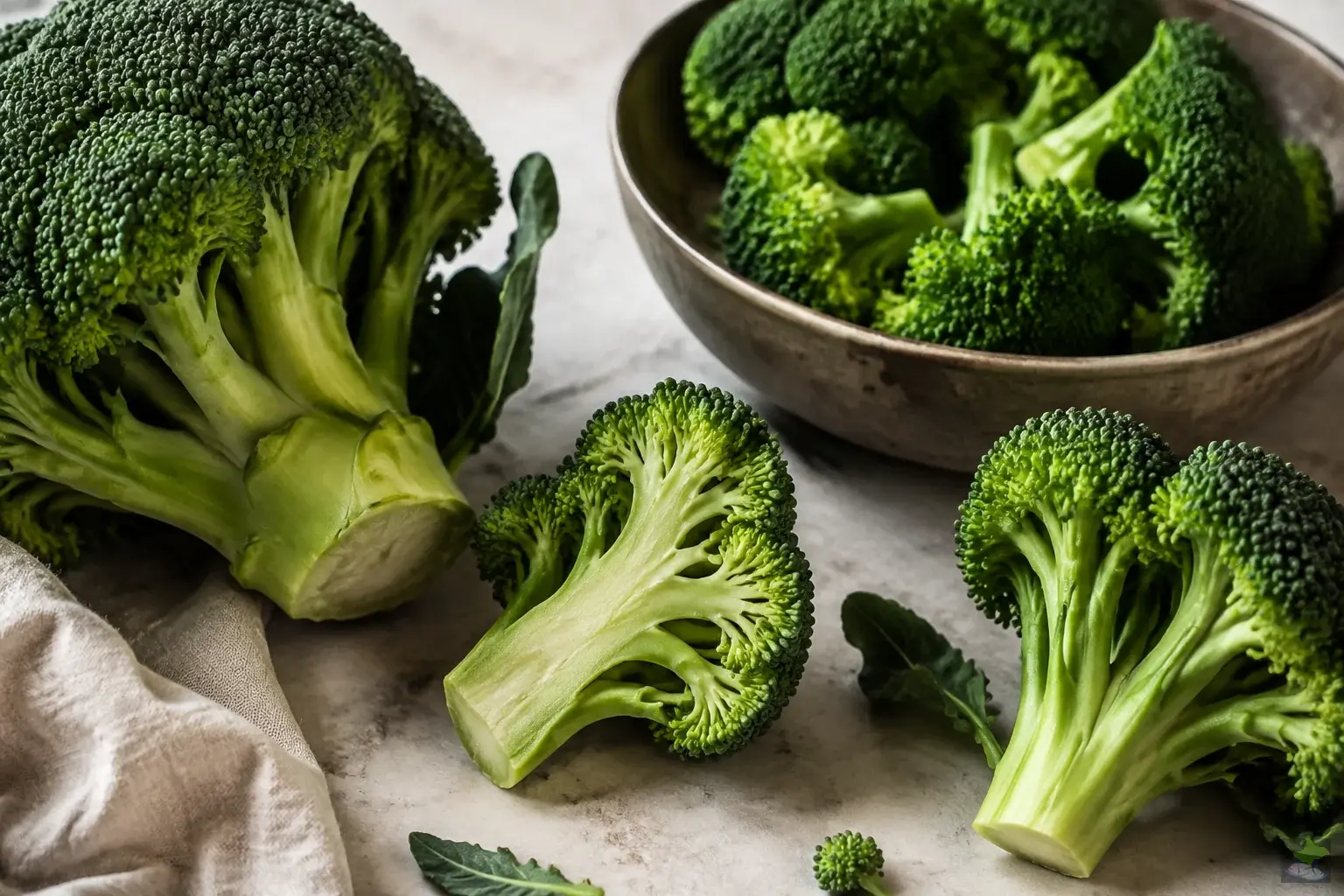
Iron and zinc: Plant-derived non-haem iron has lower average bioavailability than haem iron. Combining it with vitamin-C-rich foods such as citrus fruit, sweet peppers or broccoli improves absorption. Phytate can reduce zinc absorption from legumes, wholegrains and nuts; soaking, germination and fermentation can lessen this effect.
6. Overall Assessment: Myth versus Evidence
| Nutrient | A concern in vegan diets? | Recommendation |
|---|---|---|
| Protein | Usually manageable with sufficient energy, variety and suitable combinations | Combine legumes, wholegrains, nuts and seeds |
| Vitamin B12 | Yes—reliable supplementation or fortified foods are essential | Use a reliable cyanocobalamin or methylcobalamin product in a dose and schedule consistent with current guidance; 4 µg swallowed once daily is not automatically sufficient because supplemental absorption is dose dependent. |
| Omega-3 (EPA/DHA) | Potentially—direct food sources are limited | Consider a quality-controlled algal-oil source where appropriate |
| Vitamin D | Potentially—risk depends mainly on sun exposure and other factors | Assess seasonal exposure and supplement when indicated |
| Vitamin K | Usually available as K1 from green vegetables; individual issues vary | Eat leafy greens regularly; seek advice before supplementing |
| Iodine | Potentially—reliable sources may be limited | Use iodised salt or a controlled supplement as appropriate |
| Selenium | Potentially—plant content depends on the soil | Use varied sources; assess before supplementing |
| Iron / zinc | Potentially—bioavailability is lower in some plant foods | Combine iron with vitamin C; use soaking, germination or fermentation |
7. Relevance to Vida Vertical: Nutrients of Concern from Controlled Cultivation
As a specialist in aquaponics and hydroponics, I view nutrient provision in the broader context of food production. Controlled local cultivation can contribute useful foods, but it does not by itself eliminate the need for dietary planning or supplementation:
1. Protein-Rich Foods from Controlled Production Legumes and sprouts can contribute plant protein, while leafy vegetables primarily add micronutrients rather than large amounts of protein. Freshness does not meaningfully preserve an “amino-acid integrity” that would otherwise rapidly disappear. Combining varied legumes, cereals, nuts and seeds across the diet supports a balanced amino-acid supply.
2. Microalgae and Omega-3 Quality-controlled algal oil can provide vegan EPA and DHA without relying on fish. Production requires dedicated systems and testing for identity, oxidation and contaminants. Spirulina is not a reliable source of active vitamin B12, and ordinary aquaponic systems should not be assumed suitable for producing food-grade omega-3 products.
3. Fresh Micronutrient-Dense Produce Leafy vegetables from vertical systems can contribute folate, vitamin K, iron and calcium, although amounts and bioavailability vary. Nutrient-solution management can influence crop composition, but biofortification with iron or zinc requires crop-specific validation, analytical testing and food-safety controls.
4. Fermentation of Fresh Produce Fresh vegetables can be fermented to extend shelf life and create desirable flavours and live microbial cultures in unpasteurised products. Health effects are product- and person-specific; fermentation does not automatically create a potent synbiotic or guarantee increased mineral bioavailability.
5. Transparency and Process Control Closed hydroponic and aquaponic systems allow close monitoring and can reduce some pesticide uses, but pest management is not obsolete and residue-free status requires evidence. Claims that conventionally grown food commonly causes microbial dysbiosis are not supported and should not be inferred from the production method.
8. Conclusion
People following a varied, energy-adequate vegan diet can generally meet protein requirements through legumes, whole grains, soy foods, nuts and seeds. For omega-3, ALA-rich foods form the foundation, while a quality-controlled algal EPA/DHA product may be appropriate depending on individual needs. Omega-6 should not be portrayed as inherently harmful.
Vitamin B12 is unequivocally a nutrient of concern in vegan diets and requires reliable fortified foods or supplementation. Fermented plant foods and unverified algae products are not dependable sources. Other nutrients—including vitamin D, iodine, selenium, iron, zinc and calcium—should be addressed according to food choices, life stage, health and laboratory or professional assessment where appropriate.
People who plan a varied diet, use reliable B12 sources and seek professional assessment when needed can follow a vegan diet while supporting their health. Sound nutritional knowledge and high-quality, fresh foods—whether from a supermarket or a vertical garden—provide a strong foundation.
Note: These recommendations apply to healthy adults. Individual medical or dietetic advice is indicated in the presence of illness, during pregnancy or breastfeeding, or when planning a major dietary change. Supplementation should reflect current guidance and personal risk; laboratory testing may be appropriate for selected nutrients.
References:
- German Nutrition Society (DGE): D-A-CH reference values for nutrient intake. www.dge.de
- Pawlak, R., et al. (2014). The prevalence of cobalamin deficiency among vegetarians assessed by serum vitamin B12: a review of literature. European Journal of Clinical Nutrition, 68(5), 541–548.
- Rizzo, G., et al. (2016). Vitamin B12 among Vegetarians: Status, Assessment and Supplementation. Nutrients, 8(12), 767.
- Saini, R. K. & Keum, Y.-S. (2018). Omega-3 and omega-6 polyunsaturated fatty acids: Dietary sources, metabolism, and significance. Life Sciences, 203, 255–267.
- Mariotti, F. & Gardner, C. D. (2019). Dietary Protein and Amino Acids in Vegetarian Diets – A Review. Nutrients, 11(11), 2661.
- Melina, V., Craig, W. & Levin, S. (2016). Position of the Academy of Nutrition and Dietetics: Vegetarian Diets. Journal of the Academy of Nutrition and Dietetics, 116(12), 1970–1980.
Author: Uwe | Vida Vertical – Health
EXPLORE RELATED TOPICS