
CHAPTER 02 · 8 MIN READ
Vitamin K2
Biochemical mechanisms, clinical evidence and the importance of fermentation for micronutrient supply
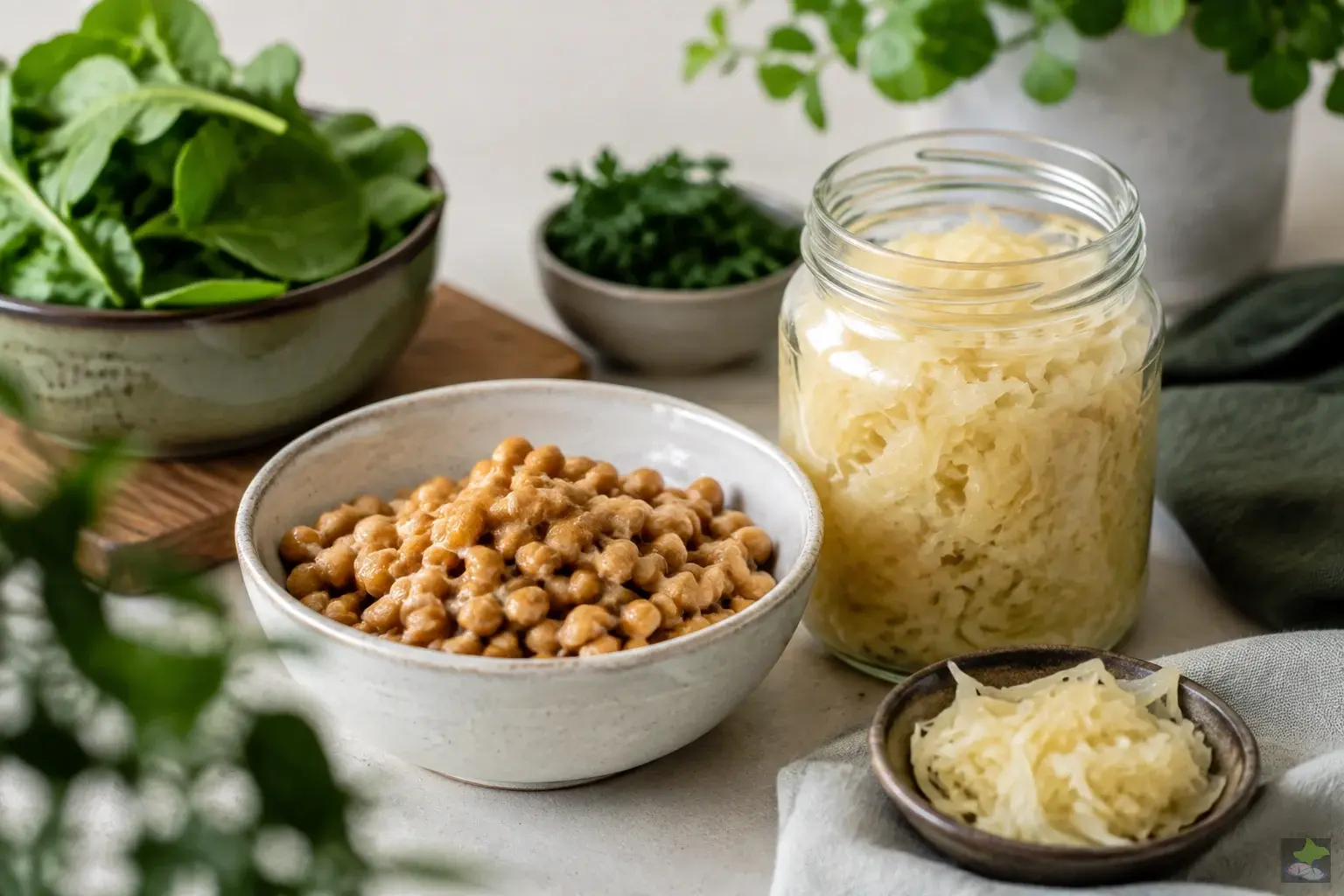
Category: Health | Vida Vertical
Summary
Vitamin K2 denotes a family of fat-soluble menaquinones that has received increasing attention alongside vitamin K1. All vitamin K forms serve as cofactors for gamma-glutamyl carboxylase and thereby activate proteins involved in coagulation, bone metabolism and inhibition of pathological calcification. This article explains the shared biochemical mechanism, absorption, food sources and microbial production and examines clinical evidence for K2 and its interaction with vitamin D. It also distinguishes reliable K1-rich crops from highly variable menaquinone formation during fermentation.
1. Introduction: Vitamin K as a Family of Compounds
Vitamin K is a family of fat-soluble compounds sharing a 2-methyl-1,4-naphthoquinone ring. Nutritionally, two groups are most relevant:
- Vitamin K1 (phylloquinone): Found mainly in green leafy vegetables and important for activation of hepatic coagulation proteins.
- Vitamin K2 (menaquinones): A group of compounds with different side-chain lengths, produced by bacteria and found in selected fermented and animal-derived foods.
K1 and menaquinones differ in sources, transport and tissue distribution, but both support the same carboxylation reaction. Claims that K1 acts only in the liver and K2 alone in bone or vessels oversimplify the evidence.
2. Biochemical Mechanism: Gamma-Glutamyl Carboxylase
2.1 Carboxylation
All vitamin K forms act as cofactors for gamma-glutamyl carboxylase. The enzyme converts specific glutamate residues to gamma-carboxyglutamate in target proteins, enabling them to bind calcium and perform their biological functions.
2.2 Key Target Proteins
Coagulation proteins: Coagulation factors II, VII, IX and X and proteins C, S and Z require vitamin-K-dependent carboxylation. Anticoagulants such as warfarin and phenprocoumon inhibit vitamin K recycling.
Osteocalcin: Osteocalcin is produced by osteoblasts and binds mineral after carboxylation. Its precise role as a clinical marker or treatment target remains under investigation; bone mineralisation depends on many nutrients and hormones.
Matrix Gla protein (MGP): MGP is a potent inhibitor of vascular calcification and helps prevent calcium deposition in arterial walls and soft tissue. Insufficient activated MGP is associated with arterial stiffness and higher cardiovascular risk.
2.3 The Vitamin K Cycle
During carboxylation, reduced vitamin K is oxidised to an epoxide. Vitamin K epoxide reductase recycles it, allowing repeated use. Vitamin K antagonists interrupt this cycle and therefore require consistent intake and clinical monitoring.
3. Absorption and Transport: The Role of Fat Digestion
Vitamin K is absorbed in the small intestine with dietary lipids, incorporated into lipoproteins and transported through lymph and blood. Absorption differs by form and food matrix and may be impaired by fat-malabsorption disorders.
Eating vitamin-K-rich vegetables with some dietary fat can improve absorption, but a special high-fat meal is unnecessary.
4. Adequate Intake and Recommendations
German reference values estimate adequate total vitamin K intake at 60 µg per day for adult women and 70 µg for adult men, with age-specific values. These figures cannot be divided by the number of K forms to derive a separate K2 target; no official daily K2 requirement has been established.
Trials have investigated pharmacological or supplemental menaquinone doses for bone and vascular outcomes, but results do not support routine high-dose K2 for all older adults or postmenopausal women.
5. Food Sources and Microbial Synthesis
5.1 Vitamin K1: Plant Sources
Rich sources include:
- Leafy vegetables and brassicas: spinach, kale, broccoli and Brussels sprouts
- Herbs: parsley and chives
- Other foods: selected oils, pulses, avocado and grapes in smaller or variable amounts
5.2 Vitamin K2: Microbial Origin
Bacteria produce menaquinones of different chain lengths. Selected fermented and animal-derived foods contain varying forms and amounts; gut bacteria also produce them, but their contribution to human requirements is uncertain.
- Cheese, especially some aged varieties
- Certain fermented dairy products
- Sauerkraut, usually in low or variable amounts
- Kimchi, with variable content
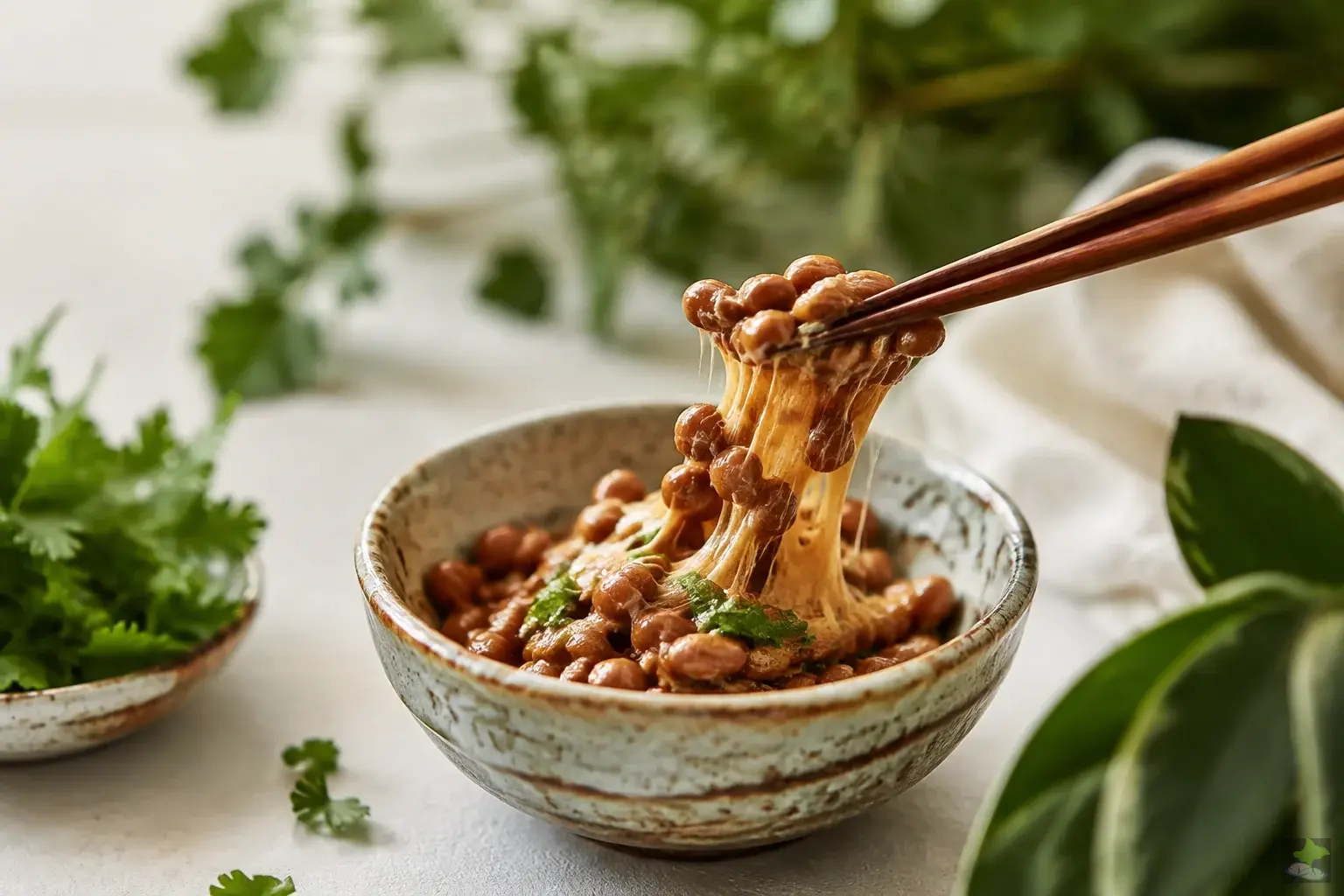
- Natto, an exceptionally rich source of MK-7
Egg yolk, meat and liver can contain menaquinones; rapeseed oil is principally a K1 source, not a notable K2 source.
5.3 Supplements and MK-7
Routine K2 supplementation is not automatically needed when fermented foods are absent. MK-7 has a longer circulating half-life than K1 and some short-chain menaquinones, but product isomer composition, dose and clinical relevance vary. People taking vitamin K antagonists must not start supplements without medical supervision.
6. Interaction with Vitamin D3: Evidence and Uncertainty
6.1 Calcium-Regulating Proteins
Vitamin D promotes intestinal calcium absorption and affects expression of osteocalcin and MGP; vitamin K is required for their carboxylation. This biochemical interaction is plausible, but it does not prove that every vitamin D user needs K2 supplementation.
The popular “calcium paradox” is an oversimplified narrative. Osteoporosis and vascular calcification are multifactorial, and calcium does not simply move into arteries because K2 is absent.
6.2 What the Evidence Supports
Vitamin K-dependent carboxylation contributes to osteocalcin and MGP function, but supplements have not been conclusively shown to direct calcium from arteries into bone or prevent cardiovascular events in the general population.
Combination products are widely marketed, yet routine D3-plus-K2 supplementation for cardiovascular prevention is not established. Bone health depends on vitamin D and calcium adequacy, exercise and other factors; treatment should follow clinical guidance.
7. Deficiency and Clinical Consequences
7.1 Bone Health
Low vitamin K intake or status is associated with bone outcomes, but isolated K2 deficiency is not routinely diagnosed and causality is not established for all associations. Osteoporosis assessment and treatment should not be reduced to osteocalcin carboxylation.
7.2 Coagulation
Clinically significant vitamin K deficiency can impair clotting and cause bleeding. It occurs especially in newborns without prophylaxis, severe malabsorption, prolonged antibiotic exposure or liver/biliary disease—not commonly from isolated low K2 intake.
7.3 Vascular Calcification
Uncarboxylated MGP is associated with vascular calcification and kidney disease, but whether K2 supplementation prevents heart attack or stroke remains uncertain.
8. Relevance to Vida Vertical: K1-Rich Crops and Controlled Fermentation
Controlled crop production can provide K1-rich vegetables. Producing predictable K2 requires characterised microorganisms and validated fermentation rather than analogy with aquaponic bacteria.
1. K1-Rich Leafy Vegetables from Hydroponics
Hydroponic spinach, kale, broccoli and rocket can supply vitamin K1. Cultivar, light, maturity and storage influence content; controlled conditions do not automatically maximise it, and short supply chains reduce but do not eliminate losses.
2. Fermentation as a Potential K2 Production Process
Some fermenting microorganisms produce menaquinones, but ordinary lactic fermentation of cabbage or carrots yields low or highly variable amounts. Sauerkraut and kimchi cannot be assumed to be rich K2 sources unless strain, process and product have been analysed.
Combining leafy vegetables with fermented foods can diversify a diet, but it does not guarantee complete vitamin K provision or eliminate the need for individual guidance.
3. The Gut Microbiome as a Source
Gut bacteria produce menaquinones, mainly in the colon. Their absorption and contribution to status are uncertain. Fibre supports general gut health, but hydroponic vegetables do not uniquely increase endogenous K2 synthesis.
4. Aquaponics and Microbial Processes
Nitrifying bacteria in aquaponic biofilters perform a different process from food-fermentation organisms. Understanding one does not allow K2 production to be transferred or controlled without microbiological strain selection, food-safe fermentation and analysis.
5. Algae as Potential Vitamin K Sources
Some algae contain vitamin K compounds, often K1, but species and content vary. They should not be presented as a meaningful K2 source without product-specific compositional evidence.
9. Conclusion
Vitamin K is essential for carboxylation of proteins involved in coagulation, bone metabolism and regulation of calcification. K1 and menaquinones share this mechanism, while evidence for distinct clinical benefits of supplemental K2 remains incomplete.
Hydroponic systems can provide K1-rich leafy vegetables, and validated microbial fermentation can produce specific menaquinones. Home-fermented vegetables do not reliably provide a measured K2 dose, and routine D3/K2 combination supplements are not universally required.
Note: This article provides general information. People taking vitamin K antagonists such as phenprocoumon or warfarin should keep vitamin K intake reasonably consistent and discuss major dietary changes or supplements with their clinician; they should not avoid vitamin-K-containing vegetables without instruction.
References:
- Rittenau, N. (2019). Vegan-Klischee ade! Wissenschaftliche Antworten auf kritische Fragen zu vegane Ernährung. 6th edition. Ventil Verlag.
- Schurgers, L. J., et al. (2007). The synthetic form of vitamin K2 (MK-7) is more bioavailable and has a longer half-life than MK-4 in humans. Blood, 109(8), 3279–3283.
- Knapen, M. H., et al. (2015). Menaquinone-7 supplementation improves arterial stiffness in healthy postmenopausal women. Thrombosis and Haemostasis, 114(5), 1082–1091.
- DiNicolantonio, J. J., et al. (2015). The health benefits of vitamin K. Open Heart, 2(1), e000300.
- Patel, K. (2020). Vitamin K. Examine.com. Retrieved from https://examine.com/supplements/vitamin-k/
- German Pharmacy Portal (2019). Combination of vitamin D3 and vitamin K2. Retrieved from https://www.deutschesapothekenportal.de/
Author: Uwe | Vida Vertical – Health
EXPLORE RELATED TOPICS
You may also be interested in

Vitamin D3
Endogenous synthesis, physiological functions and strategies for preventing widespread deficiency
Vitamin K2
Key physiological functions, synergy with vitamin D3 and targeted synthesis through horticultural fermentation

Critical Nutrients in a Vegan Diet
Evidence-based analysis of myths and strategies for meeting nutritional requirements