Hydroponics · History and origins
From water culture to modern hydroponics
Hydroponics was not invented overnight. It emerged from centuries of practical water management, scientific plant physiology and efforts to supply roots deliberately with water, oxygen and mineral nutrients.
01
Early precursors: cultivating with water before hydroponics had a name
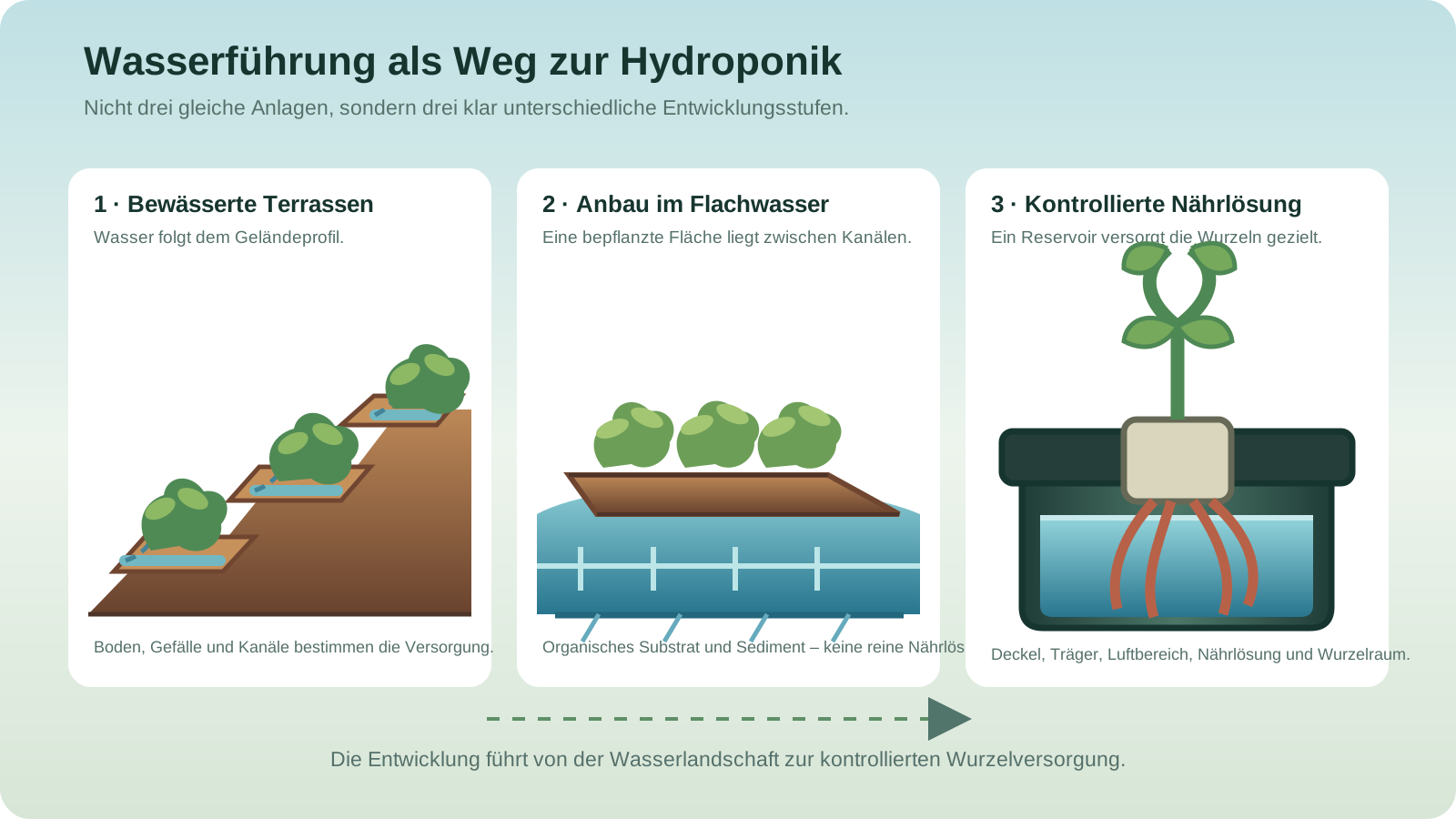
People have long cultivated plants in places where water played a special role. The Hanging Gardens of Babylon are frequently cited as an early example, but neither their precise existence nor their technical design has been conclusively established archaeologically. They therefore cannot be identified unequivocally as a documented hydroponic system.
The chinampas in the Valley of Mexico are better documented. These artificial fertile plots were built from organic matter and sediment in a wetland environment. They were productive wetland and raised-field garden systems, but not hydroponics in the modern sense because the plants were not supplied exclusively through a controlled mineral nutrient solution.
Water management
Canals, basins, terraces and artificial islands show how closely plant production and water engineering have historically been linked.
Locational advantage
Wet sites could influence nutrients, temperature and root supply differently from dry soils.
Not equivalent
Water-based cultivation, aquaculture, floating gardens and hydroponics are related, but they are not technically or biologically identical.
02
Scientific foundations emerge in the 17th and 19th centuries
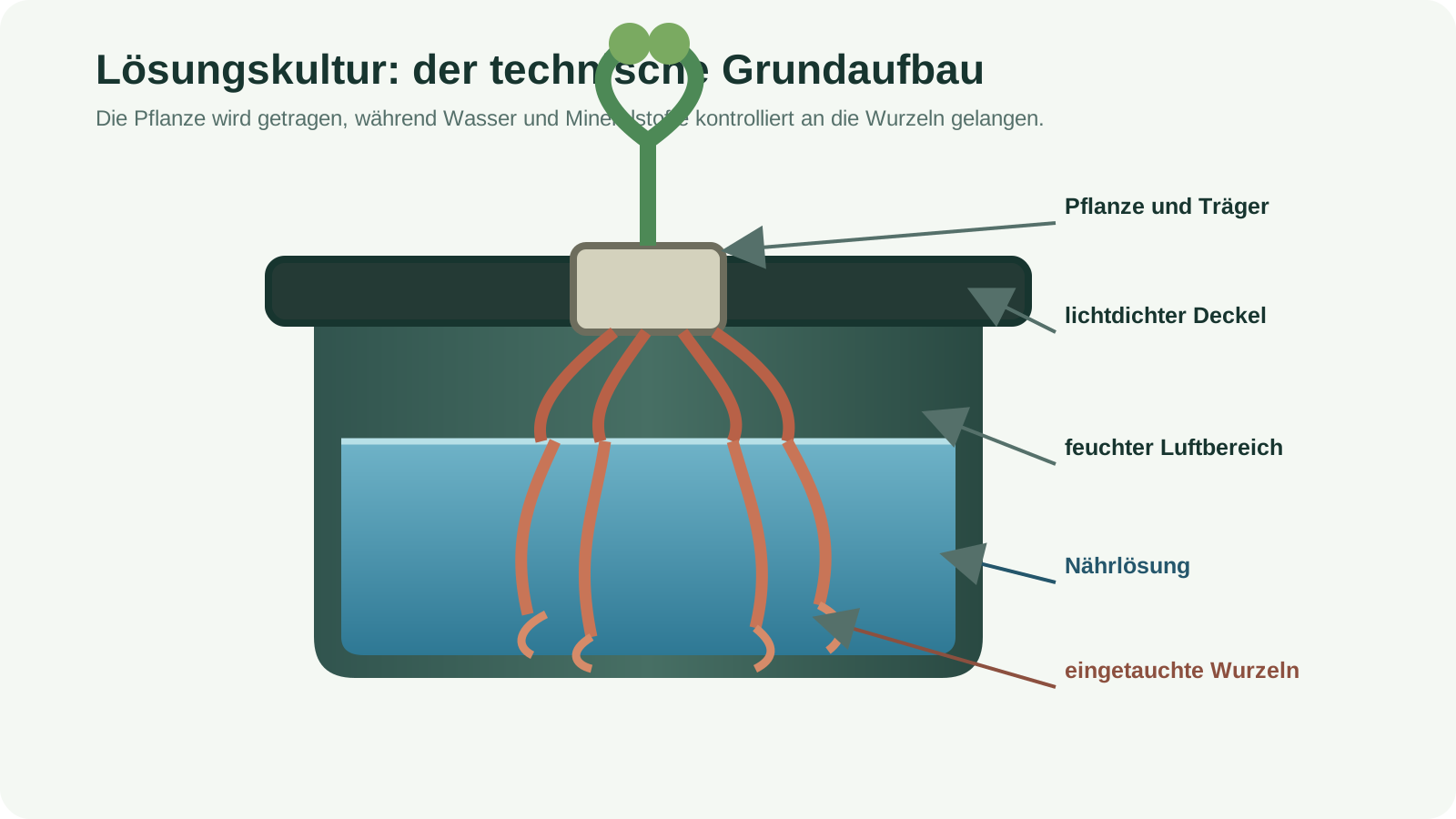
The decisive step was recognising that plants do not necessarily obtain their mineral elements from soil particles. In many cultivation systems soil serves as a reservoir, buffer and mechanical anchor, but dissolved nutrients are absorbed through the roots.
In the 17th century, researchers investigated how water and dissolved substances affected plant growth. By the 19th century, solution culture had become an important method in plant physiology. Julius von Sachs and Wilhelm Knop developed nutrient solutions that allowed plants to be grown without natural soil and deficiency symptoms to be studied systematically.
03
William F. Gericke turns solution culture into a cultivation concept
In the 1920s and 1930s, plant physiologist William Frederick Gericke of the University of California applied the principles of solution culture to larger plants and practical cultivation. His experiments demonstrated publicly that high-yielding crops could grow in a mineral nutrient solution without natural soil.
Gericke is therefore often described as a pioneer of modern hydroponics. He shaped the public image of soilless cultivation and popularised the termhydroponics, derived from Greek word elements relating to water and work or activity. By then, however, the scientific foundations had already been laid by earlier research into plant nutrition.
In 1940 Gericke publishedThe Complete Guide to Soilless Gardeningan early comprehensive account of soilless gardening. Hydroponics thereby became accessible to a wider audience not merely as a laboratory technique, but as a practical cultivation method.
04
From experimental systems to standardised methods
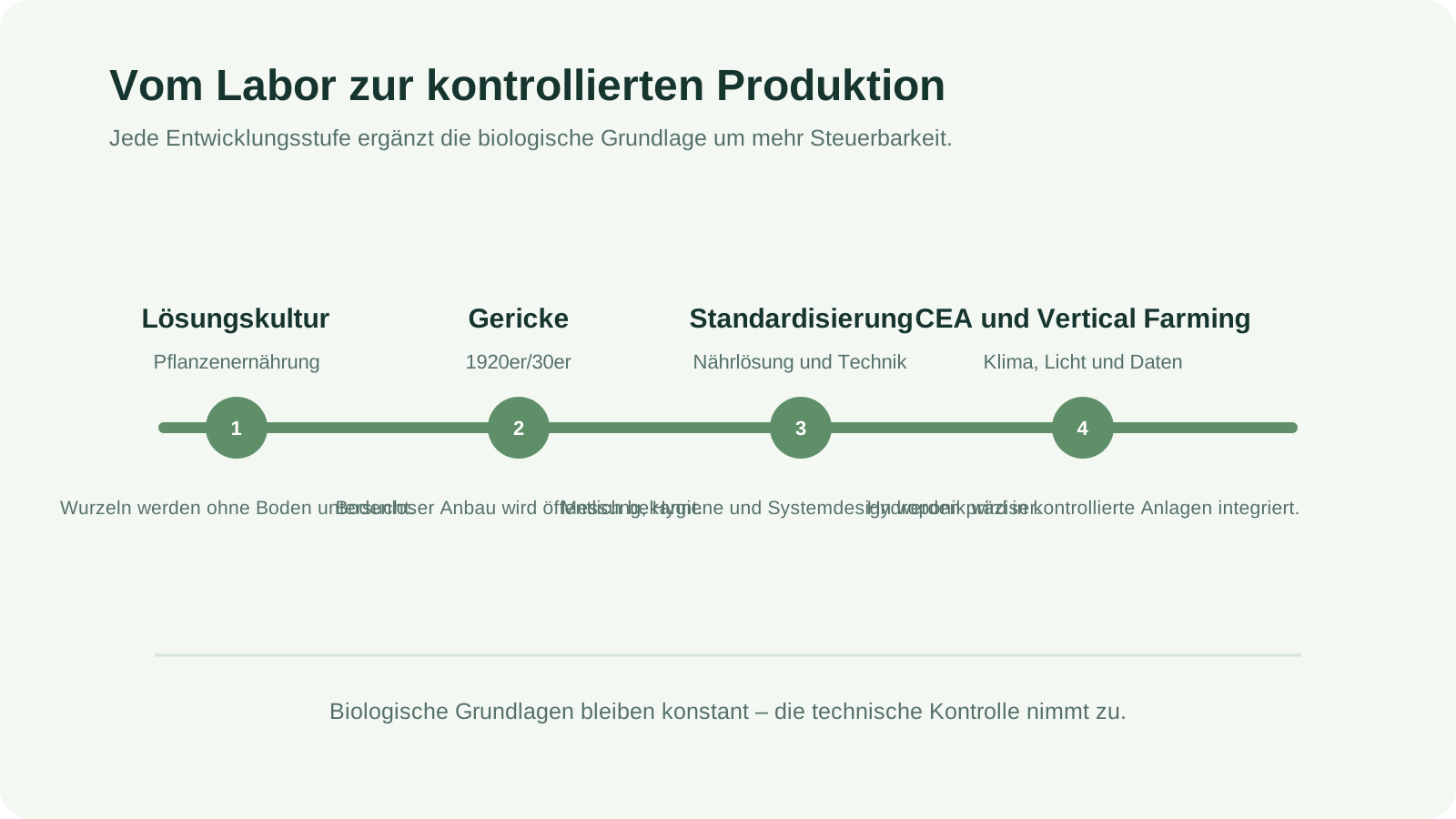
After Gericke, attention shifted from basic feasibility to reliable control. Nutrient formulations, substrates, irrigation, oxygenation, hygiene and climate management gradually developed into technical disciplines in their own right.
Solution culture
The foundations of plant nutrition and controlled nutrient solutions are investigated.
Gericke
Soilless cultivation becomes publicly known as a practical growing method.
Standardisation
Nutrient solutions, measurements and technical methods are refined for practical use.
System diversity
NFT, DWC, ebb and flow, drip irrigation and vertical systems continue to develop.
Controlled Environment Agriculture
Light, climate, water, nutrient solution and data are integrated in greenhouses and indoor farms.
05
Space research as an accelerator
Spaceflight gave soilless cultivation an additional purpose: plants had to grow reliably with limited space, water and mass. NASA research therefore investigated hydroponic and aeroponic methods for closed or partially closed life-support systems.
This research did not reinvent hydroponics, but it intensified requirements for root zones, water recycling, lighting, hygiene, nutrient management and resilience to failures. Many principles used in modern indoor and vertical farming have benefited from this development.
06
Hydroponics today: a tool, not an end in itself
Modern hydroponics ranges from a simple Kratky container on a windowsill to highly automated greenhouse and vertical-farming facilities. These systems share the ability to make root supply more predictable than in unmonitored soil. The particular technology nevertheless determines how much energy, control, maintenance and expertise are required.
What remains unchanged
Water, oxygen, light, temperature and nutrient availability remain the biological foundations.
What has changed
Meters, sensors, LED lighting, pumps and controllers enable more precise process management.
What does not follow automatically
Less soil does not automatically mean less labour, lower energy use or a closed nutrient cycle.