
CHAPTER 03 · 7 MIN READ
Regional Alternatives to “Superfoods”
Nutrient Profiles of Local Foods Compared with Exotic Trend Products
Section: Health | Vida Vertical
Summary
The term “superfood” has become a ubiquitous marketing device that associates exotic foods with exceptional health benefits. This article critically examines the label and compares three popular imported products—açaí berries, chia seeds and quinoa—with more regional alternatives: blueberries, flaxseed and brown rice. Nutrient profiles show that local counterparts can be comparable or advantageous in selected respects, although results depend on the food, serving size and analytical method. The final section explores how regional production, including vertical and hydroponic cultivation, can support a sustainable supply of micronutrient-rich foods with less dependence on global supply chains.
1. Introduction: Examining the “Superfood” Label
“Superfoods” are now a familiar part of nutrition discourse, appearing in cafés, restaurants, smoothie bars and countless social-media posts. Promised effects range from general health promotion and weight loss to unsupported claims about treating chronic disease, often accompanied by premium prices.
What, then, defines a superfood? The answer is revealing: There are no binding scientific or regulatory criteria governing the use of the term. “Superfood” is neither a protected designation nor a formal category in food law. A manufacturer may apply the label without meeting defined nutrient thresholds, clinical evidence standards or demonstrated health effects.
Much of the trend’s appeal lies in novelty. Products unfamiliar in Western countries can be marketed more readily as exceptional, whereas in their regions of origin the same foods may have formed part of ordinary diets for generations.
2. What Actually Characterises So-Called Superfoods
Despite the absence of a definition, many foods marketed as superfoods are nutrient-dense and provide antioxidants, vitamins, minerals, fibre or essential fatty acids. The useful question is not whether they can form part of a healthy diet, but whether their price and marketing claims are justified and whether regional foods offer comparable nutritional value.
The following comparisons show that local foods can be equivalent or advantageous in particular measures while also offering shorter transport distances, lower costs and potentially lower environmental impacts.
3. Açaí versus Blueberries: Comparing Antioxidant Capacity
3.1 Açaí Berries (Euterpe oleracea)
Açaí berries originate in the Brazilian Amazon, where they are traditionally eaten as a staple food. In Western countries they are available mainly as powder, capsules or frozen pulp. They contain anthocyanins and other polyphenols, fats and fibre. Their relatively high price reflects their limited cultivation region, processing requirements and long transport routes.
3.2 Blueberries (Vaccinium myrtillus / Vaccinium corymbosum)
Blueberries have a long history as a regional food in many parts of Europe. Comparative measurements indicate that their antioxidant capacity can be high , but values vary considerably by species, cultivar, ripeness, processing and analytical method, so a universal ranking above açaí is not justified.
Their anthocyanins and flavonoids can contribute to antioxidant activity. Human studies associate regular berry consumption with selected cardiometabolic and cognitive outcomes, but these observations do not prove that blueberries prevent or treat disease.
3.3 Comparative Assessment
| Parameter | Açaí berry | Blueberry |
|---|---|---|
| Antioxidant capacity | High and method-dependent | High and method-dependent |
| Fibre | Present | Present |
| Fat | Higher in unsweetened pulp | Low |
| Availability in Central Europe | Limited, generally imported | Regional and seasonal |
| Price level | Usually high | Low to moderate in season |
| Evidence for cognitive outcomes | Limited | Growing but not conclusive |
Result: Both fruits can contribute valuable polyphenols. Regional blueberries are usually fresher, less expensive and easier to source locally; antioxidant figures alone should not be used to claim universal superiority.
4. Chia versus Flaxseed: Omega-3 Fatty Acids and Fibre
4.1 Chia Seeds (Salvia hispanica)
Chia seeds originate in Mexico and Guatemala and have become highly popular, particularly in chia pudding. When soaked, they form a mucilaginous gel that acts as a natural thickener. Their nutrient profile includes:
- Omega-3 fatty acids (alpha-linolenic acid, ALA)
- Fibre, which supports normal bowel function
- B vitamins and vitamin E
- Minerals including potassium, phosphorus, magnesium, iron, calcium and selenium
4.2 Flaxseed (Linum usitatissimum)
Flax is one of Europe’s oldest cultivated plants and has been valued as a food and traditional remedy for millennia. Flaxseed is widely available and inexpensive in Central Europe. Its nutrient profile includes:
- Omega-3 fatty acids: Flaxseed generally contains more alpha-linolenic acid than chia by weight, although values vary by cultivar and analysis.
- Fibre: Amounts are broadly comparable with chia, and both seeds form a gel when soaked.
- Vitamins and minerals: B vitamins, vitamin E, potassium, phosphorus and magnesium, with quantities varying between foods and datasets.
- Choline: Flaxseed also provides choline, a nutrient involved in cell membranes, liver function and acetylcholine synthesis.
4.3 Comparative Assessment
| Parameter | Chia seeds | Flaxseed |
|---|---|---|
| Omega-3 fatty acids (ALA) | High | Generally higher by weight |
| Fibre | High | Comparable |
| Gel formation when soaked | Yes | Yes |
| Choline | Present in varying amounts | Present |
| B vitamins and vitamin E | Present | Present |
| Potassium, phosphorus and magnesium | Present | Present |
| Availability in Central Europe | Usually imported | Regional and available year-round |
| Price level | Moderate to high | Low |
Result: Flaxseed is a strong regional source of ALA and fibre and is generally less expensive than chia. Both can be useful foods; grinding flaxseed improves access to its nutrients.
5. Quinoa versus Brown Rice: Protein, Iron and Micronutrients
5.1 Quinoa (Chenopodium quinoa)
Quinoa belongs botanically to the amaranth family (Amaranthaceae) and is described as a pseudocereal. Originally cultivated in the South American Andes, it is now also established in Central European diets. One cup of cooked quinoa provides approximately:
- 8 g protein
- 5 g fibre, depending on portion and database
- Thiamine, riboflavin and folate
- Minerals including iron, zinc, magnesium and selenium
5.2 Brown Rice (Oryza sativa, wholegrain)
Brown rice is the unpolished wholegrain form of rice and retains its nutrient-rich bran and germ layers. One cup of cooked brown rice provides approximately:
- 5 g protein
- 3–4 g fibre, depending on portion and database
- B vitamins and minerals, generally in different amounts from quinoa
- Notable difference: Brown rice may provide more selenium and niacin than quinoa in some food-composition datasets, but values vary by origin and preparation.
5.3 Comparative Assessment
| Parameter | Quinoa | Brown rice |
|---|---|---|
| Protein (per cooked cup) | approx. 8 g | approx. 5 g |
| Fibre (per cooked cup) | approx. 5 g | approx. 3–4 g |
| Iron | Generally higher | Generally lower |
| Zinc | Present | Present |
| Selenium | Variable | Can be higher |
| Vitamin B3 (niacin) | Lower in some datasets | Higher in some datasets |
| Gluten-free | Yes | Yes |
Result: Quinoa generally provides more protein, fibre and iron per cooked cup, while brown rice may provide more selenium and niacin in some datasets. Both are naturally gluten-free and can contribute useful carbohydrates and micronutrients to a varied diet.
6. A Critical Appraisal of the “Superfood” Label
The comparison reveals a consistent pattern: exotic products marketed as superfoods can be nutritious, but they are not inherently better than regional alternatives. Nutritional advantages depend on the particular food, nutrient, portion and preparation rather than on the marketing category.
The premium paid for exotic “superfoods” often reflects:
- Long transport routes and import costs
- Processing such as drying or milling
- Marketing and positioning costs
- Limited availability
These factors do not necessarily increase nutritional value. People seeking good value can obtain a varied nutrient supply from regional, seasonal foods, often at lower cost and with shorter supply chains.
7. Relevance to Vida Vertical: Regional Provision through Controlled Cultivation
For Vida Vertical readers, the practical conclusion is straightforward: valuable foods are those that reach the plate fresh, nutrient-rich and in a form that fits the overall diet. Vertical and hydroponic systems can offer specific advantages:
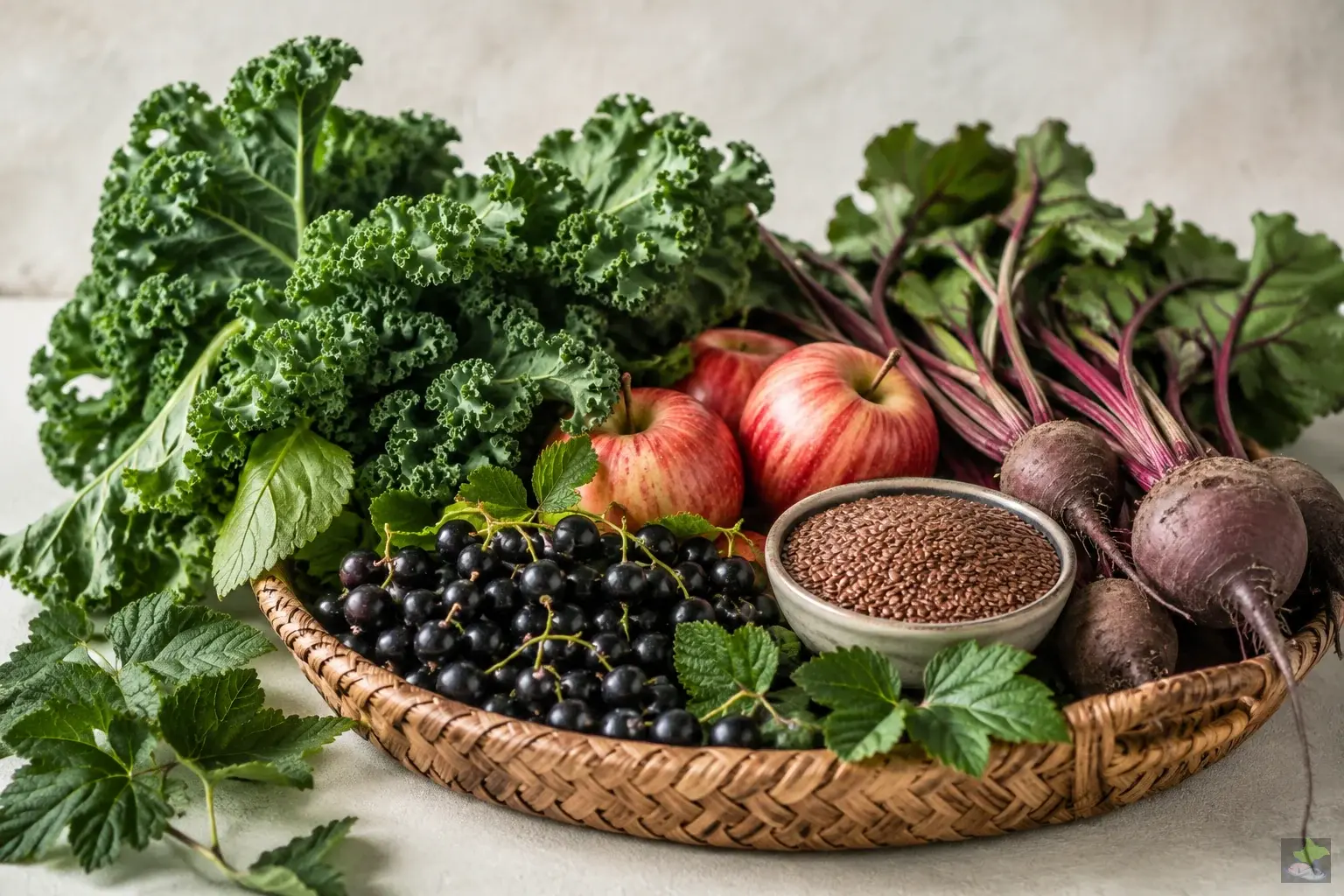
Blueberries and other berries: Conventional blueberries have crop requirements that can limit their use in vertical systems. Other berries, leafy vegetables and purple-leaved crops can nevertheless provide diverse polyphenols. Short harvest-to-consumption intervals help limit storage losses.
Flax and oilseed crops: Whether flax is suitable for controlled systems depends on scale, cultivar and production objectives. Regional harvesting and suitable storage can help protect oxidation-sensitive oils.
Sprouts and microgreens: Hydroponically grown sprouts and microgreens can provide nutrient-dense foods in little space. Germination can change mineral bioavailability and reduce some antinutrients, although effects vary by species and method.
Leafy vegetables and herbs: Kale, spinach, rocket and parsley from vertical cultivation can provide iron, calcium, vitamin C, folate and other nutrients at high freshness.
Controlled local production can therefore combine nutrient-rich foods with short transport routes, freshness, transparent growing conditions and less dependence on distant supply chains.
8. Conclusion
“Superfood” is a marketing term, not a scientific category. Many products sold under this label are nutritious, but the same is true of numerous regional foods. Blueberries provide polyphenols, flaxseed is rich in ALA, and brown rice has a useful micronutrient profile of its own.
The practical message is that a varied diet does not depend on the most expensive or exotic foods. Regional and seasonal produce—ideally fresh and responsibly cultivated—can provide excellent nutritional value. Money saved on imported trend products may be invested more effectively in the quality and variety of everyday food.
Note: These comparisons use general food-composition data and do not replace individual dietary advice. Nutrient contents vary by cultivar, growing conditions, processing, serving size and analytical method.
References:
- Kalt, W., et al. (2020). Recent Research on the Health Benefits of Blueberries and Their Anthocyanins. Advances in Nutrition, 11(2), 224–236.
- Gorissen, S. H. M., et al. (2014). Flax and flaxseed oil (Linum usitatissimum): a review by the Natural Standards Research Collaboration. Journal of Food Science and Technology, 51(9), 1633–1653.
- Tang, Y. & Tsao, R. (2017). Phytochemicals in quinoa and amaranth grains and their antioxidant, anti-inflammatory, and potential health beneficial effects. Molecular Nutrition & Food Research, 61(7), 1600767.
- de la Vega, M. A., et al. (2021). Nutritional and bioactive compounds of Açaí (Euterpe oleracea Mart.): A review. Food Research International, 141, 109964.
- German Nutrition Society (DGE): D-A-CH reference values for nutrient intake. www.dge.de
Author: Uwe | Vida Vertical – Health
EXPLORE RELATED TOPICS
You may also be interested in
The NOVA Classification
Degree of Food Processing as an Indicator of Metabolic Health
Emulsifiers in Food
Biochemical Mechanisms, Effects on the Intestinal Barrier and the Importance of the Natural Food Matrix
Food Colourings
Biochemical Classification, Toxicological Assessment and the Relevance of Natural Pigments in Nutrition