Microgreens anbauen
Microgreens in Aquaponic Systems
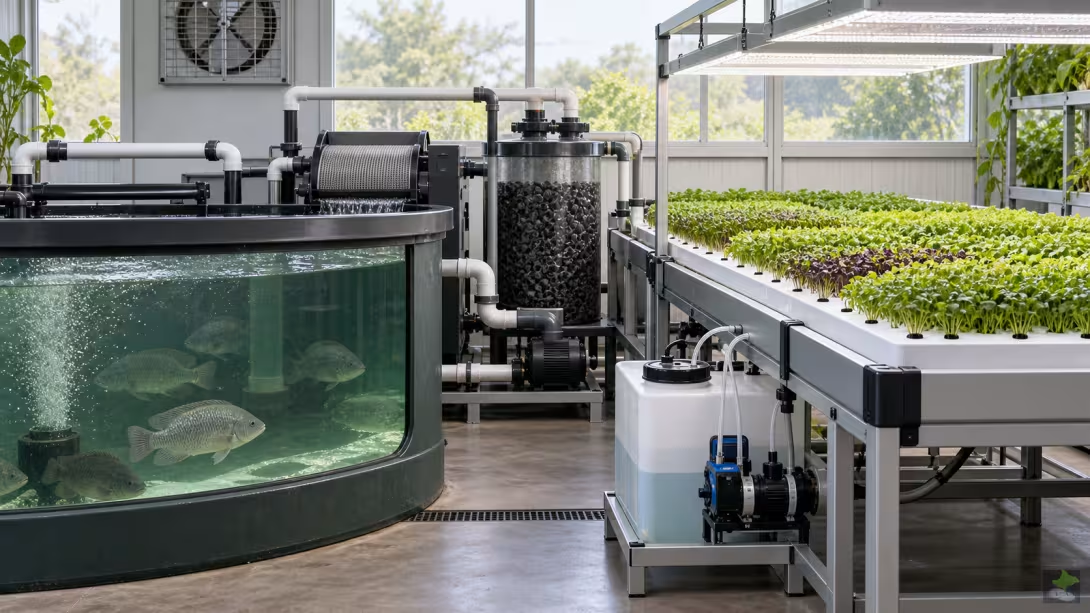
Aquaponics combines aquaculture with plant production: microorganisms convert fish excretions and feed residues into nutrients available to plants. Microgreens can in principle be integrated, but their short growing cycle, hygiene requirements and the differing nutrient needs of individual species call for particularly careful planning.
Why integration is demanding
Fish welfare, the biofilter and plants do not always share the same optimum operating parameters. Nutrient concentrations depend on feed input, fish stocking, mineralisation, water replacement and growing area. It is therefore wrong to assume either a general nutrient deficiency or an invariably high demand among microgreens. Measurements and small cultivation trials must establish whether the available water is sufficient for the selected species and harvest stage.
Coupled systems
In a fully coupled circuit, water flows from the fish tank through mechanical and biological filters to the plant section and back again. The system conserves resources, but every adjustment to pH or nutrients can potentially affect the fish and microorganisms. Materials and operating inputs must be suitable for aquaculture. A pump or aeration failure affects the entire circuit.
Decoupled and hybrid systems
In a partially decoupled system, nutrient-rich aquaponic water is transferred in a controlled manner to a separate plant circuit. There, pH, EC and deficient nutrients can be adjusted to meet plant requirements without the enriched water immediately returning to the fish. This provides more control, but increases the need for equipment, documentation and water-balance management. Supplementation must take place only after measurement and with due regard for food and operational safety.
Recommended trial design
- Begin with a few identical trays and one robust variety.
- Run a reference tray with the usual irrigation method in parallel.
- Document the water source, pH, EC, temperature, nitrate and yield.
- Reliably remove solids before the water reaches narrow pipes and plant sections.
- Assess fish health, biofilter performance and plant quality separately.
- Scale up only after several stable cycles.