
CHAPTER 03 · 6 MIN READ
Ultra-Processed Foods
The NOVA Classification, Microbial Dysbiosis and the Physiological Consequences of Modern Convenience Food
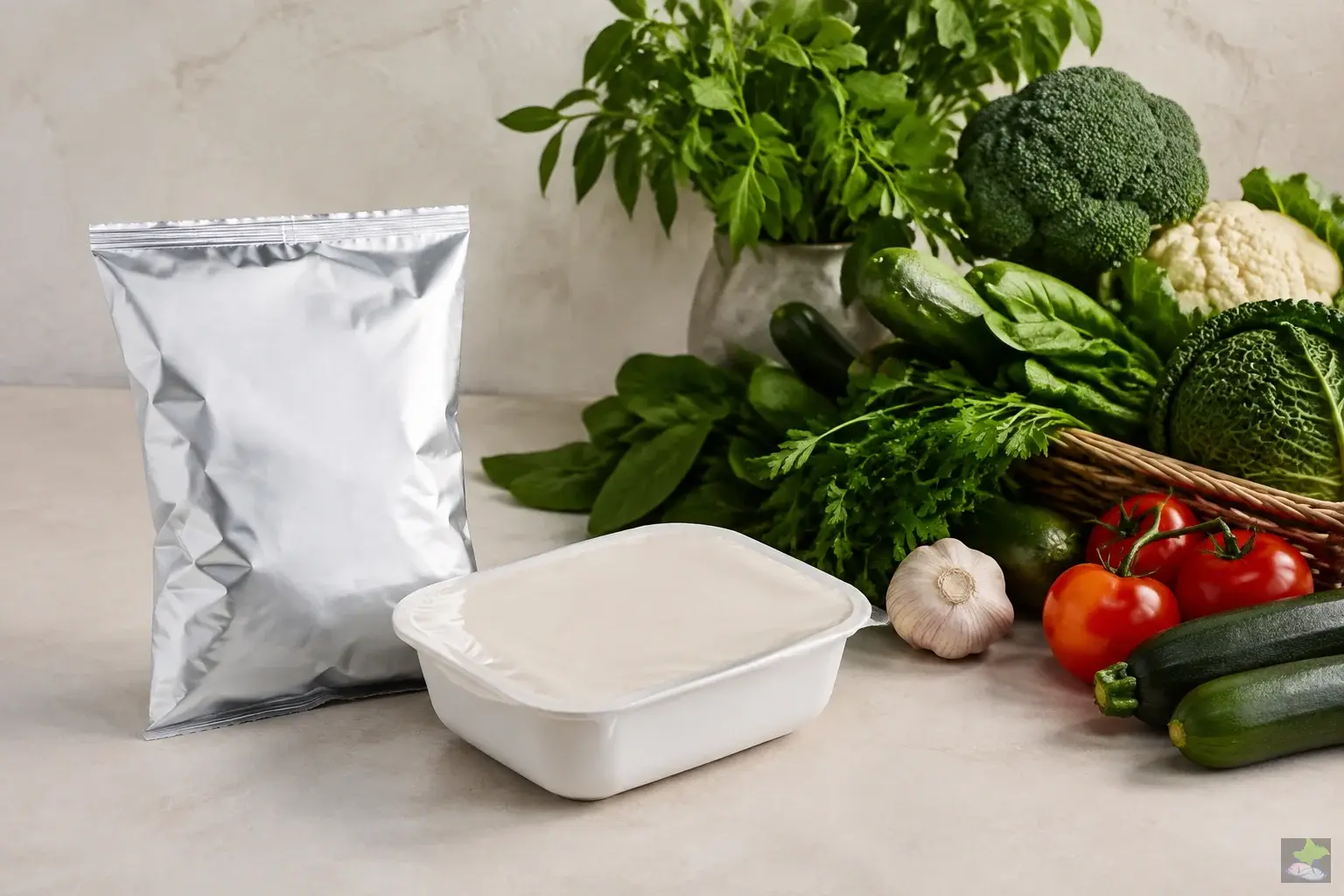
Section: Health | Vida Vertical
Summary
The modern food industry has brought a vast range of ultra-processed convenience products to market, prized for their intense palatability and long shelf life. Using the scientific NOVA classification, this article examines their metabolic and microbiological implications—from high energy intake and unfavourable nutrient profiles to possible effects of certain industrial emulsifiers on the intestinal mucus barrier. It concludes by showing how produce from controlled hydroponic and aquaponic systems can support a minimally processed, microbiome-friendly diet.
1. Introduction: The NOVA Classification as a Scientific Assessment Tool
The terms “ready-made product” and “convenience food” cover a broad spectrum of industrially prepared foods. To study their health effects systematically, the research group led by Professor Carlos A. Monteiro at the University of São Paulo developed the NOVA classification. Rather than classifying foods by macronutrient content, the system groups them according to the nature and extent of industrial processing:
- Group 1: Unprocessed or minimally processed foods. Fresh vegetables, fruit, pulses, nuts, meat and milk. Processing is limited primarily to methods such as drying, pasteurising, fermenting or freezing.
- Group 2: Processed culinary ingredients. Oils, fats, sugar and salt obtained from Group 1 foods or from nature and used in cooking.
- Group 3: Processed foods. Group 1 foods preserved or prepared with Group 2 ingredients, such as canned vegetables, cheese and freshly made bread.
- Group 4: Ultra-processed foods. Industrial formulations made largely from substances derived from foods—such as hydrolysates, isolates and modified starches—and additives used to modify flavour, colour or texture, including flavourings, emulsifiers and colourings. They generally contain little intact Group 1 food.
Nutritional criticism focuses primarily on Group 4. Many such products are formulated to be highly palatable, convenient and easy to consume, characteristics that can promote greater energy intake.
2. Metabolic Consequences: Hyper-Palatability and the Calorie Trap
A landmark 2019 inpatient study by Hall and colleagues at the US National Institutes of Health (NIH) examined how ultra-processed foods affect energy intake. Participants were offered either an ultra-processed or an unprocessed diet ad libitum. The diets were designed to match the presented amounts of calories, macronutrients, sugar, sodium and fibre, although some properties of the foods and meals inevitably differed.
Participants consumed about 500 kilocalories more per day on the ultra-processed diet and gained weight during that phase. Faster eating rates and the physical structure and energy density of the foods may have contributed; the study does not establish that any single additive or mechanism was responsible.
3. The Hidden Burden: Sodium, Sucrose and Imbalanced Fatty-Acid Profiles
Ultra-processed foods can make a substantial contribution to sodium and free-sugar intake in Western dietary patterns. The German Nutrition Society (DGE) gives an orientation value of up to 6 grams of salt per day. Regularly choosing products high in salt can make that level easy to exceed, while sustained high sodium intake is associated with elevated blood pressure and cardiovascular risk.
Fat quality also deserves attention. Many sauces, marinades and fried convenience foods use inexpensive vegetable oils such as sunflower oil. Because conventional sunflower oil is rich in the omega-6 fatty acid linoleic acid and contains little omega-3, a diet dominated by such products may provide an unbalanced range of fat sources. However, omega-6 fats are essential nutrients, and evidence does not support describing linoleic acid itself as inherently inflammatory; the practical priority is an overall balanced diet that also supplies adequate omega-3 fatty acids.
4. The Microbial Dimension: Emulsifiers and the Intestinal Barrier
From a microbiological perspective, certain additives used in Group 4 products are being investigated for possible effects on intestinal health. In animal experiments, researchers at Georgia State University found that commonly used emulsifiers—including carboxymethylcellulose (E466) and polysorbate 80 (E433)—altered the gut microbiota and reduced the distance between bacteria and the intestinal epithelium.
These findings suggest that some emulsifiers may affect the protective mucus layer and promote low-grade inflammation in susceptible experimental models. They cannot be transferred directly to typical human exposure or used to conclude that all emulsifiers are toxic. Human studies remain limited, so the most defensible advice is to emphasise varied, fibre-rich foods while considering individual tolerance and the total dietary pattern.
5. The Vida Vertical Perspective: The Counterpoint to Ultra-Processing
From an aquaponics and hydroponics perspective, NOVA Group 4 contrasts sharply with the goal of producing fresh, recognisable plants. Ultra-processing often breaks down the original food matrix, separates components and recombines them with additives to create specific textures, flavours and shelf lives.
Vertical farming and soilless cultivation can provide a direct source of Group 1 foods, with the added benefit that produce may be harvested shortly before it is eaten:
1. Intact Food Matrix and SatietyHydroponically harvested leafy vegetables, microgreens and herbs retain their natural cellular structure. Their volume, water and fibre content, together with the chewing they require, can help slow eating and support satiety as part of a balanced meal. Blood-glucose responses nevertheless depend on the meal as a whole and on the individual.
2. Fewer Industrial Dressings and EmulsifiersPeople who harvest their own microgreens, salad leaves and herbs can prepare simple dressings instead of relying on heavily formulated products. Extra-virgin olive oil or linseed oil, lemon juice and freshly picked herbs provide flavour and allow full control over the ingredients; linseed oil is also a source of alpha-linolenic acid, an omega-3 fatty acid.
3. The Microbiome through an Aquaponic LensAquaponics makes the importance of microbial ecosystems tangible. Its biofilter, where microorganisms convert nitrogen compounds, offers a useful analogy—though not a biological equivalent—to the human gut microbiome. Caring for the symbiosis among fish, bacteria and plants can encourage the same systems-oriented thinking when composing a varied diet rich in intact plant foods and fermentable fibre.
4. Frozen Alternatives from the HarvestWhen there is no time to harvest and cook every day, surplus herbs, berries or suitable vegetables from a vertical garden can be frozen promptly. Rapid freezing can preserve many nutrients and phytochemicals well, although texture and some sensitive vitamins may change. It is a practical, additive-free alternative to many ready-made frozen meals.
6. Strategies for Everyday Eating
The following evidence-informed principles can help when convenience foods are part of everyday life:
- Read the Ingredients and Nutrition Information: Use the ingredient list together with the nutrition declaration. Frequent choices should ideally be lower in salt, free sugars and saturated fat and provide useful amounts of fibre; no single ingredient automatically makes a product unsuitable.
- Add Fresh Ingredients: Adding fresh hydroponically grown leafy vegetables, sprouts or herbs to a ready-made meal can increase its volume, fibre and micronutrient content and reduce its energy density per serving.
- Organic Certification: EU organic rules restrict which additives and processing aids may be used, but “organic” does not automatically mean minimally processed or nutritionally balanced. The complete ingredient list and nutrition declaration therefore remain important.
7. Conclusion
Ultra-processed foods are industrial formulations rather than a single nutritionally uniform category. Diets high in them are consistently associated with poorer health outcomes, and controlled feeding evidence shows that they can increase energy intake, but mechanisms and the contribution of individual products vary. The NOVA classification is a useful lens on processing and should be considered alongside nutrient composition, portion size and the overall dietary pattern.
A practical response to convenience-led eating is to make minimally processed foods the foundation of the diet. Home-grown produce from hydroponic or aquaponic systems can make fresh vegetables and herbs immediately available and add fibre, vitamins and phytochemicals to meals. It is one useful route—not the only one—to a diverse dietary pattern that supports metabolic and intestinal health.
Note: This article provides general scientific information and is not a substitute for individual medical or dietetic advice. Anyone with gastrointestinal disease or metabolic syndrome should plan dietary changes with a qualified healthcare professional.
References:
- Monteiro, C. A., et al. (2018). The UN Decade of Nutrition, the NOVA food classification and the trouble with ultra-processing. Public Health Nutrition, 21(1), 5–17.
- Hall, K. D., et al. (2019). Ultra-Processed Diets Cause Excess Calorie Intake and Weight Gain: An Inpatient Randomized Controlled Trial of Ad Libitum Food Intake. Cell Metabolism, 30(1), 67–77.
- Chassaing, B., et al. (2015). Dietary emulsifiers impact the mouse gut microbiota promoting colitis and metabolic syndrome. Nature, 519(7541), 92–96.
- German Nutrition Society (DGE): D-A-CH reference values for nutrient intake. www.dge.de
- Srour, B., et al. (2018). Consumption of ultra-processed foods and cancer risk: results from NutriNet-Santé prospective cohort. BMJ, 360, k322.
Author: Uwe | Vida Vertical – Health
EXPLORE RELATED TOPICS
You may also be interested in
Regional Alternatives to “Superfoods”
Nutrient Profiles of Local Foods Compared with Exotic Trend Products
The NOVA Classification
Degree of Food Processing as an Indicator of Metabolic Health
Emulsifiers in Food
Biochemical Mechanisms, Effects on the Intestinal Barrier and the Importance of the Natural Food Matrix