
CHAPTER 02 · 5 MIN READ
Micronutrients
Biochemical foundations, physiological functions and practical intake recommendations
Category: Health | Vida Vertical
Summary
Micronutrients comprise vitamins and minerals that provide no energy but perform indispensable regulatory functions in the human body. This article organises the principal micronutrient groups, explains their biochemical mechanisms and derives evidence-based recommendations for dietary practice. Particular attention is given to how plant-based food supplies, including controlled cultivation in vertical systems, can help meet micronutrient requirements.
1. Introduction and definition
Unlike macronutrients (protein, fat and carbohydrate), micronutrients are not used to produce energy. They act as cofactors in enzymatic reactions, structural components and protective agents against oxidative stress. Intake is measured in milligrams or micrograms, yet a continuous supply is essential because the human body cannot synthesise most of these compounds, or cannot produce enough of them (German Nutrition Society, D-A-CH reference values).
Micronutrients fall into two main categories:
- Vitamins (fat-soluble and water-soluble)
- Minerals (major and trace elements)
2. Vitamins: classification and physiological significance
2.1 Water-soluble vitamins
Water-soluble vitamins include thiamine (B1), riboflavin (B2), niacin (B3), pantothenic acid (B5), pyridoxine (B6), biotin (B7), folate (B9), cobalamin (B12) and ascorbic acid (vitamin C). Because they are hydrophilic, these compounds—with the exception of vitamin B12—are not stored in substantial quantities. Excess is excreted through the kidneys, reducing the risk of hypervitaminosis but necessitating regular intake.
Vitamin B12 (cobalamin) has a special status: it is the only water-soluble vitamin stored in substantial amounts in the liver. It plays a major role in erythropoiesis (red-blood-cell formation). Because cobalamin occurs almost exclusively in animal-derived products, fully plant-based diets carry a higher risk of inadequate intake.
2.2 Fat-soluble vitamins
The fat-soluble vitamins A, D, E and K are absorbed with dietary lipids and can be stored in the liver and adipose tissue. This storage helps bridge short gaps in supply but also creates a risk of cumulative overdose.
| Vitamin | Primary function | Relevant sources |
|---|---|---|
| A (retinol / beta-carotene) | vision, cell differentiation, skin protection, antioxidant activity | carrots, spinach, squash, eggs, dairy products |
| D (cholecalciferol) | calcium homeostasis, bone mineralisation, immune modulation | UV-B-induced synthesis in the skin; only small quantities in food |
| E (tocopherols) | antioxidant protection of cell membranes, anti-inflammatory action | sunflower oil, olive oil, nuts, avocado |
| K (phylloquinone / menaquinone) | synthesis of coagulation factors, inhibition of bone resorption | green leafy vegetables, oats, kiwi fruit |
Vitamin D deserves particular attention: synthesis in the skin under UV-B radiation is the primary source. At Central European latitudes, solar radiation is insufficient especially from October to March, and a significant proportion of the population consequently has suboptimal serum 25-hydroxyvitamin D levels.
2.3 Vitamin C (ascorbic acid)
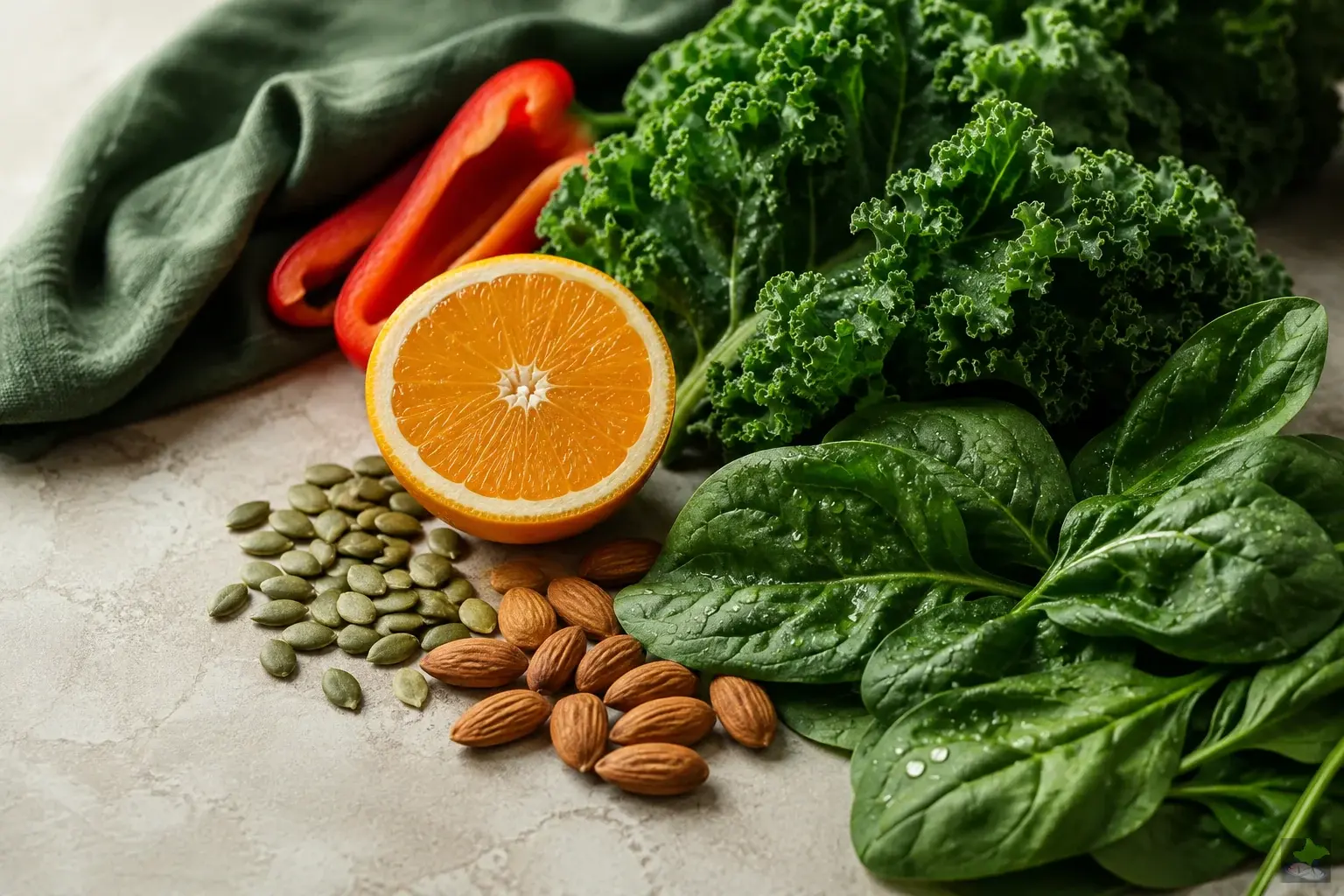
Ascorbic acid is a powerful antioxidant, supports immune function and participates in collagen synthesis and wound healing. As a water-soluble vitamin, it has a comparatively low risk of accumulation. Excellent sources include citrus fruit, peppers, broccoli, spinach and brassica vegetables.
3. Minerals: major and trace elements
3.1 Major elements
Sodium and potassium act as an opposing ion pair and regulate intra- and extracellular water balance. Their balance is crucial to maintaining membrane potential, regulating blood pressure and conducting cardiac impulses. High sodium intake without adequate potassium is associated with cardiovascular risk. Potassium-rich foods include broccoli, potatoes, bananas and fish.
Calcium is quantitatively the most important mineral in the skeleton. Its proper incorporation into bone matrix depends on vitamin D. Dairy products, nuts and green vegetables such as broccoli, kale and rocket are significant sources.
Magnesium (total body content approximately 20–30 g) is located mainly in bone and skeletal muscle. It serves as a cofactor in more than 300 enzymatic reactions, including ATP hydrolysis and muscle contraction. Whole grains, pulses and nuts are rich sources.
3.2 Trace elements
Iron is central to oxygen transport (haemoglobin) and the cellular respiratory chain. Deficiency can present clinically as microcytic anaemia accompanied by fatigue. Women have higher requirements because of menstrual blood loss. Haem iron from animal sources is more bioavailable than non-haem iron in plant foods such as pulses, beetroot and kale.
4. Foods particularly rich in micronutrients
Foods with high nutrient density support efficient micronutrient intake:
- Kiwi fruit: High in vitamin C, B vitamins, vitamins A and E, potassium, iron and zinc; also approximately 4 g fibre per 100 g.
- Whole hen’s egg: Omega-3 fatty acids, vitamin B12, vitamin A, iron, zinc and phosphorus.
- Pulses (lentils, chickpeas, beans): High iron and magnesium content, balanced macronutrient distribution and high fibre content.
- Brassicas (broccoli, kale, spinach): Vitamin C, phytochemicals (glucosinolates, OPCs) and antioxidants.
5. Practical recommendations and meeting requirements
Meeting the reference value for every micronutrient precisely each day is neither necessary nor practical. The German Nutrition Society’s D-A-CH reference values provide guidance for healthy adults. An evidence-based practical principle is:
Consume 500–600 g of vegetables and fruit daily, divided into four or five portions.
Requirements may be higher with:
- chronic illness or medication use
- pregnancy and lactation
- intense physical activity
- psychological stress, smoking and alcohol consumption
- a fully plant-based diet (especially vitamin B12, iron and zinc)
If deficiency is suspected, medical assessment using serum or whole-blood analysis is indicated before targeted supplementation begins.
6. Relevance to vertical and controlled plant production
For Vida Vertical readers, it is worth noting that the micronutrient density of plant foods depends substantially on cultivation method, substrate composition, light spectrum and plant nutrition. Mineral supply can be controlled precisely in hydroponic and aquaponic systems. Studies suggest that under optimised conditions—balanced nutrient solution, appropriate light intensity and short intervals between harvest and consumption—levels of vitamin C, phytochemicals and minerals in leafy vegetables and herbs may equal or exceed those of conventional field crops. Controlled production therefore has the potential to support micronutrient-rich diets directly at source.
7. Conclusion
Micronutrients are not optional extras but biochemical necessities. A varied, plant-rich diet containing 500–600 g of vegetables and fruit each day reliably meets the needs of most healthy adults. People who grow food in vertical or hydroponic systems also gain the ability to influence nutrient composition and harvest timing—a contribution to health that literally begins with home cultivation.
Note: This article provides general information and does not replace individual medical or nutritional advice. If you suspect a nutrient deficiency, consult your treating clinician.
Sources and further reading:
- German Nutrition Society (DGE): D-A-CH reference values for nutrient intake. www.dge.de
- Biesalski, H.-K., Grimm, P., Nowitzki-Grimm, S.: Taschenatlas Ernährung. Thieme Verlag.
Author: Uwe | Vida Vertical – Health
EXPLORE RELATED TOPICS
You may also be interested in
Essential Amino Acids
Biochemical foundations, physiological functions and intake strategies
Essential Amino Acids
Molecular building blocks of protein synthesis, physiological functions and intake strategies
Human Protein Requirements
Physiological foundations, requirement assessment and evidence-based intake recommendations