
CHAPTER 02 · 7 MIN READ
Protein Requirements of the Human Body
Physiological Foundations, Requirements Assessment and Evidence-Based Intake Recommendations
Section: Health | Vida Vertical
Summary
Proteins are rightly described as building blocks of life. They participate in nearly every biochemical process in the human body—from building and repairing muscle cells and acting as enzymes to regulating metabolism. This article examines the physiological basis of protein requirements, the principal determinants used to estimate individual needs and evidence-based intake recommendations for different activity levels. It also considers the potential risks of high protein intake and compares animal and plant sources. Finally, it explores how controlled cultivation of protein-rich plants in hydroponic and aquaponic systems may contribute to a sustainable, nutrient-optimised protein supply.
1. Introduction: Proteins as Fundamental Biomolecules
Proteins are an essential part of the daily diet for good reason. They consist of amino-acid chains linked by peptide bonds and perform a wide range of functions in the human body that extend far beyond providing energy.
Daily protein requirements depend on factors such as body weight, body composition, age, training status, goals and energy balance. The German Nutrition Society’s reference value of 0.8 g per kilogram of body weight per day applies to healthy adults aged 19–65 with low activity; physically active people and older adults may require more.
2. Biochemical Foundations: Amino Acids as Functional Units
2.1 Structure and Diversity
Proteins are assembled from 20 standard proteinogenic amino acids. Each contributes to biological functions, so none should be viewed as important in isolation. Amino acids nevertheless differ in whether the human body can synthesise them:
- Non-essential amino acids: Can generally be synthesised endogenously.
- Essential amino acids (EAAs): Cannot be synthesised in sufficient amounts and must be supplied by the diet.
High-quality protein sources provide all nine essential amino acids in suitable proportions: histidine, isoleucine, leucine, lysine, methionine, phenylalanine, threonine, tryptophan and valine.
2.2 Protein Quality
Protein quality describes how effectively a dietary protein supplies digestible amino acids in proportions that meet human needs. Many animal proteins score highly, but well-planned combinations and sufficient amounts of varied plant proteins can also meet requirements.
3. Physiological Functions of Proteins
Proteins serve as structural and functional components throughout the human body:
Muscle structure and function: Although muscle cells consist largely of water, their function depends on proteins, particularly the contractile proteins actin and myosin. Adequate protein is essential for maintaining, repairing and building muscle tissue.
Cell repair and regeneration: Amino acids contribute to many repair processes, including recovery of muscle tissue after exercise, wound healing and renewal of skin and other tissues. These processes also depend on energy, micronutrients and coordinated cellular signalling.
Enzymatic function: Many proteins act as enzymes that catalyse metabolic and biochemical reactions. Without them, numerous reactions in the human body would proceed too slowly to sustain life.
Immune function: Antibodies are proteins with a central role in immune defence. Severe or prolonged inadequate protein intake can impair immune function.
Hormonal regulation: Several hormones—including insulin, glucagon and growth hormone—are peptides or proteins made from amino acids.
4. Determinants of Individual Protein Requirements
4.1 Body Weight and Body Composition
Body weight is commonly used to estimate protein needs, but body composition and clinical context also matter. In people with substantial excess body weight, calculations based solely on current weight may overestimate requirements; adjusted body weight or lean mass may be more appropriate under professional guidance.
4.2 Training Status and Goals
Resistance exercise stimulates muscle protein synthesis and increases the need for sufficient dietary protein to support repair and adaptation. The magnitude of this response varies with training volume, intensity, experience and recovery.
4.3 Energy Balance
Energy balance affects protein requirements. During an energy deficit, higher protein intake combined with resistance training can help preserve lean mass. Protein alone cannot completely prevent muscle loss if the deficit is excessive or the training stimulus and recovery are inadequate.
5. Evidence-Based Intake Recommendations
5.1 Recommendations for Athletes
Sports-nutrition literature supports the following practical ranges; individual needs may vary:
| Goal | Strength athletes | Recreational athletes |
|---|---|---|
| Muscle gain (energy surplus) | 1.8–2.0 g/kg/day | 1.5–1.8 g/kg/day |
| Muscle retention (energy deficit/diet) | 2.0–2.3 g/kg/day | 1.8–2.0 g/kg/day |
5.2 Example Calculation
A 70 kg strength athlete during an energy-restricted diet:
70 kg × 2.0 g/kg = 140 g protein per day
5.3 The Role of Protein During Dieting
Protein is particularly important during an energy-restricted phase:
- It generally has a greater satiating effect than fat or carbohydrate.
- Protein has a higher thermic effect than fat or carbohydrate: roughly 20–30% of its energy may be expended during digestion, absorption and metabolism.
- Together with resistance training, it helps preserve muscle mass.
6. Protein Sources: Animal versus Plant
6.1 Established Protein Sources
Established protein sources include:
- Meat and fish
- Eggs
- Dairy products (quark, milk, yoghurt)
- Legumes (lentils, peas, beans)
- Nuts
- Protein powders
6.2 Plant Alternatives
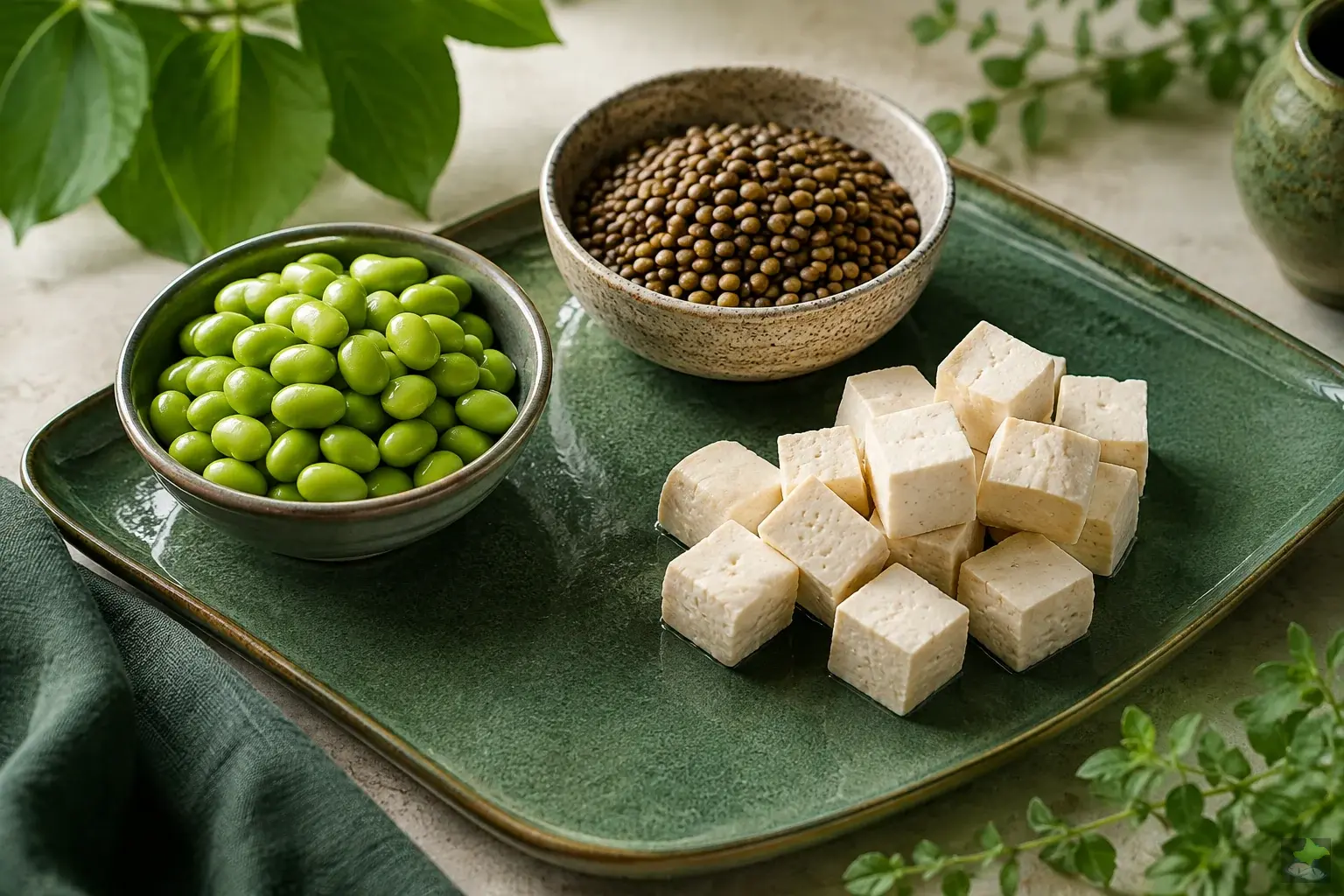
Animal foods do not need to be the primary protein source. Legumes, cereals, pseudocereals, nuts, seeds and soy products can provide substantial amounts. A varied plant-based diet—and combinations such as legumes with cereals—can supply all essential amino acids and meet protein needs.
7. Excess Intake: Myth or Genuine Risk?
Whether very high protein intake presents health risks cannot be answered with an unconditional yes or no: It depends on dose, duration and individual health.
Studies in healthy, resistance-trained adults have not identified clear short-term harm at relatively high intakes, but this does not establish that 250–300 g per day is universally safe or beneficial. Very high intake may displace fibre-rich foods, increase cost and be unsuitable for some medical conditions. Intake should therefore be matched to body size, activity and goals rather than maximised without reason.
Important qualification: People with chronic kidney disease, impaired renal function or other relevant conditions should discuss protein amount and sources with their physician or renal dietitian. Individual assessment is also advisable during pregnancy, in older age and when major dietary changes are planned.
8. Relevance to Vida Vertical: Protein Supply from Controlled Cultivation
As a specialist in aquaponics and hydroponics, I view protein supply in the wider context of food production. Controlled local cultivation can offer several advantages:
1. Legumes in Controlled Production Peas and beans provide lysine-rich protein, but biological nitrogen fixation depends on compatible root bacteria and appropriate system conditions. Combining legumes with regional cereals creates a complementary amino acid profile.
2. Sprouts and Microgreens as Nutrient-Dense Foods Growing sprouts in hydroponic trays alters seed proteins and can reduce some antinutritional factors, potentially improving digestibility. Their total protein contribution depends on species, maturity and serving size.
3. Algae as Protein-Rich Biomass Microalgae such as spirulina, grown in dedicated controlled systems, can provide protein with a broad amino acid spectrum. Species identity, contamination control and production quality are essential, and such cultures should not be assumed suitable for every aquaponic circuit.
4. Transparency and Process Control Closed hydroponic and aquaponic systems allow close control of water, nutrients and crop health. Pest management may still be required, but preventive and biological methods can reduce pesticide use. Short harvest-to-consumption intervals primarily preserve freshness and sensitive micronutrients.
9. Conclusion
Proteins are fundamental to life, and individual requirements vary more than a single general recommendation suggests. Appropriate intake depends on body size and composition, age, activity, goals, health status and energy balance. Physically active people often benefit from intakes above the reference value for sedentary adults.
For healthy adults, moderately high protein intakes within evidence-based ranges can support satiety, training adaptation and retention of lean mass. Source quality and the overall dietary pattern still matter: plant and animal sources can both contribute, provided essential amino-acid and micronutrient needs are met.
Combining varied, minimally processed protein foods with fresh produce from controlled cultivation can unite nutritional quality with more transparent and potentially resource-efficient production.
Note: These recommendations apply to generally healthy adults. Anyone with kidney disease or another chronic condition should seek individual medical or dietetic advice.
References:
- Helms, E. R., et al. (2015). High-protein, low-fat, short-term diet results in less stress and fatigue than moderate-protein moderate-fat diet during weight loss in male weightlifters: a pilot study. International Journal of Sport Nutrition and Exercise Metabolism, 25(2), 163–170.
- Tipton, K. D. & Wolfe, R. R. (2004). Protein and amino acids for athletes. Journal of Sports Sciences, 22(1), 65–79.
- Antonio, J., et al. (2015). A high protein diet (3.4 g/kg/d) combined with a heavy resistance training program improves body composition in healthy trained men and women – a follow-up investigation. Journal of the International Society of Sports Nutrition, 12, 39.
- Antonio, J., et al. (2014). The effects of consuming a high protein diet (4.4 g/kg/d) on body composition in resistance-trained individuals. Journal of the International Society of Sports Nutrition, 11, 19.
- Lemon, P. W. (2000). Beyond the zone: Protein needs of active individuals. Journal of the American College of Nutrition, 19(suppl 5), 513S–521S.
- German Nutrition Society (DGE): D-A-CH reference values for nutrient intake. www.dge.de
Author: Uwe | Vida Vertical – Health
EXPLORE RELATED TOPICS
You may also be interested in
Micronutrients
Biochemical Foundations, Physiological Functions and Practical Intake Recommendations
Essential Amino Acids
Biochemical Foundations, Physiological Functions and Intake Strategies
Essential Amino Acids
Molecular Building Blocks of Protein Synthesis, Physiological Functions and Intake Strategies