
CHAPTER 05 · 7 MIN READ
Gut Health
The Microbiome, Prebiotics, Probiotics and Evidence-Based Dietary Strategies
Section: Health | Vida Vertical
Summary
The intestinal microbiome—the community of microorganisms living in the digestive tract—is a complex ecosystem involved in digestion, metabolism, immune signalling and other physiological processes. This article defines probiotics and prebiotics, explains their mechanisms and presents ten food groups that can support gut health. It also discusses dietary patterns that may disturb microbial ecology and considers how hydroponic or aquaponic cultivation and safe home fermentation can contribute fresh, fibre-rich foods to a sustainable dietary strategy.
1. Introduction: The Gut Microbiome as a Physiological Ecosystem
The human gastrointestinal tract contains diverse communities of microorganisms, collectively called the gut microbiota; the microbiome also encompasses their genes and functional environment. Microbial density is greatest in the colon, while smaller populations inhabit the small intestine and stomach.
The microbiome is relevant to far more than digestion:
- Nutrient Breakdown and Metabolism: Gut microbes ferment food components that human enzymes cannot fully digest and produce metabolites that can be absorbed or used locally. Most ordinary nutrients, however, do not depend entirely on bacterial digestion.
- Immune Regulation: A substantial part of the immune system is associated with gut lymphoid tissue. Microbial composition and activity interact bidirectionally with immune development and responses.
- Metabolic Functions: Bacterial fermentation of certain fibres produces short-chain fatty acids including acetate, propionate and butyrate. Butyrate is an important fuel for colon cells, and these metabolites participate in metabolic and immune signalling.
- Neuroendocrine Interactions: The gut and brain communicate through neural, endocrine, immune and metabolic pathways. Microbes can influence precursors and signalling molecules, but claims that they directly determine mood, cognition or stress resilience require careful interpretation.
Dysbiosis—an imprecise term for altered microbial ecology—is associated with inflammatory bowel disease, metabolic disorders and several other conditions. Association does not necessarily establish cause, and there is no single universally “healthy” microbiome.
2. Probiotics and Prebiotics: Definitions and Distinctions
Two frequently confused concepts are central to discussions of gut health:
2.1 Probiotics
Probiotics are live microorganisms that, when administered in adequate amounts, confer a health benefit on the host. Benefits are strain- and condition-specific; not every fermented food meets the probiotic definition. Common studied organisms include certain Lactobacillaceae and Bifidobacterium strains. Some can transiently influence microbial activity or barrier function, but they do not necessarily colonise the gut permanently.
2.2 Prebiotics
Prebiotics are substrates selectively used by host microorganisms that confer a health benefit. Many are particular fibres or resistant carbohydrates, although not every indigestible fibre is formally a prebiotic.
Products combining documented probiotics and prebiotics are termed synbiotics. Their effectiveness depends on the specific organisms, substrate, dose and health outcome.
3. Ten Food Groups That Can Support Gut Health
No definitive ranking of the ten “most effective” foods exists. The following varied groups can contribute fibre, resistant starch, live cultures or other useful nutrients:
3.1 Vegetables
Vegetables provide diverse fibres, vitamins and phytochemicals. Cruciferous vegetables, roots and leafy greens broaden plant variety and supply substrates that different microbes can use.
3.2 Flaxseed
Flaxseed supplies fibre, mucilage and alpha-linolenic acid. Ground seed improves nutrient access, while adequate fluid helps the fibre support regular bowel function. Flax mucilage does not literally cleanse the intestine or remove dead bacteria.
3.3 Pulses
Lentils, peas, beans and chickpeas provide plant protein and fermentable fibres that can support short-chain-fatty-acid production and microbial diversity. Gradual introduction can improve tolerance.
3.4 Wholegrains
Wholegrain oats, rye, spelt and brown rice retain fibre-rich bran and germ. They generally provide more fibre and micronutrients than refined versions, although individual tolerance and dietary needs still matter.
3.5 Potatoes and Resistant Starch
Cooked and cooled potatoes contain more resistant starch than freshly cooked hot potatoes. Some remains after reheating. It escapes digestion in the small intestine and can be fermented in the colon, but it is not used exclusively by bacteria and amounts vary with variety and preparation.
3.6 Fermented Foods
Some fermented foods contain live microorganisms, but survival and health effects differ by product and processing. Useful examples may include:
- Yoghurt with live cultures and no unnecessary added sugar
- Kefir
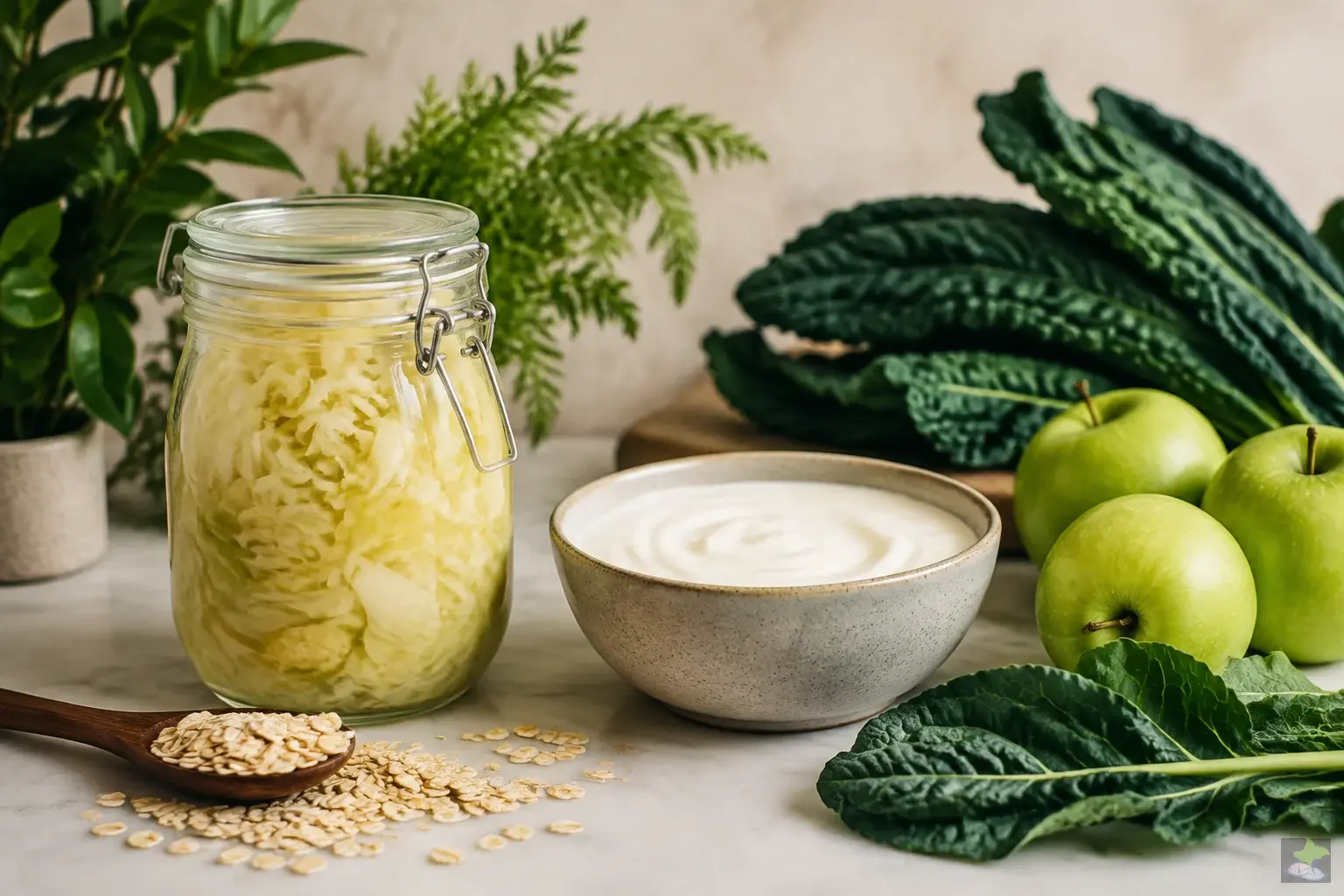
- Raw, unpasteurised sauerkraut handled safely
- Other properly fermented vegetables; apple-cider vinegar is fermented but is not an established probiotic food.
3.7 Fish
Oily fish provides EPA and DHA and can form part of a balanced diet. Evidence for direct microbiome benefits is still developing. Other animal foods should not be rejected simply because they contain saturated fat; overall dietary pattern and fat quality are more relevant.
3.8 Apple-Cider Vinegar
Apple-cider vinegar contains acetic acid, but evidence that it selectively improves the human gut microbiome is limited. It may be used as a dressing; drinking it is unnecessary and undiluted vinegar can damage teeth or irritate the oesophagus.
3.9 Yoghurt
Yoghurt with documented live cultures can provide microorganisms and nutrients. Check the label for cultures and added sugar; ordinary yoghurt production involves heat treatment before fermentation, not necessarily pasteurisation after cultures are added.
3.10 Sauerkraut
Raw, unpasteurised sauerkraut can contain live lactic-acid bacteria, while pasteurised versions still provide vegetables and fibre. Effects vary, and safe salt concentration, hygiene and storage are essential for home fermentation.
4. Dietary Factors That Can Affect the Gut Microbiota
Microbial ecology is shaped by the whole diet, medications, infections, age and lifestyle. The following factors merit context rather than blanket prohibition:
- Excessive Alcohol and Caffeine: Heavy alcohol use can impair intestinal barrier function and alter microbial communities. Moderate caffeine does not create an “acid excess” that destroys beneficial bacteria; effects depend on the beverage and person.
- Saturated and Trans Fats: Industrial trans fats should be minimised. Diets very high in saturated fat may affect cardiometabolic health and microbial profiles, but food source and replacement nutrient matter.
- Added Sugar and Ultra-Processed Foods: Patterns high in added sugar and some ultra-processed foods may reduce dietary diversity and are associated with adverse outcomes. They do not simply feed only pathogens or yeasts.
- Emulsifiers and Non-Sugar Sweeteners: Certain emulsifiers and sweeteners alter microbiota or mucus in experimental models, but findings are compound-, dose- and person-specific and cannot be generalised to every approved additive.
5. Relevance to Vida Vertical: Gut-Friendly Foods From Vertical Cultivation
Controlled home cultivation can make fresh, fibre-rich plants more accessible, although gut health depends on the entire diet and not on the production system alone:
1. Fibre-Rich Vegetables From Hydroponic ProductionLeafy greens and suitable brassicas grown vertically provide fibre and plant diversity. Freshness can reduce storage losses, but hydroponic produce is not automatically pesticide-free or nutritionally superior; responsible crop protection and hygiene remain necessary.
2. Flax and Other Oilseed CropsFlax provides fibre and ALA, but mature seed production needs substantial light and space and may be better suited to fields than compact hydroponics. Its mucilage supports stool consistency rather than “cleansing” the intestine.
3. Fermenting the HarvestHome-grown cabbage, carrots and other vegetables can be fermented soon after harvest. Proper fermentation may preserve live lactic-acid bacteria, but microbial counts are not automatically maximal and food-safety guidance must be followed.
4. Resistant Starch From Home-Grown CropsCooked and cooled potatoes or other starchy foods can contribute resistant starch. Crop choice should reflect the space and energy demands of the growing system.
5. Transparency and Responsible ProductionClosed systems offer control over inputs but do not make pesticides, contamination or residues impossible. Good agricultural practice, clean water and hygienic handling are essential; conventional produce should not be portrayed as a frequent primary cause of dysbiosis.
6. Microalgae as a Source of Omega-3Selected microalgae cultivated in dedicated, controlled systems can provide EPA or DHA. Their direct effects on the intestinal barrier require more evidence, and food-grade production needs species-specific safety and quality controls.
6. Conclusion
Gut health is connected with digestion, immune function and metabolism, while research on cognition and mental wellbeing continues to evolve. A varied diet rich in different fibres and, where suitable, fermented foods can support microbial function.
Vegetables, flaxseed, pulses, wholegrains, cooled starchy foods, cultured yoghurt and safely fermented vegetables all contribute in different ways. Fish or algae-derived omega-3 may suit some diets. No short list offers complete protection, and rigid avoidance of sugar, saturated fat or every additive is neither necessary nor evidence-based.
Fresh produce from controlled cultivation and safe fermentation can make a varied diet more practical. They provide useful foods, not “probiotic powerhouses” that confer complete control over an individual microbiome.
Note: These recommendations concern generally healthy adults. Persistent gastrointestinal symptoms, inflammatory bowel disease or problems after antibiotic treatment should be assessed by a qualified healthcare professional.
References:
- Miqdady, M., Al Mistarihi, J., Azaz, A. & Rawat, D. (2020). Prebiotics in the Infant Microbiome: The Past, Present, and Future. Journal of Pediatric Gastroenterology and Nutrition, 70(1), 12–20.
- Bischoff, S. C. & Manns, M. P. (2005). Probiotics, prebiotics and synbiotics: clinical and practical relevance. Deutsches Ärzteblatt, 102(13), A925–A930.
- Roberfroid, M., et al. (2010). Prebiotic effects: metabolic and health benefits. British Journal of Nutrition, 104(S2), S1–S63.
- de Vrese, M. & Schrezenmeir, J. (2008). Probiotics, prebiotics, and synbiotics. Advances in Biochemical Engineering/Biotechnology, 111, 1–66.
- Douglas, L. C. & Sanders, M. E. (2008). Probiotics and prebiotics in dietetics practice. Journal of the American Dietetic Association, 108(3), 510–521.
Author: Uwe | Vida Vertical – Health
EXPLORE RELATED TOPICS
You may also be interested in

Dietary Fibre
Biochemical Classification, Physiological Mechanisms and Preventive Relevance
The Human Microbiome
Physiological Functions, Influencing Factors and Strategies for Microbial Diversity

Meal Preparation for Working Life
Nutritional Foundations, Practical Strategies and the Importance of Fresh, Responsibly Grown Ingredients