
Hydroponiksysteme · Passive Kulturführung
Kratky Method
Nicht zirkulierende Nährlösung, funktioneller Luftwurzelraum und kontrollierte Betriebsführung.
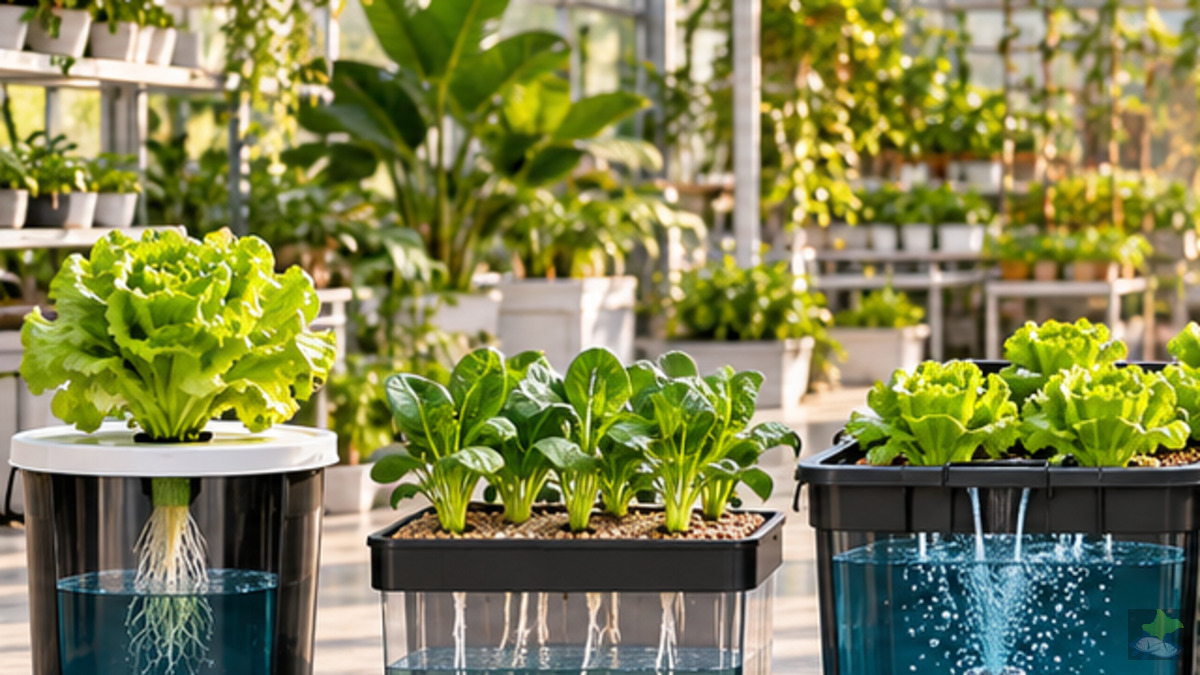
The Kratky Method is a passive, non-circulating Hydroponic process. The plant grows over a supply of water and dissolved plant nutrients. While the roots are developing, humid air space between the cover and the nutrient solution. This airspace is not an unused empty space, but an essential functional area of the Systems.
This is how the Kratky Method works
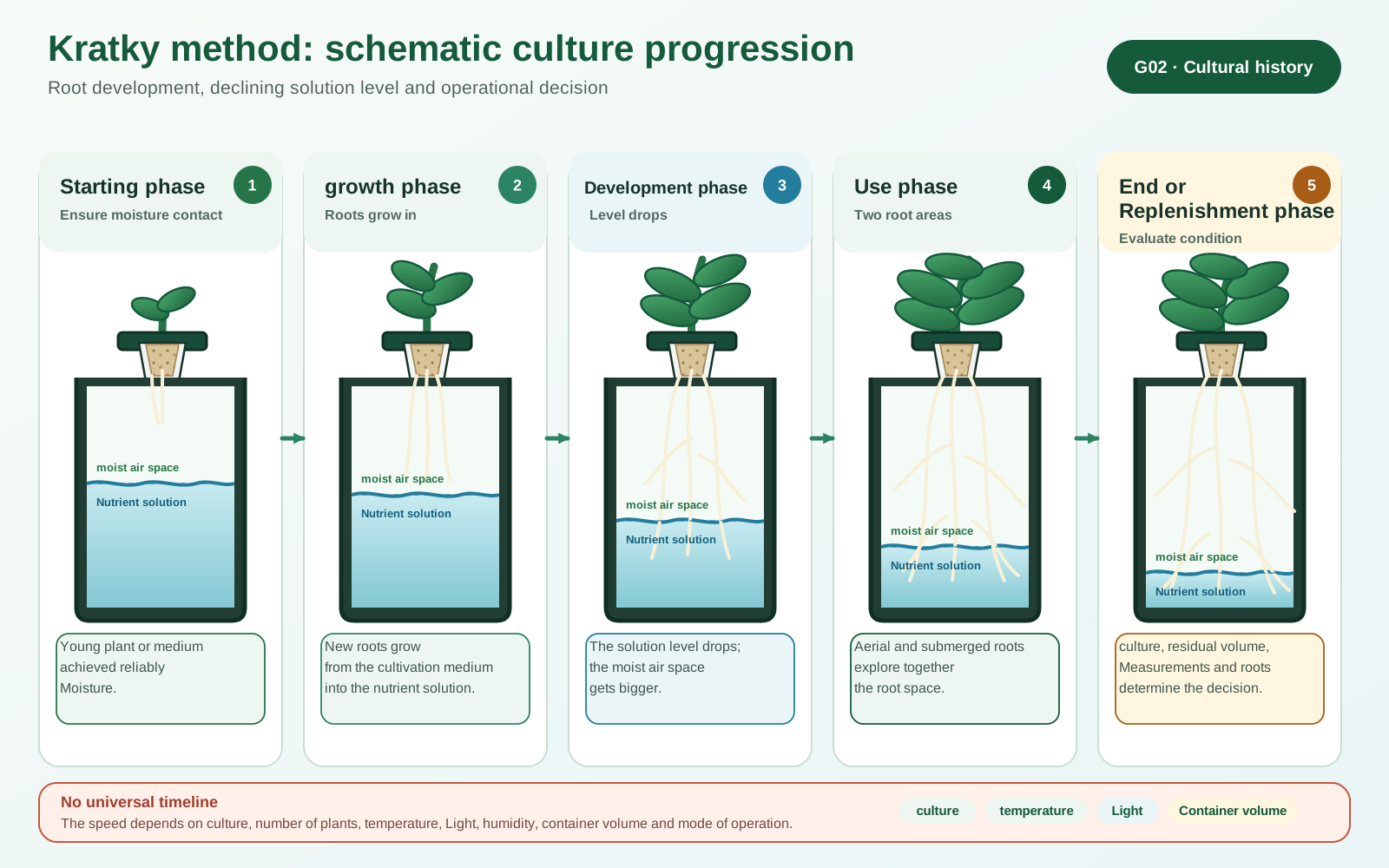
In the beginning, young plant, plant carrier and nutrient solution are thus coordinated that the young plant reliably with moisture is supplied. Once the roots have been removed from the growing medium, When they have grown out, they open up the nutrient solution and the moist airspace under cover.
Through water absorption, perpiration and evaporation, the level in the The course of culture declines. The airspace above the Nutrient solution larger. Some of the roots remain in this moist area, while other roots continue to reach into the nutrient solution.
The plant thus uses two functionally different areas of a Contiguous root system:
- The upper root area is in contact with moist air and Supports passive oxygen uptake.
- The immersed root area mainly takes water and dissolved plant nutrients.
- The transition area is sensitive to sudden, Improper changes in water level.
The air gap does not replace every form of process control. temperature, Plant development, root state, water level and composition Nutrient solution continues to influence cultural success.

Components and tasks of the system
A reliable Kratky system is not created by a container with water. All components shall be connected as: functional unit is planned.
- Storage containers
- It contains the nutrient solution and must be used for crop time, plant number and expected water consumption must be sufficiently dimensioned. The root zone should remain as light protected as possible.
- Cover
- It carries the plant carrier, limits the incidence of light and shields the wet root zone. Openings must not unnecessarily light, dirt or introduce precipitation water into the container.
- Plant carriers
- The pot, net or grid shall keep the plant and the growing medium intact. intended position. The construction must have the root growth in towards nutrient solution.
- Growing medium
- The medium stabilizes the young plant and supports the Moisture transport in the starting phase. water retention capacity, Capillarity and air conduction differ depending on the material.
- Nutrient solution
- It provides water and dissolved macro- and micronutrients. One historical test solution or a product-specific recipe is Not automatically suitable for every crop and source water.
- Control access
- Levels, temperature, pH and electrical conductivity must be tested without permanently opening the container or Strongly illuminate root zone.
- Location and plant support
- Light, temperature, wind, precipitation and loads from larger plants This is part of system planning. Fruit crops often require one of the container independent support structure.
Air gap, root zones and oxygen supply
The Kratky Method does not work without air stone because roots No need for oxygen. Its principle of operation rather creates an humid airspace in which part of the root system has atmospheric can absorb oxygen.
The upper and the submerged root areas are not two of each other separate root systems. These are functional areas of a contiguous rooting. The transitions change with Root growth, level, temperature and culture state.
Upper air root area
This area is located in the humid airspace below the Cover. Finer and branched roots can be a large contact surface with the moist air. The area shall not: dry out completely by a sudden increase in level flooded.
Transitional area
Here moist air, spray moisture and nutrient solution meet. The The transition region is particularly sensitive to abrupt Changes in levels, concentrated fertiliser solution and mechanical Damage.
Immersed solution root region
The immersed roots open up water and dissolved nutrients. Dissolved oxygen also remains biologically relevant in this area. Oxygen availability and root function are inter alia Temperature, microbial activity, root mass and condition of nutrient solution affected.
Oxygen levels from actively ventilated DWC systems must therefore not be be readily adopted as general Kratky limits.

Starting level and safe moisture contact
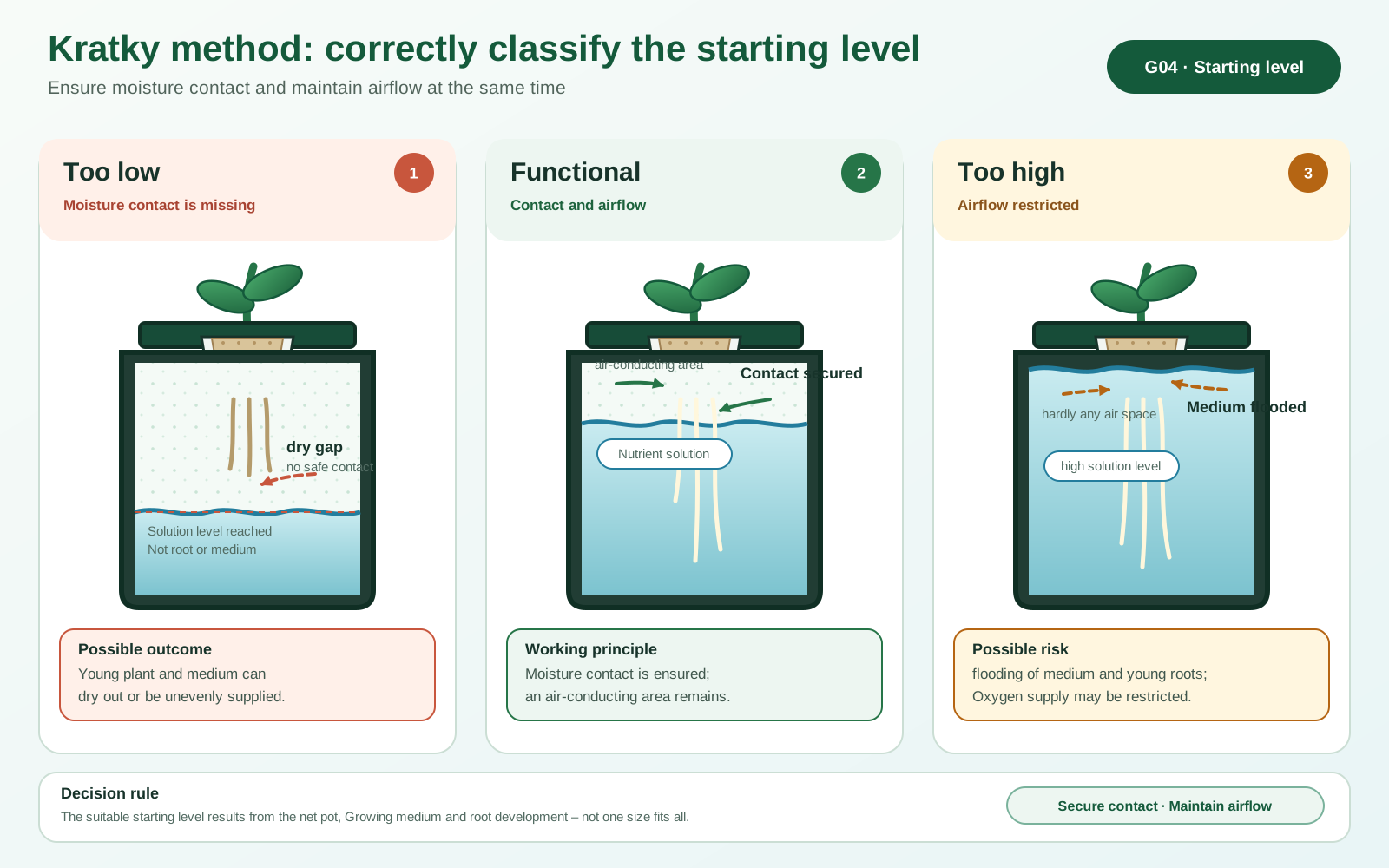
The right starting level is not determined by a universal in millimetres. What matters is whether the young plant is safe is supplied with moisture without the oxygen supply unnecessarily flooding important root and substrate areas.
The start must therefore take into account at least the following factors:
- the shape and depth of the pot;
- the type, grain size and capillary nature of the culture medium,
- the length and development state of the existing roots,
- distance between the carrier and the nutrient solution,
- evaporation and risk of dehydration on site,
- sensitivity of the culture used.
Too low starting level
Reaching neither roots nor sufficiently capillary Growing medium the moisture, can dry out the young plant. One large amount of solution in the container does not help if the hydraulic There is no connection to the plant.
Suitable starting contact
The moisture contact is secured while an air-conducting area in the net pot or root zone. With increasing Root growth can decrease the level and create the air root area.
Too high starting level
If the pot, substrate and young root area become too deep or permanent flooded, the oxygen supply can be restricted. The Risk depends on geometry, medium, temperature, root development and water condition.
Size container and nutrient solution supply
Non-circulating systems need a culture fit Water supply. However, a single flat-rate number of litres per plant would misleading. The need changes with plant species, development phase, Culture time, leaf area, light, temperature, humidity and location.
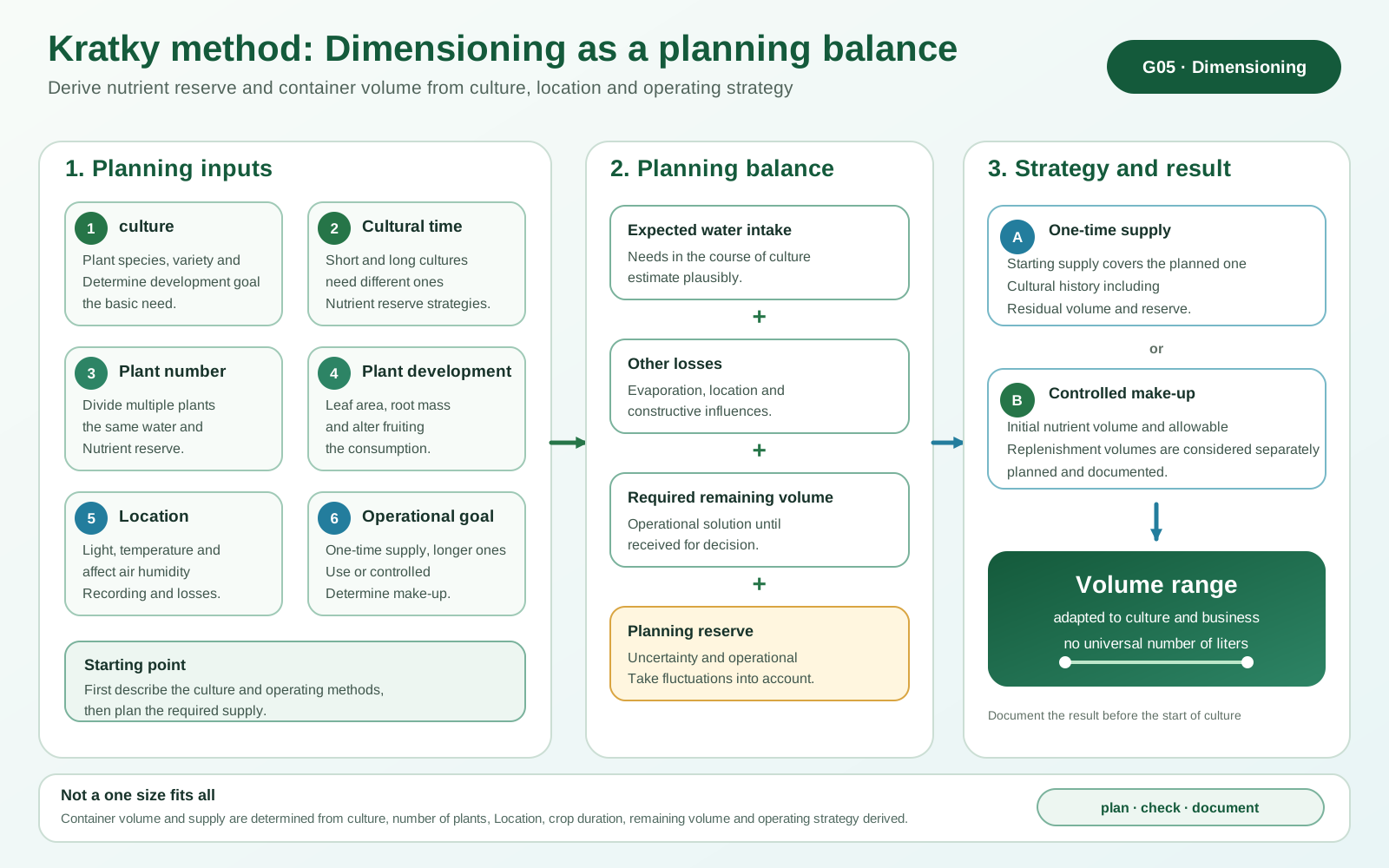
For planning, not only the starting volume has to be considered. It is also crucial which usable residual volume during the culture is to be preserved and whether the plant is for a single stock, controlled level management or a planned refill is designed.
Vida-vertical planning balance
The dimensioning is taken as a balance sheet and not as a universal Container rule structured:
Required starting volume = expected plant uptake + Expected evaporative and operating losses + Required residual volume + Planning reserve
This balance sheet is an editorial planning aid. It does not replace any crop-specific water demand calculation and no measurement among the actual location conditions.
Influence variables
- Culture: Leaf vegetables, herbs and fruit vegetables There are considerable differences in cultural time and water requirements.
- Plant number: Several plants share stock, root zone and control reserve.
- Climate: High irradiation, temperature, wind and low Air humidity can increase water consumption.
- Container geometry: depth, surface, dead volume and Position of the planting sites affect the usable supply.
- Cultural strategy: one-off stock, level management, Refeeding and solution change require different Constructions.
- Safety reserve: The system must not only critical if practically no usable nutrient solution is present is present.
Differentiate short and long cultures
For short leaf cultures, a sufficiently sized one-off Supply the entire culture. Long-term and fruit crops may be: larger containers, support structures, measurement routines and a Require controlled supplementation strategy.
Successful test measures from published plants show that the the respective design worked under their conditions. See also: are not general sizes for every culture and every location.
From the theoretical container volume to the usable supply
The nominal volume of a container is not automatically the actual usable stock of nutrient solution. Above the maximum intended level space for plant carriers, roots and the humid air area remain. Residual amounts can also remain on the container bottom which no longer reliably developed by the roots or no longer are properly controlled. This is why planning counts usable operating volume between the intended starting state and Minimum operational status.
Non-circulating systems need a culture fit Water supply. A single flat-rate number of litres may Do not replace context. Two plants of the same species can each by level of development, leaf area, temperature, lighting, Air movement and humidity significantly different amounts of water consumed. The container itself also influences the balance sheet: Surface, heat input, leaks and unprotected openings can cause additional losses.
Planning reserve is not freely available supplemental water
A reserve is intended to prevent the culture from already being small deviation into a critical residual state. It is: but no reason to choose the container indiscriminately larger. Very large Solution quantities increase weight, material requirements and cleaning effort. They can also slow down temperature changes, but Problems of nutrient composition do not automatically prevent.
For a comprehensible planning, at least starting volumes, Plant number, crop time, expected residual volume and planned Operational strategy documented. In the case of a single supply, the Take stock until the planned end of culture. In the case of a Refilling strategy must be filling path, mixing process, maximum level and protection of the already formed air root region constructively be taken into account.
Ensure dimensioning by observation
A calculation before the start of the culture remains a forecast. The The actual course is therefore via level markings or a other reproducible volume measurement controlled. date, Plant status, water level and particular weather conditions or Climate conditions allow consumption to be realistic later to be evaluated. Only several documented cultural courses on the concrete Location provides a reliable operational experience base.
The solution level may decrease in the course of the culture. In doing so, the Oxygen supply not active with a general number ventilated installations. values from DWC experiments are not readily transferable as general Kratky limits, because ventilation, level control and root environment are different.
Starting state constructively planned
Already at the dimensioning must be determined how the young plant is safely supplied with moisture. Therefore, the starting level may: not exclusively from the total volume or from any universal millimeter indication. Relevant are: net pot geometry, growth medium, capillary, root length present and the planned development of the air gap.
The basic form does not require active ventilation of the nutrient solution. Nevertheless, dissolved oxygen remains in the immersed root area biologically relevant. High solution temperatures, strong microbial Loading or damaged roots can improve operational safety impairment. Volume planning must therefore always be Temperature control, root observation and hygiene Operational management are combined.
Properly prepare starting water and nutrient solution
The plant does not receive nutrients from a floor buffers. The container must therefore have a fully installed provide a nutrient solution containing all the macronutrients required for the culture. and micronutrients. nitrogen, phosphorus, potassium, calcium, Magnesium and sulfur are just as much a part of the supply as the required trace elements.
“Complete” does not mean that a single recipe among all Conditions are right. plant species, development phase, water quality, Temperature and cultural strategy influence the requirements. Historical Test solutions demonstrate the conditions of a particular test, are but no automatic universal recipe for today's small plants.
Evaluate starting water first
Starting water is not only the neutral carrier medium for fertilizer. It can already contain calcium, magnesium, sodium, chloride, hydrogen carbonate and other solutes. These components affect, how pH, electrical conductivity and nutrient availability Develop the starting point.
For rainwater, tap water, well water or treated water Different procedures may therefore be required. Odor, haze and a single conductivity value do not replace robust water analysis. With recurrent or major production the composition of the starting water should be known and documented be.
Concentrate is not yet a ready-to-use nutrient solution
Multipart fertilizers are concentrated separately because certain ions in high concentration reacting with each other and sparingly soluble can form connections. Therefore, highly concentrated components are not poured together undiluted. Each component shall: in accordance with the manufacturer or recipe specification in sufficient Water is distributed.
- Determine the amount of water needed and the actual container volume.
- Test and document starting water.
- Select suitable hydroponic fertilizer.
- Add separate concentrates individually and sufficiently diluted.
- Homogenize the solution carefully.
- Only then assess EC, pH and temperature.
- Document measured values, product, batch and dosage.
Properly classify pH, EC, temperature and oxygen
Measurements are decision aids, not isolated quality stamps. A single numerical value can indicate the condition of plants, roots and Do not fully describe nutrient solution. Important are plausible Measurements, time courses and the joint evaluation of several observations.
EC: sum of conductive ions, no nutrient analysis
The electrical conductivity indirectly describes the sum of the water dissolved electrically conductive ions. It does not show which individual nutrients are present and whether their ratio for the The plant is balanced.
A stable EC value can therefore be different developments cover up. The plant can preferably absorb certain ions, while others remain in the solution or accumulate. evaporation can concentrate the solution; water absorption; and Refeeding can change the measured value in another direction.
pH: Influence on solubility and availability
The pH influences chemical equilibrium and thus the Availability of dissolved nutrients. A suitable area is crop-specific and can also be derived from fertilizer, source water and operational phase. A flat-rate figure for each culture and each Nutritional solution would be technically inadequate.
Alkalinity: resistance to pH changes
The alkalinity of the starting water affects how strongly the pH changed by fertiliser, plant uptake or corrective agent. Two water samples can have the same initial pH and after the However, starting out behaves differently. pH and alkalinity may be: Do not be confused with each other.
Temperature: link between plant, solution and oxygen
Temperature affects plant metabolism, water absorption, Root function, microbial processes and physical Oxygen solubility. Warm nutrient solution may release less oxygen as a cooler solution. At the same time, plants and microorganisms in Higher temperatures consume more oxygen.
Oxygen levels from actively ventilated DWC systems are not considered general Kratky limits. The systems differ in level guidance, ventilation and root environment. Staying in the Kratky system both the humid air root zone and the state of the immersed to assess the root area.
Measuring instruments and measurement routine
- Calibrate measuring instruments as specified by the manufacturer.
- Keep electrodes clean, moist and suitably stored.
- Keep the measuring point and procedure as equal as possible.
- Consider the temperature dependence of the measurement.
- Check implausible values by control measurement.
- Document progress instead of individual snapshots.
Put the Kratky system into operation in a controlled manner
The commissioning decides whether young plant, moisture pathway, Nutrient solution and air gap work together from the beginning. The following: The process is a Vida Vertical work aid that has tested several Bringing together source requirements. He is not a literal adopted Guidance on a single publication.
- Test containers: cleanliness, damage, Control light protection, leakage and adequate load capacity.
- Determine the volume: usable volume; and Level markings are not only derived from the nominal volume.
- Preparing the site: Container before filling Horizontal, stable and in the final place.
- Catch starting water: origin, temperature and Document available analytical data.
- Prepare nutrient solution: fertilizer components individually, interfere completely and safely.
- Test measured values: EC, pH and temperature only after sufficient mixing.
- Check young plant: healthy roots, Use appropriate developmental stage and clean culture medium.
- Produce moisture contact: Root or medium Reliably supply without unnecessarily removing the air-carrying area flooding.
- Use the plant: securely fix the power box; and take into account subsequent vertical loads.
- Document take-off status: date, culture, variety, Record the number of plants, volumes, levels and measured values.
Post-occupation check
At the early stage, it shall be checked that the culture medium: Remain sufficiently moist and grow new roots towards solution. wilt, rotting odor, permanently soaked medium or missing Root growth is not a normal starting trait and must be studied will become.
The cover is then closed in such a way that no unnecessary Incidence of light occurs. Control openings shall remain accessible but shall: not permanently left open.
Observe operations and detect changes early
A passive system has fewer moving components, but still biological and chemical processes. Control therefore does not mean: constantly correct each measured value. It means change to recognize in time and systematically limit its cause.
Observe the plant
- new growth, leaf colour and leaf position;
- wilting at certain times of day,
- spots, necrosis or deformed growth,
- signs of pests and diseases,
- Stability and necessary plant support.
Observing roots
- extension of the upper and immersed root area,
- conspicuous discoloration or slimy coverings,
- odor development,
- mechanical damage or constriction;
- Flooding or drying out of functional areas.
The natural root color is culture, fertilizer and material dependent. Coloring alone is not yet a safe diagnosis. They must work together: Assessed with odor, structure, plant status and course of measurements will become.
Control nutrient solution and container
- solution level and remaining usable volume,
- temperature profile,
- pH and EC plot,
- opacity, deposits and unusual odour,
- light incidence and algae evolution,
- leakage, deformation and contamination;
- input by rain, animals, tools or plant remains.
Adjust control frequency to risk
Small containers can heat up faster and have smaller reserves. Large fruit plants can make their consumption in a short time Significant change. Controls are therefore based on container size, Plant development, location and production target adapted.
A documentation of date, level, temperature, pH, EC and short Plant observation makes developments visible in individual Samples would go unnoticed.
Refill, correct or end culture?
The widespread statement that a Kratky plant should never be allowed in principle To be refilled is technically too flat. Published non-circulating systems distinguish between decreasing levels, Controlled level management and supplementation for longer cultures.
Equally wrong would be any container arbitrarily on the original Complete the starting level. After forming the air root region, a strong or sudden increase in the level of roots flooding to moist Air is adapted.
Five different operational situations
- One-time stock
- The starting stock is scheduled until the harvest of a short crop.
- Controlled level management
- The level is determined according to the specific system variant in a the intended area.
- Supplement for long-term crops
- water or appropriately prepared nutrient solution is supplemented in a controlled manner, without greatly flooding the air root region formed.
- Partial or full change
- The existing solution is not only supplemented in quantity, but also partially or completely replaced by their condition.
- Culture ends
- If residual volume, root condition, hygiene or plant development do not allow safe operation, the culture is terminated.
Check before any addition
- Which system variant is actually operated?
- How far has culture developed?
- What is the current level?
- What is the size of the air root area formed?
- Is water especially missing or is the nutrient balance unclear?
- How have EC, pH and temperature evolved?
- Is the existing solution hygienic and sensory inconspicuous?
- Can the supplement be distributed sufficiently?
Why punctual addition can be problematic
Without circulation, an addition is not necessarily distributed immediately uniform. Water and nutrient solution can be due to different density or an unfavorable filling path form layers. One Measurement sample at only one location can then have a non-representative value supply.
Concentrated nutrient solution must not be above the level The roots meet directly. High local salt concentrations can cause root damage. Concentrates are therefore removed from the Root contact is correctly diluted and introduced in a controlled manner.

Appropriate crops and different requirements
The suitability of a culture does not depend solely on whether it can grow hydroponically. What matters is whether the container, stock, root zone, culture time, support and operating strategy for their Development fits.
Short leaf cultures and herbs
Salads, selected leafy vegetables and compact herbs are for small passive units are particularly well documented. Their comparatively short cultural time can be a unique supply enabling. However, this is not a guarantee of success: variety, temperature, Light, plant spacing, container volume and hygiene remain relevant.
Fruit vegetables and larger plants
Tomatoes, cucumbers and melons have been published in larger non-circulating systems are successfully studied. These results must not be equated with a simple small container culture will become. The experimental facilities had other stocks, planting distances, Support systems and operating methods.
Fruit crops typically require a longer crop time, greater water supply, sustainable plant support and a differentiated replenishment strategy. High demand for water and certain nutrients increase the requirements for measurement, Documentation and container planning.
Selection questions before the start of culture
- How long will the culture last?
- How big are leaf area and root mass?
- Can the container safely hold the expected supply?
- Does the plant need an additional support structure?
- Is a single supply realistic or refilled?
- What temperature and light conditions are available?
- How quickly can you react to conspicuous readings or wilting?
Recognize disturbances and systematically limit them
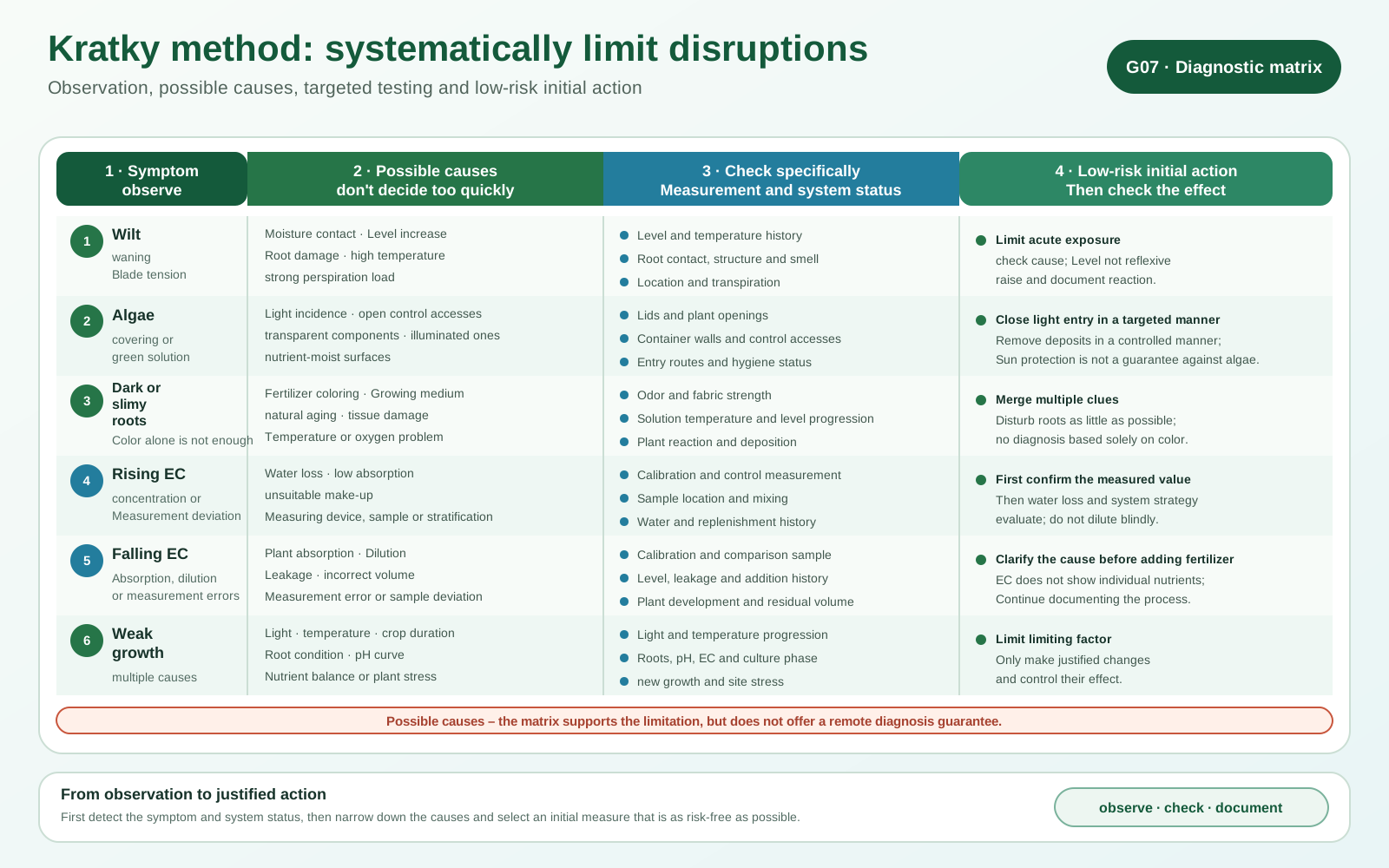
Conspicuous leaves, wilts or discolored roots do not have automatically only one cause. temperature, water level, root state, Nutrient distribution, pH, light, pests and pathogens may be: similar symptoms. A remote diagnosis based on only one Photos or a single measured value is therefore not reliable.
Sudden wilting
wilting can be caused by lack of moisture contact, high perspiration, Root damage or an unsuitable solution state arise. In one the established Kratky system must be additionally checked whether the level Suddenly lifted and a developed air root area flooded has been. An immediate further addition of water would not be possible without this test. safe initial measure.
Algae and incident light
Light entering the nutrient solution can promote algae growth. To be tested shall be: lids, planting openings, control accesses, transparent hoses and container walls. Sun protection limits an important cause, guaranteed but neither complete algae freedom nor hygienic safety.
Root discoloration and odour
Roots can be caused by fertilizer, growing medium or natural aging. colored. More critical are combinations of unpleasant odor, slimy surface, tissue decomposition, wilting and unfavourable dissolution temperature. Therefore, before a measure, color, strength, Odor, plant condition, level and measured values considered together.
Interpreting EC and pH correctly
A single EC value does not prove a balanced Nutrient composition. Plants take individual ions differently on; Water losses can concentrate the remaining solution. At the same time, the pH can change. The course of several values is It is therefore more meaningful than an isolated measurement.
Four-stage diagnosis
- Describe the symptom: What is visible, since when and What parts of plants?
- Collect possible causes: not immediately on fertilizer, Set pH or disease.
- Targeted testing: root contact, level, temperature, Check pH, EC, odour, sun protection and pest signs.
- Select a gentle initial measure: acute hazards limit, document observation and control effect.
Hygiene, reuse and food safety
Hydroponic cultivation is not automatically free of organic, chemical or physical contamination risks. water, young plants, vessels, tools, hands, surfaces, animals and Harvesting containers can introduce substances or microorganisms into the system Enter.
Before the start of culture
- Test containers and lids for cracks, rough spots and residues.
- Controlled cleaning of net pots, growing trays and tools.
- Only use appropriate starting water and clean young plants.
- Keep away soil, polluted tools and untested organic remains.
- Prepare work area and hands before handling plants.
distinguish cleaning and disinfecting
Cleaning removes dirt, plant remains, biofilm and others deposits. A disinfection or sanitization measure can only act reliably on sufficiently cleaned surfaces. The used Means must be used for the intended use and the treated surface be suitable. concentration, contact time, temperature, rinsing and Occupational safety is governed by labelling and applicable law.
Reused components
Reuse only makes sense if a component is completely can be controlled. Severely scratched, porous, embrittled or inaccessible components can provide reliable cleaning complications. An externally clean container is not automatic hygienically safe.
Material suitability
materials must be used for the intended period of use, nutrient solution, temperature, light exposure and food production. The mere designation “plastic” or a recycling mark replaces no examination of the specific material and usage suitability.
Documentation
In the case of recurring production, the origin of the water, cleaning procedures, agents used, particular contamination; and Deviations documented. The required extent differs between private experiment, educational project and commercial food production.
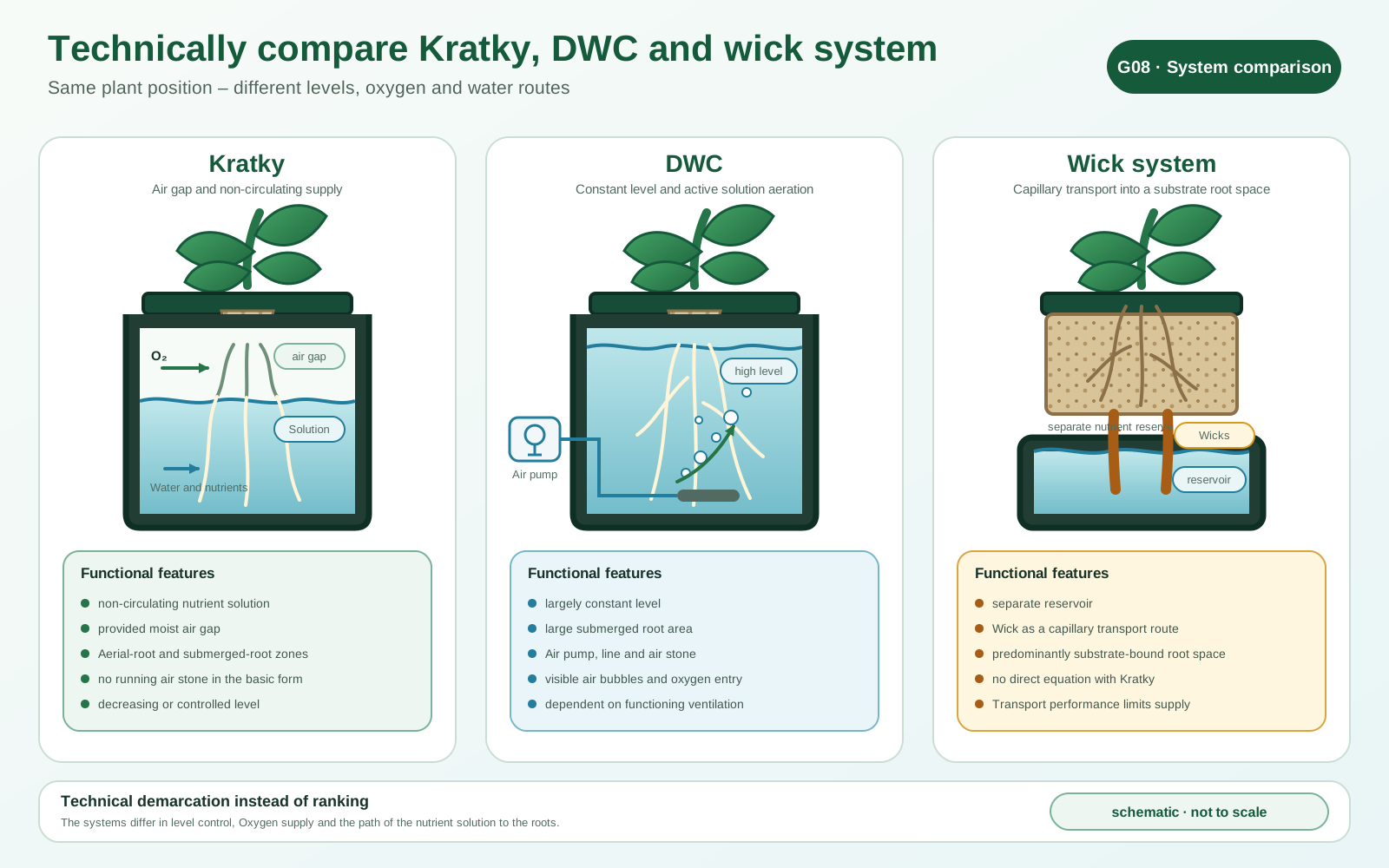
Kratky, DWC and wicking system technically distinguish
The three systems can have a similar external effect because plants Growing water or nutrient solution. The key difference is but in how water, oxygen and nutrients the root area and how the command is performed.
Kratky method
The Kratky basic shape is not circulating and sees a damp air gap above the nutrient solution. One connected Root system opens up air and solution area. The level can fall or are controlled in certain variants.
Deep water culture
At DWC, large parts of the roots are permanently in a typically actively aerated nutrient solution. The level remains in Operating range largely constant. airstone, air line and Air pumps are therefore functional system components and not any additives.
wicking system
A wick transports nutrient solution capillary from a reservoir into the Growing or growing medium. The supply depends on wick material, length, cross section, height difference, substrate and plant consumption. This transport principle is not identical to the classical Kratky root arrangement.
Advantages, Limitations and Scaling
Potential benefits
- no running circulating pump in the basic form,
- no mechanical ventilation of the nutrient solution in the basic form,
- few movable and electrically dependent components,
- clear structure for demonstration and training,
- Possible from the smallest test to larger containers,
- low hydraulic complexity and no return line.
Fewer moving components can cause failure and Reduce technical dependencies. However, this does not lead to Freedom from maintenance. plant, roots, level, temperature, nutrient solution, Hygiene and containers remain in need of control.
Technical and biological limits
- The entire stock must fit in with the cultural strategy.
- Small volumes have lower thermal and hydraulic reserves.
- Nutrient layering can go unnoticed without overturning.
- Severe changes in level can damage the air root area.
- Long-term crops require differentiated refilling.
- Fruit plants require additional support and larger stocks.
- Passive construction does not replace climate or lighting planning.
Scaling changes the system
A larger container is not just an enlarged glass. weight, load capacity, mixing, sampling, cleaning, Accessibility, plant spacing and harvest logistics are gaining in importance. Several plants also share the same stock and influence their composition together.
Published systems range from small foliar culture units to larger production vessels. This is technical bandwidth, but Not automatically economical. Individual income and expense You can only try it together with culture, location, period, Evaluate system construction and comparative methods.
Start and operation control as a checklist
This Vida Vertical checklist is an editorial synthesis of technical requirements tested. It is not a single source as literal guidance attributed.
Before take-off
- Please indicate the date of the decision to grant the aid.
- ☐ Number of plants and support required
- ☐ Useful container volume determined
- If yes, please provide a justification to the competent authority.
- ☐ Material assessed for intended use
- ☐ cleaned containers, lids, netting pans and tools
- ☐ Source water known or studied
- ☐ Appropriate hydroponic fertilisers selected
- ☐ Measuring instruments functional and calibrated
- ☐ start level derived from root, mains and medium
- ☐ Access to light protected
- If the answer is yes, please provide the following information:
Preparation
- ☐ the quantity of water covered
- ☐ Concentrates separated and safely diluted
- ☐ Sufficiently homogenised nutrient solution
- ☐ pH, EC and temperature documented
- ☐ Healthy young plant in contact with moisture
- ☐ start level and start date
During operation
- ☐ Plant status and new growth controlled
- ☐ Air and solution root area observed
- ☐ Residual volume and level
- If the answer is yes, please note that:
- If the answer is yes, please note:
- ☐ Odor, opacity and deposits controlled
- ☐ Refill decision not derived solely from the level
- ☐ Concentrated solution kept away from exposed roots
End of culture
- If the answer is yes, please note that:
- ☐ Residual solution handled professionally
- ☐ Removal of plant residues
- ☐ Components cleaned and checked for damage
- ☐ Reusable parts dry and stored protected
- ☐ Results for next dimensioning
Specialist sources and editorial traceability
This specialist page contains direct links to the original, university and extension sources actually used. Trader texts, anonymous guides and unchecked blog posts do not replace these sources.
Core sources for non-circulation hydroponics
- Q01: Bernard A. Kratky Non-Circulating Hydroponic Systems for Vegetable Production. Basis for system definition, air gap, root areas, Level management and different cultures. Open original source
- Q02: Bernard A. Kratky and John E. Bowen Observations on a Noncirculating Hydroponic System for Tomato Production. basis for tomato test, level change, Root reaction and nutrient stratification. Open original source
- Q03: University of Hawaii publication Hydroponics solutions for gardening and teaching. Supplementary basis for small leaf cultures and nutrient solution. Open original source
- Q04: Publication of portable grow beds and Roll-out tanks. Supplementary source for larger non-circulation Sub-irrigated production systems. Open original source
- Q05: Non-circulation investigation watercress production. Complementary long-term source of change pH, EC and nutrient composition. Open original source
Measurement, management and food safety
- Q06: Oklahoma State University Extension Electrical Conductivity and pH Guide for Hydroponics. Technical field of use: pH; EC; alkalinity; Calibration; crop-specific target areas. Open original source
- Q07: Cornell University, Hydroponic Lettuce Handbook. Reference source for Nutrient solution, measurement, temperature and actively ventilated DWC production. Open original source
- Q08: Virginia Tech, Hydroponic Production of Edible Crops: Food Safety Considerations. basis for hygiene, routes of contamination, Cleaning and documentation. Open original source
- Q09: University of Minnesota Extension, Small-scale hydroponics. Technical use: container selection; food safe materials; Structures; small plants. Open original source
- Q10: Oklahoma State University Extension Hydroponics. Technical field of use: nutrient solution; refilling; EC and pH control; Risks of untested supplements. Open original source
Delineation sources
- Q11: University of Nebraska, Lunchbox Hydroponics. Hybrid system from reservoir, Rockwool and wick; Not suitable as a Kratky definition alone. Open original source
- Q12: University of Florida, Floating Hydroponic Garden. Floating, Close to DWC method; can only be used in addition to delimitation. Open original source